



The Lonely Island of the Kicker
In the American sports psyche, the clutch kicker is a unique archetype. They are specialists in a game of generalists, brought onto the field for one singular, high-leverage task. Think of names like Adam Vinatieri, whose kicks through swirling snow decided
Super Bowls. For 59 minutes of a game, they are a sideline observer. Then, for a few crucial seconds, they are the only person that matters. Theirs is a binary existence: hero or goat. There is no middle ground. The pressure is immense, a product of their isolation and the finality of their task. This singular focus creates a drama that even non-football fans can understand and appreciate.
Soccer’s Moment of Frozen Time
Now, pivot to the soccer pitch, a place of constant, fluid motion. For 90 minutes, the ball rarely stops. But then comes the foul, the corner, the penalty. These are called "set pieces," moments where the game halts and resets. Suddenly, the beautiful game’s chaotic flow is replaced by a moment of stillness and strategy. A wall of defenders lines up. A goalkeeper paces nervously on his line. And one player, the designated specialist, steps up to take a direct free kick or a penalty. In these moments, the team sport becomes an individual duel, and the context shifts from collective effort to singular execution.
The Anatomy of Pressure
This is where the worlds of the NFL kicker and the soccer specialist converge. Both are defined by the immense psychological burden they carry. While their teammates are in constant action, these specialists spend most of their time waiting, thinking, and managing their nerves for a single, explosive moment. Their success is not just about physical talent—it's about mental fortitude. Can they block out the noise of 80,000 fans? Can they execute a technique they've practiced ten thousand times, but this time with everything on the line? A missed field goal can cost a team the game, just as a skied free kick can end a nation's World Cup dream. The stakes are identical, and the loneliness of the role is universal.
A Specialist's Art and Science
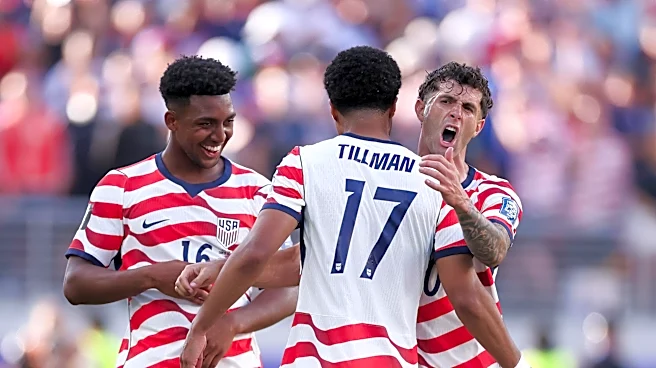
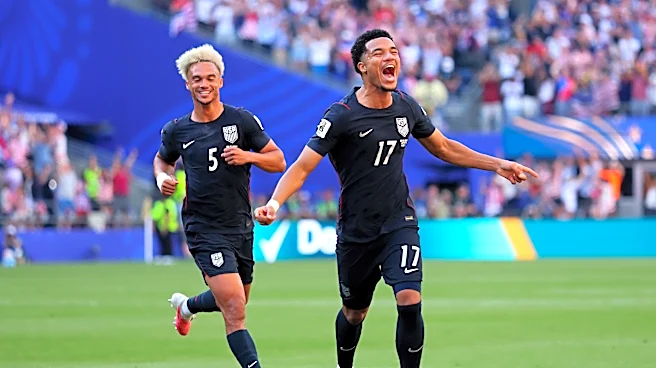
Beyond the mental game, the technical skill required is astounding and highly specialized. An NFL kicker must generate power and precision to send an oddly shaped ball through a narrow target from 50 yards away, accounting for wind and the trajectory over onrushing linemen. Likewise, a soccer free-kick artist like USMNT's Malik Tillman, who scored two direct free kicks in the 2026 World Cup, must master the physics of spin. They can make the ball dip, swerve, or "knuckle" unpredictably to deceive the goalkeeper. This isn't just kicking a ball; it's a science of applied force and aerodynamics, honed through years of dedicated, repetitive practice that few other players undertake. In major tournaments, where games are tight and cautious, these moments often decide everything.
Writing Their Own Legacy
Ultimately, both roles offer a fast track to immortality or infamy. We remember Roberto Baggio's missed penalty in the '94 World Cup final as vividly as we remember David Beckham's redemptive free kick against Greece in 2001. In the NFL, kickers are often footnotes until they become headlines for all the right or wrong reasons. This is the shared burden and glory. In a team game, they are the individuals whose legacy can be written in a single swing of the leg. They are the artists of the still ball, the masters of the frozen moment. Whether it's a 45-yard field goal in January or a 25-yard free kick in July, the feeling is exactly the same: everything stops, and one person holds the outcome in their hands—or, more accurately, on the end of their foot.