





Velvet: The Fabric of Power and Peril
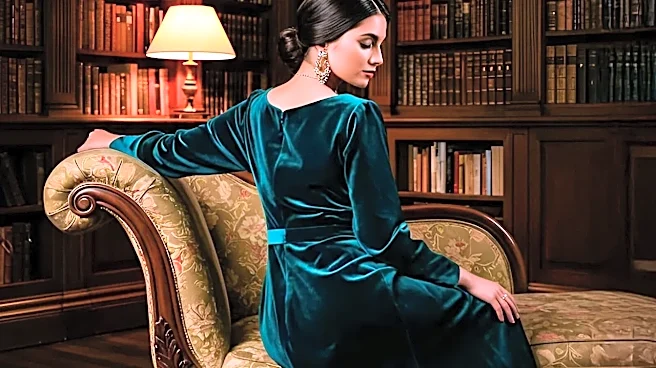
Velvet doesn't just feel luxurious; it feels like a secret. Its deep pile absorbs light, creating a richness that speaks of old money, hidden corridors, and ambivalent morality. Historically, velvet was so expensive and difficult to produce that sumptuary
laws often restricted its use to nobility, making it an immediate signifier of wealth and power. This association is hardwired into fantasy storytelling. When a character enters a scene in a velvet gown or doublet, we instantly recognize them as someone of consequence—a king, a queen, or a high-ranking courtier with influence to spare. Think of the opulent, heavy velvets worn by the Lannisters in “Game of Thrones.” Their clothing isn't just a display of wealth; it's a visual representation of their suffocating grip on power. But velvet’s story is more complex than simple luxury. Its softness invites touch, suggesting a certain sensuality, while its weight can imply a burden or concealment. A character in velvet might be a benevolent ruler, but they are just as likely to be a scheming vizier or a dangerous sorceress. The fabric’s smoothness can hide a core of iron, a concept captured in the phrase “an iron fist in a velvet glove.” This duality makes it the perfect material for characters whose intentions are ambiguous, cloaking them in an elegance that is both alluring and potentially deadly.
Wool: The Cloth of Grit and Grounding
If velvet is the fabric of the court, wool is the fabric of the common folk, the wandering hero, and the steadfast companion. It’s a material rooted in the earth—practical, durable, and warm. Derived from sheep, wool has been a staple textile for millennia, essential for survival in harsh climates. In fantasy, this translates into a language of authenticity and resilience. Characters dressed in wool are often grounded, practical, and connected to the natural world. Think of the Fellowship in “The Lord of the Rings.” Their woolen cloaks and simple, roughspun garments are not about fashion but function. The fabric protects them from the elements on their long, arduous journey, its very texture evoking a sense of hard-won endurance. Wool is honest. It doesn't pretend to be anything other than what it is. This makes it the ideal uniform for the reluctant hero who comes from a humble background or the wise mentor who has forsaken worldly luxuries for a simpler existence. Its symbolism can also be tied to community and tradition, as seen in the knitting metaphors that often represent the interconnectedness of society. A character in wool is trustworthy; they are the person you want by your side in a fight, the dependable heart of an epic adventure. Their clothing tells a story of survival, of home, and of a quiet strength that doesn't require ornament.
Chiffon: The Whisper of Magic and the Ethereal
Chiffon is the stuff of dreams. Sheer, lightweight, and almost impossibly delicate, it seems to float on air, capturing light and movement in a way that feels otherworldly. Originally made from silk, its name ironically comes from an old French word for a rag, a stark contrast to its ethereal quality. In the visual language of fantasy, chiffon is used to signify the supernatural, the magical, and the ephemeral. When you see an elf queen, a fairy, or a ghostly apparition, chances are she is draped in layers of flowing chiffon. The fabric’s translucence creates a soft, glittering effect that enhances a character's otherworldly nature. Think of Glinda the Good Witch's gown in “The Wizard of Oz” or the flowing sleeves on elven dresses that seem to move with a will of their own. Chiffon costumes often feature long, trailing elements that catch the breeze, creating a sense of constant, graceful motion that reinforces the character's connection to forces beyond the mortal realm. This fabric tells a story of beings who are not entirely of this world. It speaks of magic that is beautiful but perhaps fleeting, and of a grace that is both enchanting and untouchable. A character dressed in chiffon is often a guide, a messenger from a magical realm, or a creature whose very existence is a form of delicate poetry.