






The Anti-Campaign Campaign Speech
Awards season is a marathon of glad-handing and public performance, and the acceptance speech is its grand finale. Typically, it’s a practiced art of performative humility, a frantic rush to thank agents, managers, and God before the orchestra plays you
off. Cillian Murphy, an actor famously averse to the celebrity circus, subverted the genre. Across the Golden Globes, BAFTAs, SAG Awards, and Oscars, his speeches were models of quiet, sincere efficiency. He began his Golden Globes speech with a disarming, self-deprecating question about having lipstick on his nose. Rather than gushing, he spoke with the calm of a craftsman, consistently shifting the focus from himself to the collaborative nature of filmmaking. He praised his director, Christopher Nolan, and credited his fellow cast members—the “Oppenhomies,” as he affectionately called them—for carrying him through the performance. This wasn't the usual breathless thank-a-thon; it was a consistent, sober appreciation of the work itself, delivered with an almost unnerving calm that stood in stark contrast to the industry's typical emotional excess.
A Final, Potent Message
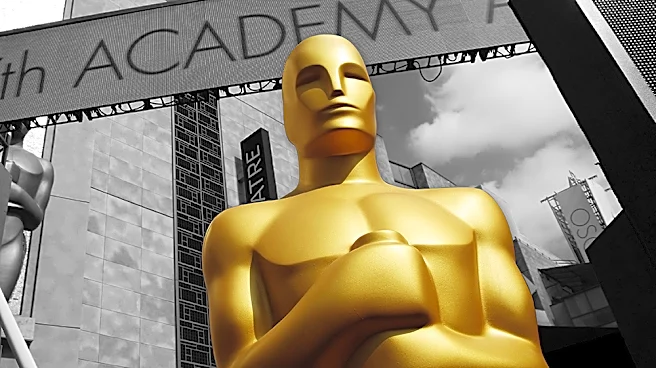
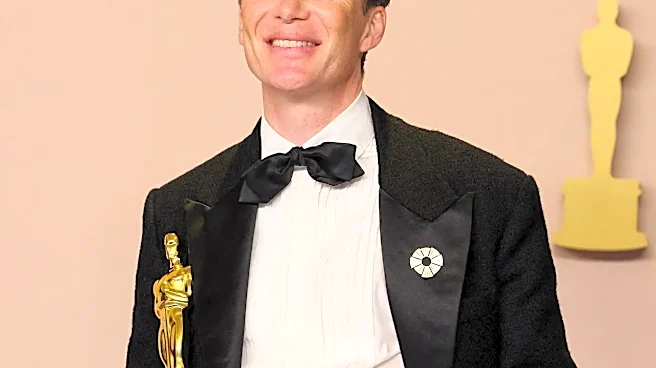
The culmination of this approach came at the Academy Awards. After becoming the first Irish-born actor to win Best Actor, Murphy took the stage looking genuinely overwhelmed but composed. He delivered his thanks to Nolan, producer Emma Thomas, his cast, and his family with characteristic brevity. Then, he did something that elevated the moment from a personal victory to a profound statement. Referencing the film's subject, he said, "We made a film about the man who created the atomic bomb, and for better or for worse, we're all living in Oppenheimer's world." He paused, then concluded: "So, I would really like to dedicate this to the peacemakers everywhere." In a room built on fantasy, the line landed with the weight of reality. It wasn’t a lecture or a partisan plea, but a simple, powerful dedication that connected the film's heavy themes to the present moment, ending his campaign not with a plea for himself, but with a hope for humanity. He finished with a simple, proud "Go raibh míle maith agat" ("Thank you very much" in Irish), grounding the global moment in his own identity.
Did It Actually Change Votes?
The headline's claim is bold, and proving a direct causal link between a speech and thousands of individual votes is nearly impossible. Awards campaigns are complex, and Murphy was the frontrunner for much of the season. However, his speeches served as the perfect closing argument for a campaign that was, in itself, an outlier. While his competitors were engaged in the traditional, high-visibility circuit, Murphy’s reserved persona became his secret weapon. His reluctance to play the fame game was seen not as arrogance but as evidence of his seriousness. The speeches didn’t reshape voting in a vacuum; they crystallized the very qualities that voters were already rewarding. They affirmed the narrative: here was a serious actor who cared more about the craft than the trophy. In an industry increasingly weary of manufactured narratives and desperate for authenticity, Murphy’s quiet confidence felt like the realest thing on offer. His wins were a victory for the work, and his speeches were the proof.
A New Blueprint for Winning?
The question now is whether Murphy’s run provides a new blueprint for Hollywood. Will future Oscar contenders adopt a more reserved, anti-celebrity posture? Perhaps. His success suggests there is an appetite within the Academy for a different kind of winner—one who projects substance over style and humility over hunger. His approach resonated because it felt like a correction to the often self-congratulatory nature of awards shows. He demonstrated that an actor could dominate the season without appearing to crave it, and that a speech could be memorable for its restraint rather than its emotion. While it's unlikely to end the tradition of tearful thank-yous altogether, Murphy's masterclass in quiet dignity provided a powerful alternative. It reminded the industry and audiences that sometimes the most resonant voice in a loud room is the one that doesn't shout.