






An Invitation to Hate-Watch
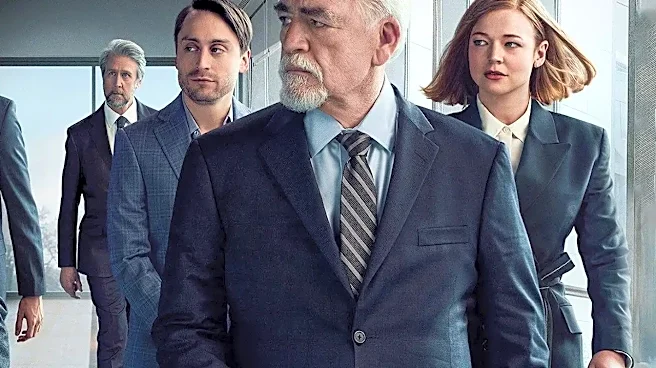
The opening episode of Succession, titled “Celebration,” does everything in its power to make you despise the Roy family. Patriarch Logan Roy (Brian Cox) is a snarling, manipulative brute celebrating his 80th birthday. His children are a gallery of grotesques.
Kendall (Jeremy Strong) is a recovering addict whose corporate jargon can’t hide his desperate need for his father’s approval. Roman (Kieran Culkin) is a smirking agent of chaos who, in the episode’s most infamous scene, dangles a million-dollar check in front of a working-class kid for hitting a home run at a family baseball game, only to tear it up in his face. Shiv (Sarah Snook) is a political operator dripping with condescension, and Tom (Matthew Macfadyen) is a sycophant of the highest order, fawning over his future father-in-law with an absurdly expensive Patek Philippe watch. There is no hero to latch onto. There isn't even an anti-hero with a charmingly roguish quality. The episode presents a group of deeply broken, emotionally stunted, and morally bankrupt people. The show doesn't ask you to like them; it dares you to watch them.
Compelling, Not Cuddly
So why did anyone stick around? Because while the characters were utterly unlikable, they were undeniably compelling. Creator Jesse Armstrong and director Adam McKay crafted a premiere that prioritized conflict and psychological realism over audience sympathy. The conventional wisdom in screenwriting is that characters should be relatable, even if they aren’t likable. Succession sidestepped this by making their inner lives and power struggles so riveting that relatability became irrelevant. The dialogue is a masterclass in subtext and savagery, where every conversation is a negotiation or an attack. The episode’s central dramatic question—will Logan actually retire and name Kendall his successor?—is established immediately, creating a powerful engine for the plot. We aren't watching to see if these people become better; we're watching to see who will win a game where everyone is willing to cheat. The thrill came not from rooting for a character, but from witnessing the sheer spectacle of their dysfunction.
The Promise of a Vicious Game
The Succession pilot didn’t sell characters; it sold a premise. That premise is a brutal, high-stakes war for control of a global media empire, played out among family members who know exactly how to hurt each other. The pilot is an expertly laid-out chessboard, introducing every piece and establishing its potential moves. Logan’s sudden decision to stay on as CEO and alter the family trust isn't just an inciting incident; it’s a declaration of war that sets the tone for the entire series. Kendall’s wounded ambition, Roman’s chaotic nihilism, and Shiv’s calculating distance are all established as weapons they will use against each other. Even Cousin Greg (Nicholas Braun), the bumbling outsider, serves as the audience's entry point into this alien world of obscene wealth and casual cruelty. We were hooked not because we cared about the Roys as people, but because we were fascinated by the brutal game they were about to play. The pilot promised a spectacle of backstabbing, and it was a promise the show would deliver on for four seasons.
Rewriting the Anti-Hero Playbook
Prestige TV was built on the backs of difficult men, from Tony Soprano to Walter White. But those shows often gave audiences an initial point of entry. Tony was a family man struggling with panic attacks; Walter was a mild-mannered teacher diagnosed with cancer. We met them before their full monstrosity was unleashed. Succession skipped the pleasantries. It presented the Roys as fully formed monsters from the opening scene. There was no slow descent into darkness; they were already there. This was a bold narrative choice that trusted the audience’s sophistication. It banked on the idea that viewers were savvy enough to be engaged by sharp writing, complex power dynamics, and a satirical look at the lives of the ultra-rich without needing a moral center to guide them. The show proved that audiences don't always need someone to root for, as long as there's a fascinating battle to watch.