


The Art of the Pre-Worn Look
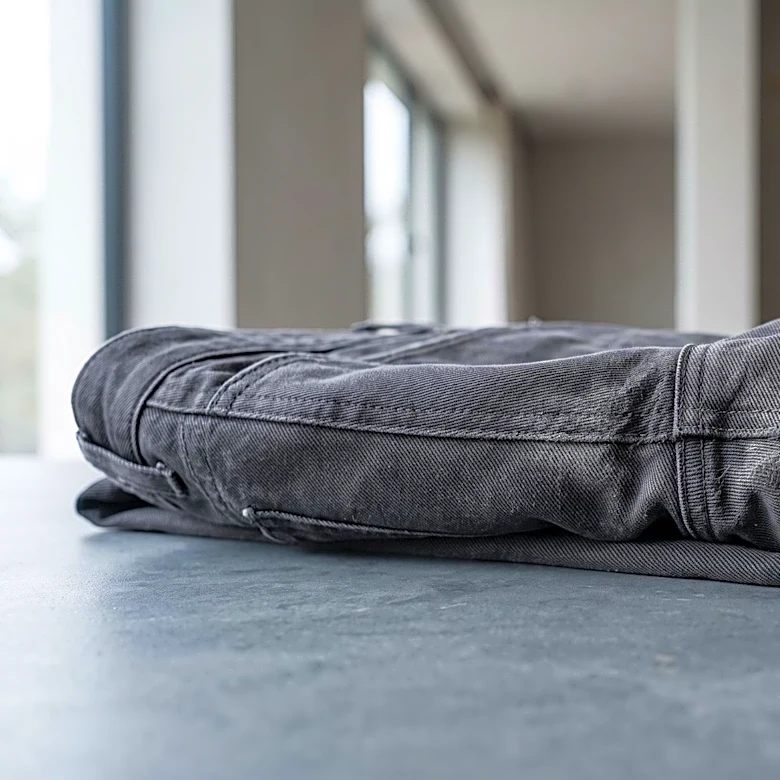
That instantly comfortable, slightly faded garment you just bought didn't get that way by chance. It underwent a finishing process called garment washing. Unlike pre-washing fabric before it's cut, garment washing happens after a piece of clothing is fully
sewn. This crucial final step uses a combination of water, softeners, and sometimes abrasive or chemical treatments to alter the garment's appearance, texture, and feel. The goal is to break down stiffness, achieve a desired aesthetic, and reduce future shrinkage, essentially fast-forwarding the breaking-in period so the item feels perfectly aged from the very first wear.
The Original Fader: Stone Washing
The classic 'worn-in' look, especially for denim, was pioneered by stone washing. The process is exactly what it sounds like: newly made garments are loaded into massive industrial washing machines along with porous pumice stones. As the drum tumbles, the stones physically abrade the fabric's surface, softening the material and scraping off some of the dye, particularly along seams and edges. This creates a vintage, faded appearance. However, this mechanical process can be harsh, thinning the fabric and sometimes causing damage. It also creates industrial sludge from the pulverized stone dust, which has environmental implications.
The Softer Touch: Enzyme Washing
As a more modern and gentle alternative to stones, many manufacturers now use enzyme washing. This technique uses cellulase enzymes—natural proteins that act as biological catalysts—to achieve a similar softening effect. Instead of physically scraping the fabric, the enzymes break down and remove the microscopic cellulose fibers on the very surface of the yarn. The result is a smoother, softer feel and a subtle, more uniform fade without the fabric stress caused by stones. Because enzymes are biodegradable and the process is more controlled, it's often considered a more sustainable and consistent method for achieving that lived-in feel.
The High-Contrast Look: Acid and Bleach Washes
For more dramatic and intentionally uneven fading, factories turn to chemical washes. The term 'acid wash' is a bit of a misnomer; the process doesn't typically use strong acids. Instead, it often involves soaking pumice stones in a bleaching agent, like potassium permanganate or chlorine, before tumbling them with dry or damp garments. The chemical-soaked stones create high-contrast, marbled patterns where they touch the fabric. After tumbling, the garments are thoroughly rinsed and neutralized to stop the chemical reaction. This method is all about achieving a specific, often nostalgic, visual effect rather than just overall softness.
More Than Just a Wash
Garment washing is part of a broader category called 'garment finishing', which includes any treatment applied after manufacturing to perfect the final product. Beyond washing, other techniques can contribute to the look and feel. Silicone softeners are often added during the final rinse cycle to give garments an exceptionally smooth, slick hand-feel. Resin finishes can be applied to help fabrics resist wrinkling. Sometimes, after a bleaching or fading process, garments are given a light 'tint' or 'over-dye' to add back a subtle color, giving them a dirtied or vintage-hued appearance. These finishing touches work together to create a specific, market-ready aesthetic.