
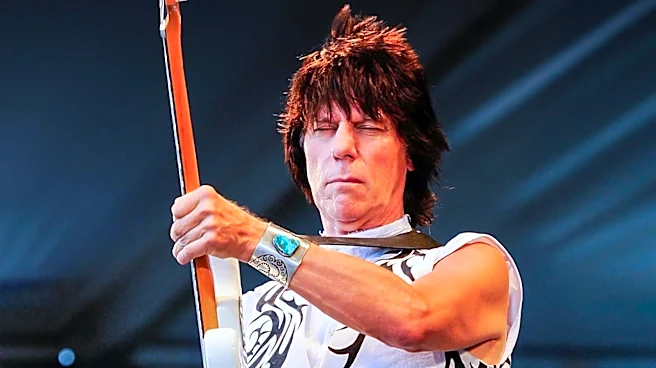
It Started in His Hands
Before any gear, the magic began with Hendrix's physical approach to the instrument. As a left-hander in a right-handed world, he famously took standard Fender Stratocasters, flipped them over, and restrung them. This wasn't just for looks; it created
a unique physical dynamic. The string tension was reversed, with the low E string having a tighter, snappier feel and the high E string being looser and easier to bend. This accidental alteration contributed to his signature vibrato and string-bending prowess. Furthermore, Hendrix was known for his large hands and use of his thumb to fret bass notes on the low E string, a technique borrowed from old blues players. This allowed his other four fingers to play chords and melodic fills simultaneously, blurring the line between rhythm and lead playing.
Taming (and Abusing) Technology
Hendrix didn't just use effects pedals; he treated them as an extension of the guitar itself. While others used the wah-wah pedal for a simple sweeping effect, Hendrix made it cry and talk. He pushed the Dallas Arbiter Fuzz Face pedal to its limits, creating a thick, woolly distortion that was both aggressive and warm. He was a master of manipulating the guitar's volume knob to clean up his signal or drive it into saturation. Then there was the Uni-Vibe, a pedal designed to emulate the sound of a rotating Leslie speaker. In his hands, it became the watery, psychedelic swirl heard on tracks like "Machine Gun." He treated these electronic boxes not as presets, but as untamed elements to be controlled in real-time, making his sound a constantly shifting, living thing.
The Amplifier as an Instrument
For most guitarists of the era, feedback was an unwanted nuisance to be avoided. For Hendrix, it was a tool. By turning his Marshall stacks up to incredible volumes, he could harness the sound of the strings vibrating in sympathy with the speaker cone. He learned to control this feedback, holding notes that would sustain into infinity or rise into screaming, harmonic overtones. This pioneering use of controlled distortion and feedback transformed the electric guitar from a simple amplified instrument into something capable of generating its own sonic weather system. He viewed the entire signal chain—guitar, pedals, and amp—as one unified instrument, mastering the dynamic relationship between them to produce sounds no one thought were possible.
The Secret Weapon: A Mad Scientist
A crucial part of Hendrix's sonic exploration was his collaboration with electronics engineer Roger Mayer. Mayer, who had a background in acoustics for the British Admiralty, became Hendrix's personal tone guru. He didn't just fix gear; he invented it. Mayer's most famous creation for Hendrix was the Octavia, a pedal that adds a note an octave higher than what's being played. This is the piercing, otherworldly sound that defines the guitar solos in "Purple Haze" and "Fire." Mayer worked directly with Hendrix, modifying and creating custom pedals to achieve the sounds Hendrix heard in his head. This bespoke approach to technology ensured that his sonic palette was truly his own, filled with effects that other guitarists simply couldn't buy off the shelf.
A Language of Blues and Psychedelia
Ultimately, the technology was just a vehicle for his musical ideas, which were rooted deeply in the American traditions of blues, R&B, and soul. Before he became a star, Hendrix paid his dues as a sideman for artists like Little Richard and The Isley Brothers. He absorbed the expressive string bends of B.B. King, the raw power of Muddy Waters, and the sophisticated chordal work of Curtis Mayfield. What made him revolutionary was his ability to take that foundation and launch it into the stratosphere of psychedelic rock. He fused the raw emotion of the blues with futuristic sounds, creating a vocabulary that was entirely new. The whammy bar swoops, feedback, and fuzz weren't just noise; they were an extension of the bluesman's cry, translated for the electric age.