




The Mountain of Raw Footage
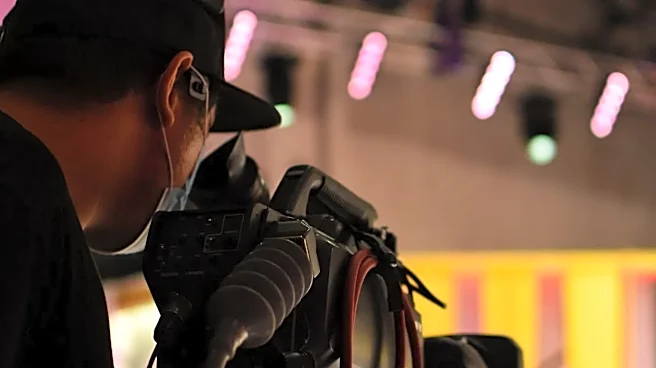
The first thing to understand about reality TV is the sheer volume of material. For a single 42-minute episode, cameras might run for hundreds, if not thousands, of hours. You’re capturing every meal, every whispered conversation, and every long, boring
silence in between. Airing this unedited would be unwatchable. The cast members might not follow a script, but the final product is far from a simple recording of events. It’s a construction project, and the architects are a specialized crew of creatives known as story producers. Their job is to find a compelling needle of narrative in a continent-sized haystack of footage.
Enter the Story Producer
On a scripted show, the writer creates the story before filming. On a reality show, the story producer finds the story after everything has been shot. While field producers may guide conversations or prompt cast members on location, the story producer works in post-production. They are the unsung authors of unscripted television. Their role is to sift through all the footage and transcripts, identify potential character arcs, pinpoint moments of conflict, and map out an emotional journey for the audience. They ask the fundamental questions of all storytelling: Who is the protagonist here? What do they want? And what’s standing in their way?
The 'Beat Sheet' Method
The core technique is deceptively simple and borrowed from traditional screenwriting: the beat sheet. Instead of scripting lines, story producers create an outline of emotional beats they want an episode to hit. An outline for a reality dating show episode, for instance, might look like this: 1. Introduce tension between two contestants. 2. A vulnerable confession during an interview. 3. A moment of comic relief. 4. A climactic argument. 5. A moment of resolution or a cliffhanger. With this emotional map in hand, story producers and editors then dive into the footage to find moments that fulfill each beat. They aren't inventing events, but they are curating and arranging them to create a specific emotional flow that feels like a classic three-act story.
Constructing Scenes and 'Frankenbites'
Once the key story beats are identified, the construction begins. A conversation that happened in the morning might be edited next to a reaction shot from that evening to create a cause-and-effect narrative that didn’t exist in real-time. This is where the controversial art of the “frankenbite” comes in. A frankenbite is an audio clip stitched together from different words or sentences, often taken from hours of interviews, to create a single, clean statement that pushes the story forward. For example, a contestant might say, “I’m really not sure... but I guess I wanna be... seen as a contender.” An editor might clip those words together to make them say, “I wanna be a contender.” While it can be used to clarify a muddled point, it can also be used to manufacture drama.
Why It Still Feels 'Real'
This process might sound like a cheat, but it’s why modern reality TV remains so compelling. The technique works because the raw materials—the emotions, the arguments, the core actions—are genuinely captured. Story producers aren’t creating fiction from whole cloth; they’re acting as sculptors, chipping away at a massive block of marble to reveal the statue within. By structuring the narrative around authentic emotional moments, even if they’re presented out of sequence or clarified with a frankenbite, the story resonates as true. The producers provide the coherence, but the cast provides the messy, unpredictable humanity that makes it all feel real. The result is a hybrid form of entertainment that delivers the satisfying payoff of a scripted story with the spark of genuine human behavior.