




The Choreographer’s Language
Choreography is more than just a series of steps; it's a language spoken with the entire body. Dancers use lines, shapes, and formations to tell a story or evoke an emotion. The space around them—the negative space—is just as important as the dancers
themselves. A choreographer might use a wide-open stage to convey freedom or a tight, clustered formation to create a feeling of claustrophobia. The genius of a piece often lies in the interplay between a soloist and the ensemble, the precise footwork that grounds a soaring leap, or a subtle gesture that ripples through a line of performers. To appreciate it, you have to see it. The whole picture, from head to toe and from one side of the stage to the other, is the canvas.
The Editor's Impulse
Filmmakers and video editors speak a different language. Their job is to create a rhythm that's purely cinematic. For decades, and especially since the rise of MTV, that language has become faster and more fragmented. The so-called "MTV style" relies on quick cuts, jarring angles, and a restless camera to generate excitement and hold the viewer's attention. This approach works wonders for action sequences or montages designed to convey a lot of information quickly. An editor cuts to a close-up to emphasize an emotion, a wide shot to establish a location, and a reaction shot to guide the audience's feelings. Their instinct is to dissect the moment, showing you exactly what they think is most important from second to second.
A Collision of Art Forms
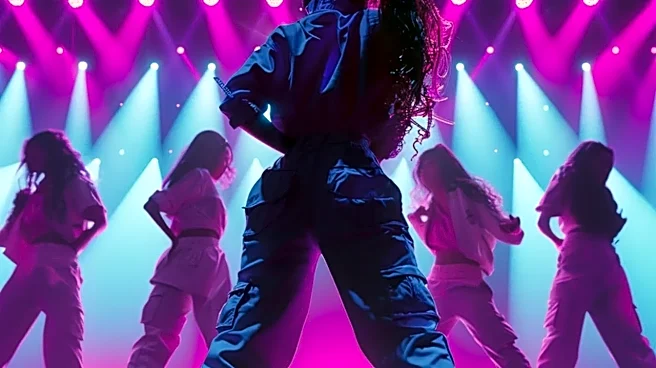
When the editor's impulse is applied carelessly to the choreographer's canvas, the result is often a mess. The frantic cutting that can make a car chase feel thrilling can make a dance number feel incomprehensible. Imagine a brilliant tap routine where the camera cuts to the singer's face just as the dancer's feet are executing a complex rhythm. The story of the dance is lost. Consider a powerful group number where the camera is so shaky and zoomed-in that you can't appreciate the beautiful, shifting patterns of the ensemble. You get the idea of energy, but you miss the artistry that created it. By constantly slicing up the performance into a flurry of disjointed close-ups—an arm here, a face there, a spinning torso—the camera robs the dance of its context, flow, and spatial integrity.
Getting It Right: The Astaire Method
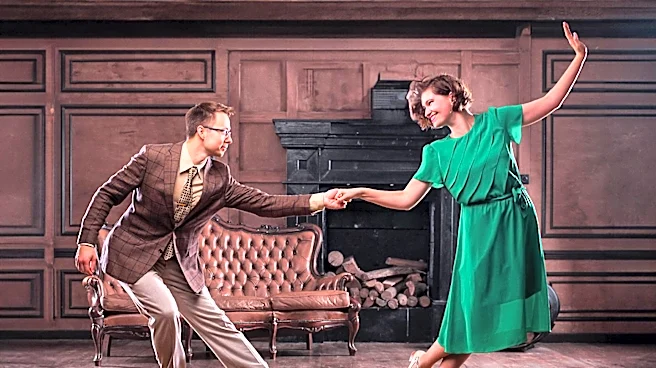
It doesn't have to be this way. The gold standard for filming dance was set decades ago by Fred Astaire. He famously insisted that his dance numbers be filmed with a stationary camera in long, uninterrupted takes. His rule was simple: the audience must see his entire body, from head to toe, at all times. Astaire understood that the magic of his performance was in its entirety—the effortless glide, the precise footwork, and the elegant posture working in perfect harmony. There were no quick cuts to manufacture excitement or hide mistakes. The energy came from the performance itself, not from the editing. Before Astaire, dance numbers in movies were often filmed with cutaways to the audience or close-ups of feet, never showing the whole performance. His insistence on capturing the complete dance was revolutionary, and for the first time, audiences applauded dance numbers in movie theaters.