






Let's Address the Soggy Reality
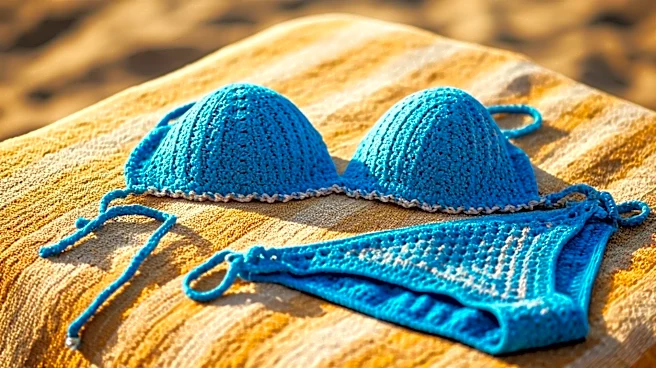
First, let's get the obvious out of the way. In a head-to-head battle with a standard nylon-spandex blend, traditional crochet swimwear loses on every practical metric. Most are made from cotton or similar natural fibers, which act like a sponge. Once wet, a crochet bikini can become heavy, misshapen, and begin to sag in ways that are both unflattering and slightly perilous. The drying time can be measured in hours, not minutes, leaving you in a damp, droopy state long after you’ve left the water. So if it fails at the primary function of modern swimwear—to perform well in and out of the water—why does it keep showing up on beaches, at pool parties, and all over your social media feed? Because it was never designed to compete in that arena.
The crochet swimsuit isn't sportswear; it’s a statement.
More 'Poolside' Than 'Pool'
The key to understanding the endurance of crochet swimwear is to reclassify it. Think of it less as an athletic garment and more as 'resort wear' or 'loungewear for the sun.' Its job isn't to help you achieve your best lap time; its job is to create a vibe. It’s the outfit for reading a book under an umbrella, sipping a drink at a cabana, or taking a golden-hour walk along the shore. The 'swimming' part of 'swimwear' is often optional in modern beach culture. For many, a trip to the pool or beach is a social event, a photo opportunity, or a chance to relax. In this context, aesthetics trump hydrodynamics. The crochet bikini sells a fantasy of a leisurely, sun-drenched life, and for that purpose, it’s perfectly designed.
The Irresistible Pull of Nostalgia
Fashion is cyclical, and crochet is inextricably linked to the free-spirited, bohemian aesthetic of the late 1960s and 1970s. It evokes images of Woodstock, folk singers, and a counter-culture movement that valued handcrafted, unique objects over mass-produced goods. Wearing a crochet piece connects the wearer to that legacy of artistic, earthy rebellion. Every time the '70s revival trend comes back—and it comes back often—crochet is right there with it. It feels personal, artisanal, and a little bit romantic. In a world of fast fashion and slick synthetics, the visible texture and intricate knot-work of a crochet piece offer a tangible sense of humanity and craft. It doesn't look like it came from a factory; it looks like it could have been made with love, and that story is a powerful one to wear.
Engineered for the Algorithm
If '70s nostalgia is the soul of crochet swimwear, Instagram is its modern-day engine. The style is incredibly photogenic. The unique texture adds depth and interest to images, catching the light in a way that flat fabrics can't. The intricate patterns and often-scalloped edges create a visually appealing silhouette that stands out in a crowded feed. It’s the perfect uniform for the aspirational influencer aesthetic, seamlessly fitting into scenes of Mediterranean vacations, desert music festivals like Coachella, and rustic beach bonfires. The impracticality for swimming becomes irrelevant when the primary goal is capturing the perfect shot. Its success on social media creates a feedback loop: the more it’s seen in beautiful, curated contexts, the more desirable it becomes, ensuring a new generation discovers it each summer.
A Few Modern Upgrades
While traditional cotton crochet remains the archetype, the industry has made some concessions to practicality. Many contemporary 'crochet' swimsuits aren't what they appear to be. Some are machine-made from synthetic yarns that mimic the look of crochet but repel water and hold their shape far better. Others are standard bikinis with crochet overlays or detailing, giving the aesthetic nod without sacrificing function entirely. You'll also find high-end versions lined with quick-drying, supportive fabric, offering the best of both worlds. These innovations help bridge the gap, allowing wearers to get the coveted look with a little less risk of a poolside wardrobe malfunction. It’s a quiet admission that while the vibe is paramount, a little bit of function doesn't hurt.