






The Anatomy of a Sneaker's Foundation
Before we get into the cracking, let's talk about the midsole itself. This is the layer of foam sandwiched between the upper part of the shoe and the rubber outsole that hits the pavement. Its job is cushioning and support. For decades, two main materials
have dominated the midsole game: EVA (Ethylene-Vinyl Acetate) and PU (Polyurethane). EVA is lightweight, soft, and flexible, making it a favorite for modern running shoes. PU, on the other hand, is a denser, heavier, and more durable foam. It's this second material, polyurethane, that is the main character in our story, especially when it comes to iconic retro sneakers from the '80s and '90s.
The Inevitable Crack: Polyurethane’s Fatal Flaw
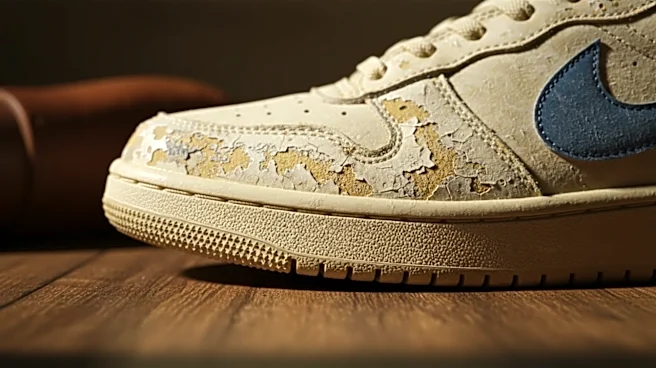
Many classic Air Jordans, like the 3, 4, and 5, were originally built with polyurethane midsoles. While PU is excellent at retaining its shape and cushioning over time, it has a well-known vulnerability: hydrolysis. Over many years, moisture in the air causes the PU to break down, leading to the infamous "crumbling" where the whole midsole can disintegrate. But the paint cracking is an earlier warning sign. The problem is one of mismatched flexibility. The paint applied to the midsole is inherently less flexible than the foam underneath it. Every time you take a step, the PU foam compresses and flexes. The rigid layer of paint on top can't keep up with this movement and, eventually, it develops stress fractures. This is why you can see cracks appear on a pair after just a few wears.
Paint vs. Pigment: A Tale of Two Midsoles
So why don't all sneakers have this problem? It often comes down to paint versus pigment. On many retro models with PU midsoles, the color is a literal coat of paint applied to the surface. In contrast, many shoes with EVA midsoles, like a lot of modern runners, use a different technique. The color is often a pigment mixed directly into the foam material itself. There is no separate layer to crack or peel. This is a more modern and often more durable approach to coloration, but it produces a different look. The sharp, clean, and often glossy finish of a painted PU midsole is a signature part of what makes those classic designs so visually appealing, even if it comes with this built-in fragility.
The Collector's Dilemma: Wear or Preserve?
This tendency to crack creates a cultural friction point for sneakerheads. On one hand, cracked paint is a badge of honor—proof that you're actually wearing and enjoying your shoes as they were intended. It tells a story of use. On the other hand, for collectors who value pristine, "deadstock" condition, a crack is a devastating flaw that diminishes value. Interestingly, not wearing the shoes can make the problem worse in the long run. Keeping a pair of PU-based sneakers locked away in a box can cause the midsole to stiffen and dry out, making a catastrophic crack or crumble more likely the first time they are finally worn.
Can It Be Fixed? The Art of Restoration
While you can't truly prevent the laws of chemistry and physics from taking their course, you can address the damage. The sneaker restoration community has turned midsole repainting into an art form. The process typically involves carefully stripping the old, cracked paint with a solvent like acetone, masking off the surrounding areas with precision, and applying multiple thin layers of flexible acrylic paint. Many restorers finish the job with a matte or satin clear coat to protect the new paint job. It’s a meticulous process, but for many, it’s a worthwhile effort to bring a beloved pair of sneakers back to life and keep them in rotation for years to come.