







The Two-Minute Promise
A movie trailer isn't just an advertisement; it's a promise. It promises action, romance, laughter, or terror. For a film opening on a major holiday weekend like July 4th—historically a peak time for families and casual moviegoers to flock to theaters—that
promise has to be crystal clear and incredibly persuasive. The stakes are enormous. A successful trailer can create overwhelming buzz and drive a massive opening weekend, while a confusing or unappealing one can doom a hundred-million-dollar film before it even premieres. This is why the creation of a trailer is one of the most scrutinized, debated, and psychologically complex processes in Hollywood.
The First Audience Isn't You
Long before a trailer is released to the public, it’s shown to a very different audience in a rented-out theater in Las Vegas or Burbank. These are focus groups, recruited to match the film's target demographic. Are they young males who want explosions? Or older females who want to see the emotional core of the story? The studio needs to know. Participants fill out questionnaires and are often interviewed about what they just saw. Did they understand the plot? Which character did they like? Were they confused? Did the music work? Every piece of feedback is data. This is the first, and perhaps most critical, battle for consensus: a small group of strangers whose reactions can force major changes to the final trailer.
War in the Edit Bay
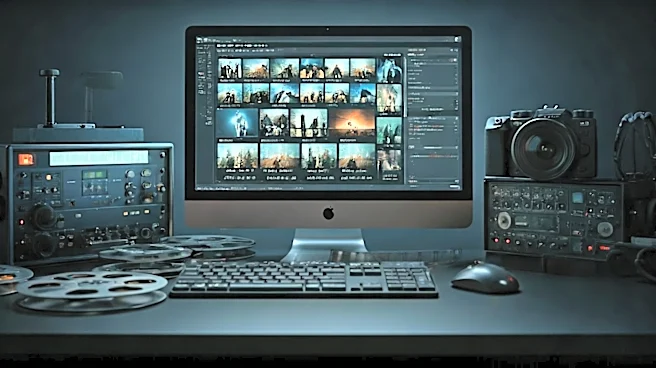
Contrary to popular belief, the film’s director rarely cuts the trailer. That job falls to specialized agencies called “trailer houses,” which act as the creative and strategic battleground. The studio’s marketing department will often send the film’s raw footage to several different trailer houses, each of whom will cut a competing version. One version might be a moody, atmospheric teaser. Another might be a fast-paced, action-packed montage. The director and producers might have their preferred version, but it’s the studio executives—focused on maximizing box office returns—who usually have the final say. This often leads to a creative tug-of-war where different visions for the movie compete, each trying to build a different kind of consensus about what the film is.
The Science of the 'Big Moment'
It’s not just about opinions anymore. Modern trailer testing is increasingly scientific. Studios can A/B test different versions of a trailer online, tracking which one gets more clicks, shares, and longer watch times. Some even use biometric feedback, tracking viewers' heart rates and eye movements to see which moments generate the biggest emotional spike. That powerful crescendo in the music, the perfectly timed title card reveal, the “money shot” that makes the audience gasp—these are rarely happy accidents. They are engineered moments, identified and refined through a rigorous process of testing and data analysis, all in the service of finding a universally understood and irresistible hook.
One Trailer to Rule Them All
For a big July 4th release, a studio wants to appeal to everyone. They need to convince the action junkie, the hopeless romantic, the comedy fan, and the family of four to all buy a ticket for the same movie. This is the ultimate challenge of group consensus. A trailer might have a version for each demographic: an action-heavy cut for sports broadcasts and a romance-focused one for prime-time dramas. The final theatrical trailer that plays before another blockbuster is the grand synthesis—the version that testing proved has the broadest possible appeal. It’s an intricate Frankenstein's monster of storytelling, stitched together from dozens of creative arguments, conflicting focus group notes, and reams of analytical data.