









First, What Is Offside Anyway?
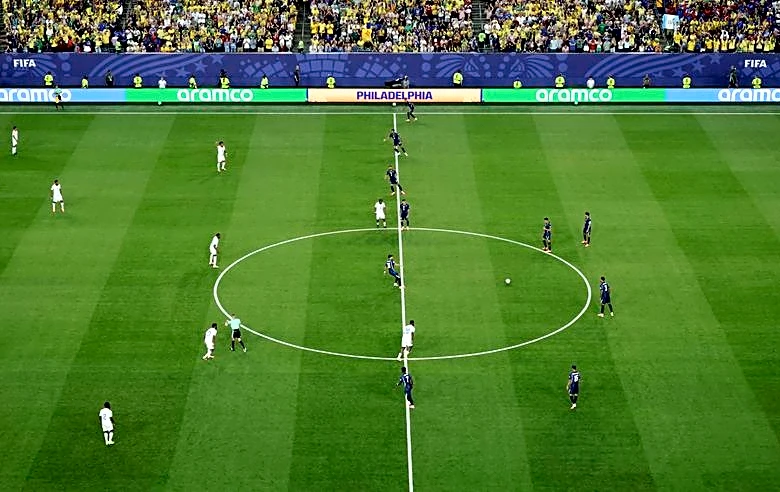
Let’s boil it down. The offside rule exists to prevent “goal-hanging”—players just camping out in front of the opponent's goal waiting for a long pass. In simple terms, an attacker is in an offside position if they are closer to the opponent's goal line
than both the ball and the second-to-last defender when the ball is played to them. The last defender is almost always the goalkeeper, so it’s really about being behind the last outfield defender. You can’t be offside in your own half of the field, and it only matters at the exact moment your teammate kicks the ball forward to you. Being in an offside *position* isn't an offense; you have to become actively involved in the play for the referee to blow the whistle. Simple, right? Except judging this in real-time, with bodies moving at full speed, is incredibly difficult.
The Old Way: A Fuzzy Line and an Argument
For decades, judging offside was a job for the assistant referee’s naked eye. They would sprint along the sideline, trying to simultaneously watch the player kicking the ball and the defensive line. On TV, broadcasters tried to help by drawing a 2D line across the field during replays. The problem? It was often just an educated guess. Depending on the camera angle, a player might look offside when they were on, or onside when they were off. The perspective could be deceiving. This led to endless arguments. Was the line drawn from the defender’s toe or his shoulder? Was that the exact frame the ball left the passer’s foot? It was a system built on subjectivity, guaranteeing controversy and leaving casual fans utterly bewildered.
The 'Broadcast Detail': Semi-Automated Offside Tech
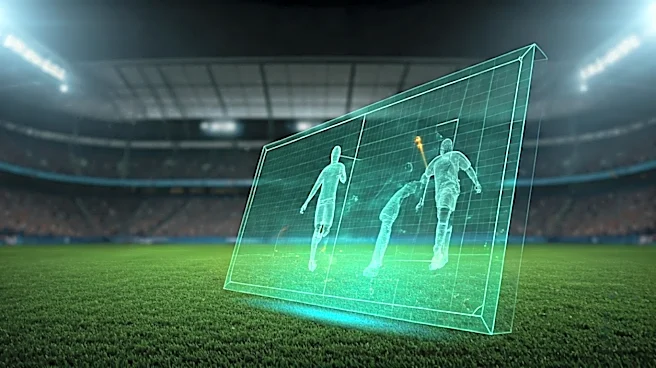
The futuristic animation you now see during major tournaments like the World Cup is the solution to that old problem. It's the public-facing part of a system called Semi-Automated Offside Technology (SAOT). It’s not just a fancy graphic; it’s a data-driven verdict. Here’s how it works: Multiple specialized cameras mounted under the stadium roof track up to 29 data points on every player’s body, creating a real-time, 3D skeletal model. Simultaneously, a sensor inside the match ball sends out a signal 500 times per second, pinpointing the exact moment of every kick. An AI system processes all this information instantly. When a potential offside occurs on a goal, the system alerts the video assistant referees (VAR), who then validate the call before informing the on-field ref.
How the 3D Animation Makes It All Clear
This is the magic. The broadcast graphic you see isn’t an artist’s rendering; it's a visualization of the data the AI collected. It freezes the moment of the kick—the single most important point in time for an offside decision. It then shows the 3D models of the relevant attacker and defender. The system automatically identifies the body part of each player (excluding hands and arms) that is furthest forward. It then draws the definitive offside and onside lines on the field, showing with millimeter accuracy whether the attacker was ahead. There’s no more arguing about camera angles or when the ball was kicked. The animation shows the kick-point, the players' positions, and the final verdict in a clear, easy-to-digest package. It turns a moment of high-speed chaos into a clear-cut geometric problem.