





Everybody Digs Bill Evans (2026)
Let's start with the most direct connection. This biographical drama isn't a straightforward cradle-to-grave story, but a focused, atmospheric portrait of Evans during a period of intense grief and creative block. After the sudden death of his brilliant
bassist Scott LaFaro in 1961, Evans was so devastated he stopped playing for nearly a year. Directed by Grant Gee, the film uses a hazy, dreamlike style to capture the pianist's inner world, focusing on mood over plot. Shot partly in black-and-white, it mirrors the noir-ish feel of the early '60s New York jazz scene. It's a film about what happens when the music stops, making it a challenging but essential watch for anyone who wants to understand the soul behind those iconic recordings.
‘Round Midnight (1986)
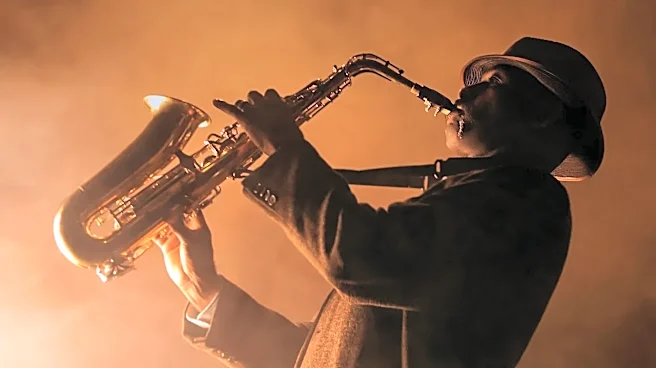
If you want to feel what it was like to live inside the world that created the music Bill Evans played, this is your movie. Directed by Bertrand Tavernier, it stars legendary saxophonist Dexter Gordon (in an Oscar-nominated role) as Dale Turner, an aging, alcoholic American jazzman finding a brief period of revival in Paris. The film is less about plot and more about atmosphere, soaking in the smoky clubs, the late-night conversations, and the fragile beauty of the music itself. While the main character is a sax player, the film’s tone of profound melancholy and its exploration of the artist's struggle perfectly capture the spirit of Evans' more somber recordings. It’s a love letter to jazz, and its bittersweet feeling will be instantly recognizable to any Evans fan.
In the Mood for Love (2000)
This film has almost nothing to do with jazz, but everything to do with the feeling of a Bill Evans trio. Wong Kar-wai’s masterpiece is a study in quiet longing, missed connections, and unspoken emotions. Set in 1960s Hong Kong, it follows two neighbors who discover their spouses are having an affair. As they form a bond, their relationship remains elegantly restrained, conveyed through stolen glances, near-touches, and shared meals. The film's visual language—rich, saturated colors, slow-motion shots, and a haunting, repetitive score—creates a sense of beautiful melancholy. It’s the cinematic equivalent of Evans’ ability to express deep, complex feelings with just a few perfectly chosen notes. It’s a film about the space between words, which is exactly where Evans’ music lives.
Cold War (2018)
Shot in stunning, high-contrast black and white, Paweł Pawlikowski’s film tells the story of a turbulent, decades-long love affair between a musician and a singer in post-war Poland and Paris. Music is the thread that holds their story together, from Polish folk tunes to the smoky jazz clubs of Paris, where the characters find a fleeting sense of freedom. The film’s aesthetic is sharp, cool, and impeccably stylish, but beneath the surface is a raw, passionate, and often heartbreaking story. The use of jazz in the Parisian scenes feels particularly vital, representing a world of improvisation and emotion that contrasts with the rigid conformity of the Eastern Bloc. Its blend of cool aesthetics and intense passion makes it a perfect pairing for an Evans marathon.
Paterson (2016)
Jim Jarmusch’s quiet, meditative film is arguably the most unconventional choice here, but it might be the purest distillation of the Evans ethos. The film follows one week in the life of a bus driver named Paterson, who writes poetry in his spare time. Nothing much happens—he drives his bus, walks his dog, has a beer at his local bar, and observes the small details of life in his city. The film moves with a gentle, lyrical rhythm, finding profound beauty in the mundane. This is the core of the Bill Evans appeal: a quiet, introspective art form that doesn't need to shout to be heard. The film celebrates the quiet creativity and internal world of an everyday artist, mirroring the understated genius of a pianist who could turn a simple standard into a deeply personal statement.