





The Deceptive Art of Covering a Button
At first glance, a covered button seems simple. It's a small dome wrapped in the same fabric as the garment, creating a seamless, harmonious look. Unlike a bold, gold-toned piece of hardware designed to catch the eye, its purpose is to blend in. But achieving
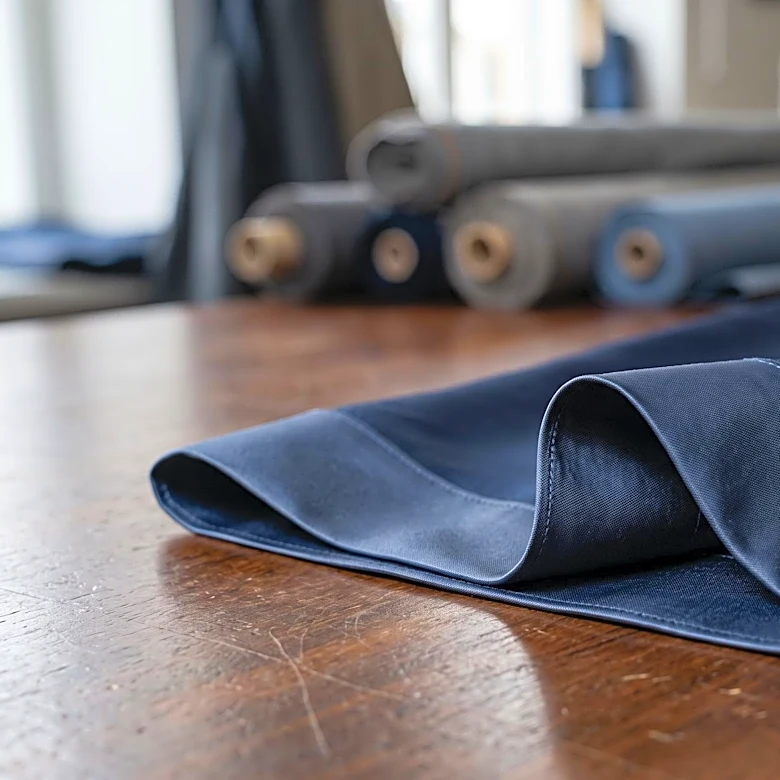
that seamlessness is a multi-step process where tiny errors have a big impact. The process starts with the fabric itself. It must be cut perfectly, often on a specific grain, to prevent stretching or distortion. If the fabric has a pattern—like a stripe or a plaid—it must be centered with exacting accuracy. An off-center pattern on a tiny button is a glaring mistake that signals mass-produced carelessness, not bespoke quality. Even the thickness of the fabric matters; a material that's too bulky will bunch and pucker, while one that's too sheer might reveal the metal or plastic shell underneath.
An Exercise in Flawless Execution
Once the fabric is cut, it is meticulously gathered and stretched over a button shell, which is usually a small metal or plastic form. This step requires careful tension control. Pull too tightly, and the fabric may tear or warp; too loosely, and the surface will look wrinkled and unprofessional. The goal is a perfectly smooth, taut dome. After the fabric is secured, the backplate is snapped into place, often with a specialized tool. Every button in a set must be identical in tension and alignment. Once created, the button must be attached to the garment. In high-quality construction, this isn't a simple case of stitching it on. A thread 'shank' is often created, which is a stem made of wrapped thread that allows the button to stand slightly away from the fabric. This provides space for the buttonhole fabric to sit comfortably underneath without pulling or causing stress. The placement of each button must be mathematically perfect, as any deviation in a row of tiny, matching buttons is immediately obvious.
Statement Hardware's Different Challenge
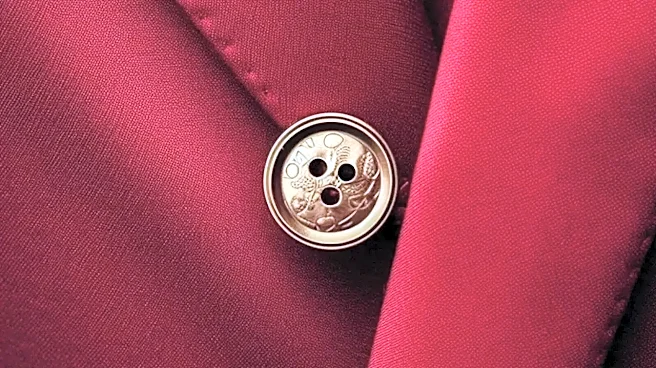
In contrast, statement hardware—like a large metal toggle, an ornate clasp, or a chunky decorative button—operates under a different set of rules. Its primary role is to be a focal point. While it certainly requires skill to attach securely, the process is often more forgiving. Many large pieces of hardware are attached with prongs, screws, or sturdy shanks that are mechanically pressed or sewn on. Their larger size can actually help mask minor imperfections in placement. A button that's a millimeter off-center is hard to spot when it's two inches wide, but on a 1-centimeter covered button, that same error is a critical failure. Furthermore, statement hardware is designed to be seen, and its character often comes from its inherent material qualities—the patina of metal, the gloss of enamel, the texture of carved horn. Its precision is in its manufacturing, not necessarily its application.
A Telltale Sign of Quality
Ultimately, the choice between a covered button and statement hardware is a design decision. But the presence of perfectly executed covered buttons is a powerful signal of a garment's quality. It tells you that the maker prioritized subtlety and cohesion over overt decoration. It shows they invested time and skill in a detail that many might overlook, understanding that true luxury is often found in the quiet, perfectly executed elements. While a bold clasp can define a coat's personality, a row of flawless covered buttons speaks to its soul. It's a testament to the idea that in craftsmanship, the smallest things are often the biggest things.