




The Problem of 11
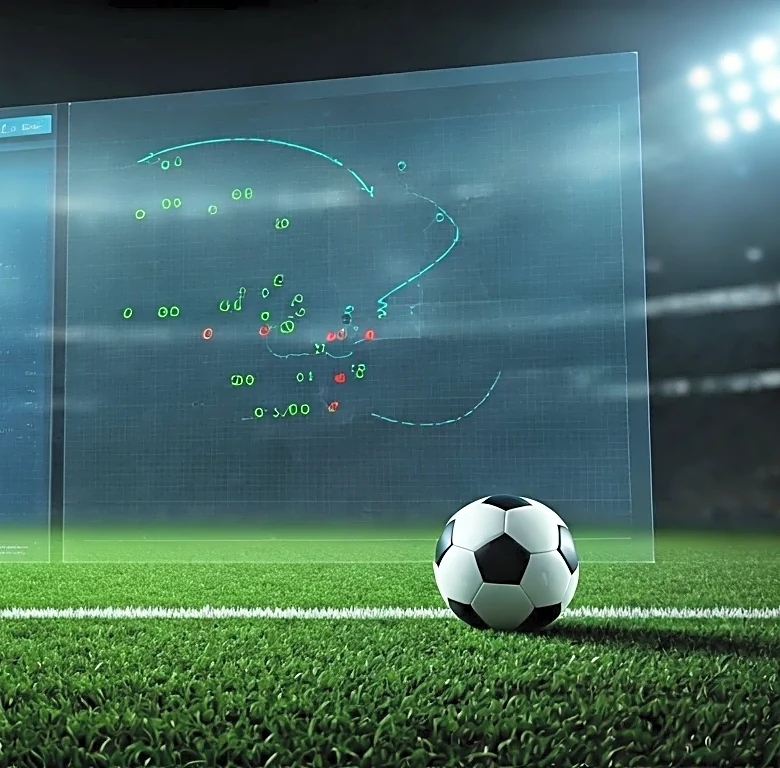
At its core, a soccer manager’s job is to solve a geometry problem: how to use 11 players to control 7,140 square meters of grass against 11 opponents trying to do the same. Every formation you’ve ever heard of—the 4-4-2, the 4-3-3, the exotic 3-5-2—is
simply a proposed solution. It’s a starting point, a blueprint for how a team will manage the fundamental tension of the game: you can’t attack and defend everywhere at once. The “tactical math” isn’t calculus; it’s a constant series of trade-offs. Pushing an extra player into the attack means leaving a gap in defense. Packing the midfield to control possession might leave your lone striker isolated. A manager isn’t just picking their best 11 players; they are picking the 11-player system that gives them the best chance to impose their will on the game while mitigating risk.
Formations Aren't Rigid Shapes
New fans often get hung up on the numbers of a formation, imagining players locked into rigid positions. The reality is far more fluid. A 4-3-3 is less about four defenders, three midfielders, and three forwards standing in a line than it is about creating triangles all over the pitch. These triangles give the player with the ball multiple passing options, making it difficult for the defense to cover everyone. In the modern game, a team’s shape in attack is often completely different from its shape in defense. A team might look like a 4-3-3 when they have the ball, with wing-backs bombing forward to provide width. But the second they lose possession, they might snap back into a compact 4-5-1, creating two defensive banks of players that are incredibly difficult to break down. The best teams are tactically flexible, morphing their shape based on the phase of play.
The High-Stakes Bet of the Press
One of the biggest tactical shifts in modern soccer is the emphasis on “pressing”—the act of aggressively trying to win the ball back immediately after losing it, high up the pitch. This isn't just mindless chasing. A well-coordinated press is a high-risk, high-reward gamble. The reward? You can win the ball close to the opponent’s goal, catching their defenders out of position for an easy scoring chance. The risk? It’s physically exhausting and requires incredible discipline. If one player fails to do their job, the opposition can easily pass through the press and find acres of open space to attack your exposed back line. This is why you see different pressing strategies. Some teams, like those managed by Jürgen Klopp or Pep Guardiola, favor a relentless “high press.” Others prefer a “mid-block” or a “low block,” sitting deeper, staying compact, and daring the opponent to find a way through their organized defense.
World Cup Math is Different
Club soccer, played over a 38-game season, is about finding the most efficient system for winning over the long haul. The World Cup is a different beast entirely. It’s a sprint, not a marathon. In a knockout tournament, one mistake can end your entire campaign. This unique pressure often leads to a more conservative brand of tactical math. Managers have very little time to drill complex attacking patterns, so they often prioritize defensive solidity first. A team that doesn’t concede goals can’t lose in 90 minutes. They can always hope to survive, get to a penalty shootout, or steal a goal from a set piece or a moment of individual brilliance. This is why you often see underdog nations find success by defending with discipline and organization, frustrating more talented opponents. In the crucible of the World Cup, a solid defense and a coherent plan often weigh more than a roster full of superstars without a system.