



Start with the Barrel Material
The first and most important decision is matching the barrel material to your hair's health and texture. Ceramic irons are the go-to for most people, especially those with fine, fragile, or damaged hair. They provide gentle, even, and consistent heat
that styles hair from the inside out, minimizing the risk of scorching. If you have thick, coarse, or hard-to-curl hair, a titanium iron is your best bet. Titanium heats up incredibly fast and holds high temperatures steadily, allowing it to tame stubborn hair efficiently. Then there's tourmaline, which is often a coating added to ceramic or titanium barrels. Tourmaline is a frizz-fighting superhero; it releases negative ions when heated, which seal your hair's cuticle to lock in moisture and create a smooth, glossy finish. For fine or frizz-prone hair, a tourmaline-ceramic iron is an excellent choice.
Choose a Barrel Size for Your Desired Style
The size of the barrel dictates the shape and tightness of your curl. It’s a common mistake to buy the wrong size and wonder why your hair doesn't look like you envisioned. For tight, defined ringlets or for styling short hair, a smaller barrel between 3/4-inch and 1-inch is ideal. The 1-inch barrel is the most versatile and a great starting point if you're unsure, as it can create everything from classic curls to more relaxed waves on most hair lengths. If you want looser, softer curls or beachy waves, opt for a larger barrel, such as 1.25-inch or 1.5-inch. These sizes are perfect for medium to long hair and create a more voluminous, lived-in look. Barrels that are 2 inches or larger won't create distinct curls but are excellent for achieving a bouncy, blown-out effect with soft bends.
Insist on Adjustable Heat Settings
A curling iron with only an on/off switch is a recipe for hair damage. The ability to control the temperature is non-negotiable for protecting your hair. Different hair types require different levels of heat. If you have fine, color-treated, or chemically damaged hair, you should use a lower temperature, generally staying below 300-320°F to prevent damage. Normal, healthy hair can typically handle temperatures between 300°F and 380°F. For thick, coarse, or particularly resistant hair, a higher setting between 350°F and 450°F may be necessary to lock in a style. Using a tool with a clear digital display takes the guesswork out of it, ensuring you're applying the right amount of heat for your hair's needs. Remember, you can always start lower and increase the temperature if your curls aren't holding.
Consider the Tool's Shape and Features
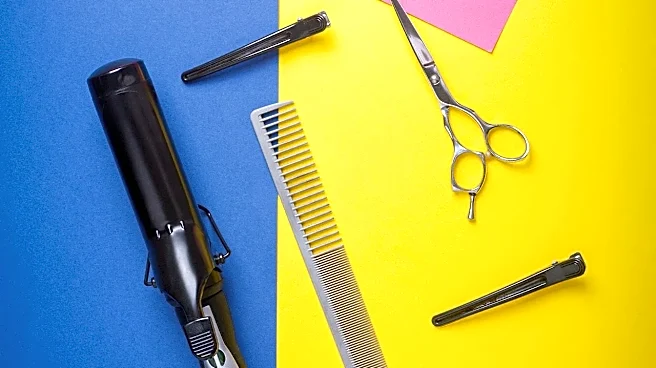
Beyond the standard cylindrical iron with a spring-loaded clamp, you'll find other designs. Curling wands, which are clipless barrels, create more natural, tapered waves because there's no clamp to create a kink at the ends. Marcel irons, which have a manual clamp instead of a spring, offer greater control and are often favored by professionals but have a steeper learning curve. You might also see specialty shapes like cone-shaped barrels (for curls that are tighter at the ends and looser at the root) or double and triple-barrel wavers (for creating uniform, mermaid-style waves). Finally, look for quality-of-life features. An automatic shut-off function provides peace of mind, a long, swivel cord prevents tangling and makes maneuvering easier, and a cool tip gives you a safe place to hold the iron for better control.