




An Idea Born at Lunch
The seed for WALL-E was planted at a now-legendary Pixar lunch meeting in 1994. While working on 'Toy Story,' the studio's brain trust, including John Lasseter, Pete Docter, and a young Andrew Stanton, brainstormed future projects. Amid ideas that would
become 'A Bug's Life' and 'Monsters, Inc.,' Stanton threw out a simple, haunting question: 'What if mankind had to leave Earth and somebody forgot to turn off the last robot?'. The image of a lonely, Robinson Crusoe-like machine, dutifully compacting trash on a dead planet, was instantly compelling. It was a character concept before it was a story, but the idea stuck with Stanton for years. However, the initial pitch was deemed too unconventional, and the studio wasn't yet confident enough to gamble on a movie with so little dialogue.
The Character Conundrum
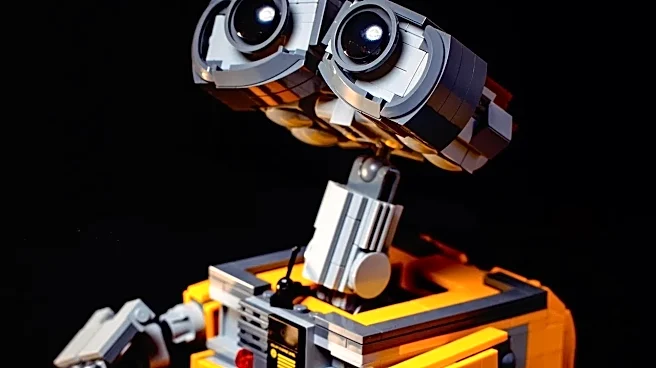
The central reason WALL-E languished was the immense challenge of its protagonist. How could a trash-compacting box, with no face and no voice, carry a feature film? Stanton and his team knew they didn't want to just stick a human voice in a robot body. The goal was to make the audience believe in the machine's soul through its actions and mechanical sounds alone. This was a huge creative risk. For years, the project, initially called 'Trash Planet,' was stuck because they couldn't crack how to make WALL-E empathetic. The breakthrough came from an unexpected place: a pair of binoculars. While at a baseball game, Stanton became fascinated with how the binoculars' lenses could convey emotion, and he decided WALL-E's expressive, binocular-like eyes would be the key.
A Story Without a Second Act
Even with a compelling lead, the story itself was a puzzle. The first act, showcasing WALL-E's lonely existence, came together relatively easily for Stanton. But where could the story go from there? An early, abandoned concept had WALL-E inciting a 'Spartacus'-style robot rebellion against humanity, who had devolved into cruel, gelatinous alien-like beings called Gels. This version was eventually scrapped for feeling too dark and weird. The story only found its heart when Stanton decided the core of the film should be a love story—the opposite of loneliness. This led to the creation of EVE and shifted the narrative from a simple sci-fi tale to a romance that could carry the audience through the stars.
The Sound of Silence
A nearly silent film from a major studio was a tough sell. Stanton initially considered making the entire film without spoken English, but realized it would become a burden on the audience once the action moved to the Axiom spaceship. The solution was to find a master of non_verbal storytelling: sound designer Ben Burtt, the genius behind R2D2's voice. Burtt was tasked with giving WALL_E a 'voice' that felt mechanical yet full of personality. He experimented by processing his own voice through a complex computer program, intentionally using the 'glitches' and 'artifacts' to create WALL_E's unique, emotive language. This sound design, combined with the animators' focus on body language inspired by silent film stars like Buster Keaton, finally gave the little robot the soul he needed to win over audiences.