
The Common Misconception
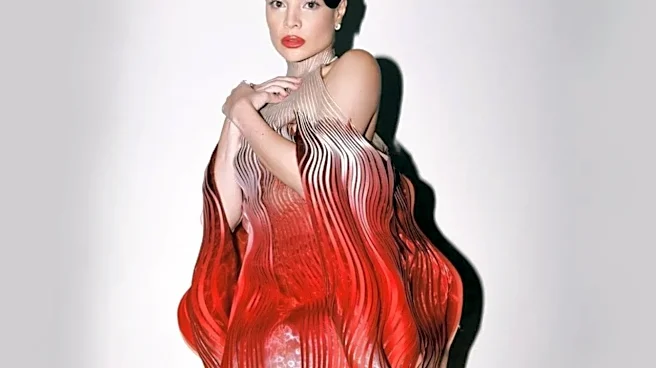
Scroll through images of avant-garde fashion, and it’s easy to equate “sculptural” with “big.” We see ballooning trousers, spherical skirts, and sleeves that seem to have their own gravitational pull. The immediate impression is one of sheer volume—of
designers adding more and more fabric until a garment becomes a statement piece. But this view misses the point entirely. While some designs do rely on massive amounts of material, true sculptural dressing is an art of engineering, not excess. It treats the human body as a starting point to be reshaped, reinterpreted, or even abstracted, much like a sculptor approaches a block of marble. The goal isn't just to be large, but to create a specific, intentional form that stands on its own. It's about structure, angles, and negative space, often achieved with surprising economy.
The Hidden Genius of Pattern Cutting
So, if not just volume, what’s the secret? It lies in pattern cutting—the process of creating the 2D templates that are pieced together to form a 3D garment. Think of it as the blueprint for clothing. In standard fashion, a pattern is designed to fit the curves of the body. In sculptural fashion, the pattern is designed to create new curves, angles, and structures that stand away from the body. This is achieved through advanced techniques. Darts become deeper and more deliberate, shaping fabric into cones and curves. Seams are placed in unconventional ways to create tension and support. Some designers even invent entirely new methods, like Issey Miyake’s revolutionary “garment pleating,” where clothes are cut and sewn first, then heat-pressed into permanent, architectural pleats. This is where fabric choice becomes critical; materials like stiff gazar, bonded wool, or technical polyesters are chosen for their ability to hold a shape.
Masters of Architectural Form
Certain designers have built their legacies on this architectural approach. Rei Kawakubo of Comme des Garçons is perhaps the most famous, consistently challenging the very idea of a human silhouette. Her 1997 “Body Meets Dress, Dress Meets Body” collection, with its padded “lumps and bumps,” forced viewers to reconsider the relationship between a garment and the person inside it. Yohji Yamamoto’s work often uses voluminous black fabric, but its power comes from masterful draping and wide-legged tailoring that creates a distinct, flowing outline. The late Alexander McQueen was trained as a pattern cutter on Savile Row, and his understanding of classic tailoring allowed him to deconstruct and rebuild historical shapes into dramatic, sculptural forms. These designers don’t just make clothes; they build them, using fabric as their primary construction material.
Volume vs. Structure
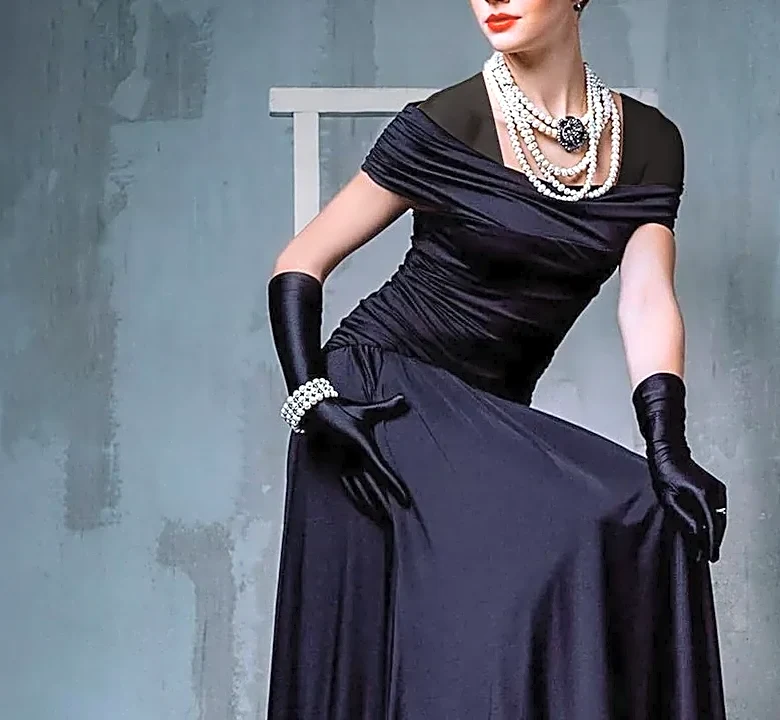
To truly grasp the concept, it helps to contrast pure volume with pure structure. Think of a classic, frothy ballgown. It achieves its size through layers upon layers of tulle and crinoline—it's essentially padding. The shape is impressive but relatively simple. Now, picture a Rick Owens jacket with its sharp, jutting shoulders and geometric draping. The form is achieved not by adding stuffing, but by the precise cut of the fabric panels and the way they are seamed together. The first is about filling space; the second is about defining it. One creates a soft, romantic cloud, while the other creates a powerful, assertive silhouette. Sculptural fashion changes how the wearer moves and occupies a room, transforming their body into a piece of living art. It’s an intellectual exercise in form and function, where every line and seam has a purpose.