


The Foundation: Where the Seam Should Sit
The single most important rule for jacket fit is simple: the shoulder seam should end precisely where your natural shoulder ends. Think of the shoulder as the hanger for the rest of the garment. If that hanger is too wide or too narrow, everything else
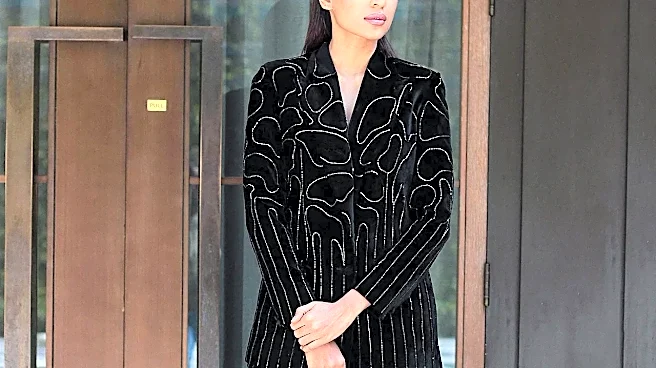
will drape incorrectly. When you're trying on a jacket, stand naturally and look in a mirror. The seam that connects the sleeve to the body of the jacket should create a clean line right at the edge of your shoulder bone. Getting this one point of alignment correct is the foundation of a jacket that looks polished and intentional, rather than like a last-minute addition.
The Telltale Signs of a Poor Fit
Once you know where the seam should be, it’s easy to spot the two most common fit problems. If the jacket's shoulders are too wide, the seam will droop over the edge of your arm, creating a soft, unkempt look often called "shoulder sag." Conversely, if the shoulders are too narrow, you'll feel pinching, and the fabric may pull or create a divot just below the shoulder pad. This happens because your own shoulder is pushing the sleeve head out beyond the intended structure. A quick way to test for an oversized shoulder is to stand next to a wall; if the jacket's shoulder pad hits the wall before your actual shoulder does, it's too big. Of all potential alterations, changing the shoulder width is one of the most difficult and expensive, so it’s critical to get it right from the start.
From Shoulder to Sleeve: The Clean Line
A perfectly placed shoulder pad does more than just define the shoulder; it ensures the sleeve hangs correctly. From that perfect seam placement, the fabric of the sleeve should fall in a clean, straight line without any puckering, twisting, or divots at the sleeve head. This smooth transition is what tailors work so hard to achieve. A well-set sleeve hangs cleanly, allowing for a natural range of motion without the jacket pulling awkwardly across your back or chest. If you see bunching or pulling right where the sleeve meets the body, it’s a sign that the shoulder construction isn't quite right, which can disrupt the entire silhouette of the jacket.
It’s About Shape, Not Just Size
Modern shoulder pads aren't the bulky, aggressive squares of decades past. Today, their purpose is to provide subtle structure and shape, not overwhelming volume. A good shoulder pad should give the jacket a clean, defined line, effectively filling the small space between your body's natural slope and the horizontal line of the jacket. It creates a subtle platform that allows the fabric to drape perfectly. When you're examining a jacket, the shoulder should feel firm but not hard. It's there to support the garment's shape and create a polished silhouette, ensuring the jacket looks tailored and intentional, not soft and shapeless like a cardigan.
What About Intentional Oversized Looks?
Of course, fashion loves to break its own rules. The rise of oversized and relaxed-fit blazers seems to contradict the idea of a perfectly fitted shoulder. However, the principle of intentionality still applies. A well-designed oversized jacket is constructed with a deliberately dropped shoulder, and the rest of the garment is cut to balance those proportions. It doesn't look like a mistake; it looks like a conscious style choice. The difference is in the overall design. A truly oversized jacket will have other proportional adjustments, like a longer body or wider sleeves, that make the look feel cohesive. A jacket that's simply a size or two too big, on the other hand, will just look sloppy, with the shoulder being the most obvious giveaway.