






The Overlooked Breakthroughs
Long before he stepped into J. Robert Oppenheimer's shoes, Cillian Murphy was turning in lead performances that felt Oscar-worthy but never made the final ballot. His harrowing turn in Danny Boyle’s 2002 zombie-genre reinvention, 28 Days Later, earned
him breakthrough attention but was ultimately too genre-focused for the Academy. Then came Ken Loach’s The Wind That Shakes the Barley in 2006. The film won the prestigious Palme d'Or at the Cannes Film Festival and earned Murphy a Best Actor nomination at the European Film Awards, yet it was completely shut out of the Oscars. Similarly, his role as a physicist on a mission to reignite the sun in Boyle’s 2007 sci-fi thriller Sunshine was praised for its restrained intensity—a precursor to his Oppenheimer performance—but failed to capture awards season attention in the U.S. These roles cemented him as an actor's actor, but left fans wondering what it would take for him to get his due.
A First Taste of Recognition
While an Oscar nomination remained elusive, other awards bodies began to take notice. His role as a transgender woman in 2005's Breakfast on Pluto landed him his first Golden Globe nomination, a significant step into the mainstream awards conversation. He became a reliable and compelling presence in major films, particularly through his collaborations with Christopher Nolan, appearing in The Dark Knight trilogy, Inception, and Dunkirk. Yet, these were often supporting roles that, while memorable, kept him on the periphery of the Best Actor race. For years, he was consistently excellent, a celebrated performer who nonetheless seemed destined to be honored more by critics and cinephiles than by the Academy itself.
The 'Oppenheimer' Moment
The announcement that Murphy would lead a Christopher Nolan epic was a turning point. The role of J. Robert Oppenheimer was the kind of transformative, historical performance that the Academy often rewards. As awards season began, Murphy quickly became the frontrunner, sweeping the Golden Globes, BAFTAs, and Screen Actors Guild Awards. But it wasn't a completely open field. Paul Giamatti's performance in The Holdovers was seen as a major challenger, creating a tight race in the run-up to the ceremony. Giamatti, beloved and long-overdue for a lead actor win, represented a real possibility of an upset. The narrative of the race was often framed as a head-to-head competition between the two respected actors. Other nominees included Bradley Cooper for Maestro, Colman Domingo for Rustin, and Jeffrey Wright for American Fiction.
A Win Decades in the Making
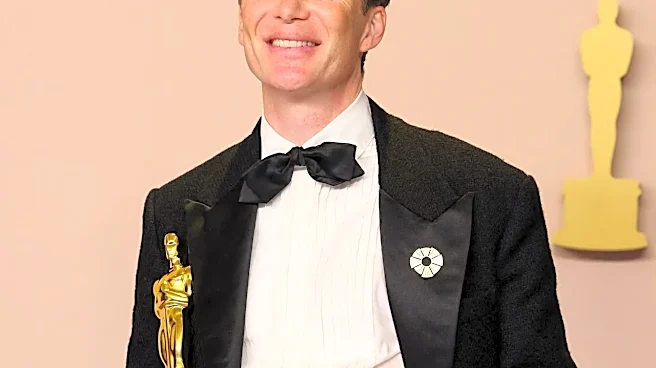
When Cillian Murphy’s name was finally called, it marked his first-ever Oscar nomination and first win. He became the first Irish-born performer to win the Best Actor award. The victory was seen not just as a reward for a single performance, but as a career achievement award for two decades of consistently brilliant work. The snubs for films like The Wind That Shakes the Barley and Sunshine were suddenly recast as part of the journey. The win felt both inevitable and hard-won, a validation that had almost gone to others in previous years simply because the right role hadn't aligned with the Academy's preferences. It was a classic Hollywood story: the respected character actor finally getting the lead role of a lifetime and taking it all the way to the industry's highest honor.