






The Great Wide Open Is Not Your Friend
In an indoor concert hall or arena, audio engineers have an advantage: walls, a ceiling, and a floor. These surfaces reflect sound, helping to contain and reinforce it, making the room feel loud and full. Outdoors, at a sprawling venue like Zilker Park,
there's nothing. Sound leaves the speakers and just… goes. It dissipates into the sky, meaning every ounce of energy the audience hears must come directly from the speaker system. There are no reflections to help carry the sound, which forces engineers to use significantly more powerful systems just to achieve the same perceived volume as an indoor show. This is especially true for low-end frequencies; bass has a tendency to feel thin and weak in an open field without careful management.
Fighting a Four-Letter Word: Wind
Of all the variables, wind is the audio engineer's biggest nemesis. A steady breeze might feel nice to the crowd, but it can literally blow sound waves sideways. This is most noticeable with higher frequencies—the crispness of cymbals, the clarity of a vocal—which can be ripped away before they ever reach a listener's ears. A gust of wind can make one side of the audience feel like the volume was just turned down, while the other side is unaffected. Engineers must constantly monitor weather forecasts and sometimes even position entire speaker arrays to align with the expected wind direction to minimize this destructive effect.
The Air Itself Is an Obstacle
Beyond wind, other atmospheric conditions play a huge role. Temperature and humidity dramatically alter how sound travels. For example, sound travels faster in warmer, more humid air because it's less dense. As day turns to night at a festival, the ground cools while the air above remains warmer, creating a temperature inversion. This can actually help the sound by bending the waves back down toward the crowd, making the show sound louder at night. But humidity also absorbs high-frequency energy above 2kHz, which can dull the sound if not accounted for in the mix. A sudden change in weather requires the engineer at the mixing board to make real-time adjustments to keep the sound consistent.
A Sea of People and Sound Bleed
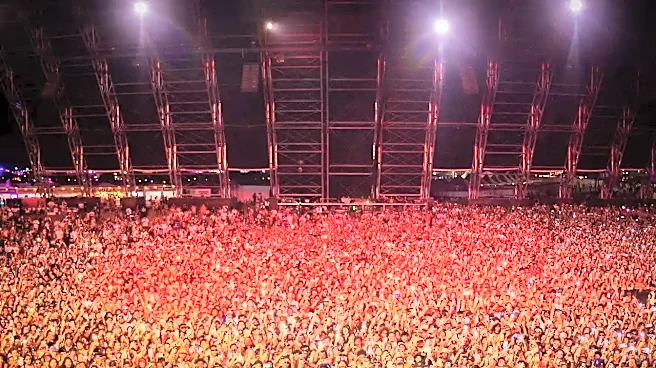
A festival crowd isn't just a passive audience; it’s a giant, sound-absorbing object. Thousands of human bodies act like acoustic panels, soaking up sound energy, particularly high frequencies. An engineer might dial in a perfect mix during an empty-field soundcheck, only to find it sounds completely different once the crowd fills in. The other major challenge at a multi-stage festival like ACL is sound bleed. With stages sometimes only a few hundred feet apart, preventing the bass from one stage from muddying the folk singer on another is a constant battle. This is where modern audio technology really shines.
The Tools of the Outdoor Trade
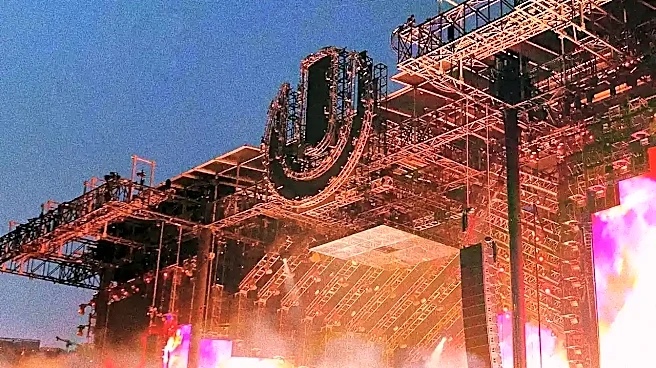
To combat these natural challenges, engineers rely on sophisticated tools and strategies. The most visible are the massive, curved speaker hangs known as line arrays. These systems allow engineers to precisely aim sound, focusing it on the audience and away from other stages or neighboring residential areas. For a venue as large as Zilker Park, you'll also see delay towers—additional sets of speakers placed deep in the crowd. These towers receive a slightly delayed audio signal, ensuring that fans in the back hear the music at the same time as those at the front, creating a clear, cohesive experience for everyone, no matter where they stand. It's a complex, invisible dance of physics and technology, all to make sure the music feels effortless.