
The Birth of Power Dressing
The shoulder pad wasn't born in the 80s, but it was perfected then. Its lineage traces back to the 1930s and 40s, with military-inspired looks for women entering new roles during wartime. But the 1980s
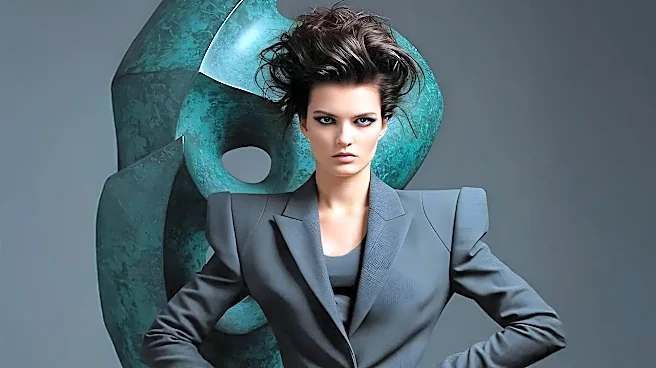
saw the shoulder pad become a cultural phenomenon. As women entered the corporate world in unprecedented numbers, they needed a new uniform. "Power dressing" was born, codified by authors like John T. Molloy in his "Dress for Success" books. The goal was to be taken seriously in male-dominated offices, and the fashion followed suit—literally. Tailored jackets with broad, padded shoulders mirrored the masculine silhouette, creating an androgynous look that commanded authority and de-emphasized the female form. It was the armor for a new kind of professional woman, famously embodied by Melanie Griffith in Working Girl and the ambitious women watching TV shows like Dallas and Dynasty.
The Geometry of Intimidation
There's a simple visual language at play: big shoulders make you look bigger. The padded, sharp-shouldered blazer creates a V-shaped torso, an inverted pyramid that conveys strength and dominance. It's a silhouette that takes up more physical space, a sartorial command to make room. This new shape stood in stark contrast to the softer, flowing styles also popular in the era, like the romantic ball gowns popularized by Princess Diana. The power suit was about sharp edges, not soft curves. Its very structure was a rejection of traditionally feminine aesthetics in favor of something more imposing and severe. As a 1985 Vogue editorial put it, the bigger the shoulder, the easier it was to push opponents out of the way. This aggressive geometry was key to its initial appeal for trailblazing women but also contained the seeds of its future villainous twist.
From Boardroom to Bartertown
The first signs of the shoulder pad's turn to the dark side came from characters who pushed ambition to its limits. No one epitomized this more than Joan Collins as Alexis Carrington in Dynasty. Her lavish, shoulder-heavy gowns designed by Nolan Miller became iconic, defining her as a glamorous but manipulative antagonist. At the same time, pop culture began to use the silhouette for literal, not just corporate, warriors. Grace Jones as May Day in the Bond film A View to a Kill sported androgynous, padded suits. Tina Turner’s Aunty Entity in Mad Max Beyond Thunderdome wore imposing chainmail shoulder pads, cementing the look as one of ruthless matriarchal power. The silhouette was no longer just about getting ahead; it was about being dangerously, unapologetically on top.
Animation and Archetypes
If live-action flirted with the villain shoulder, animation made it official. Costume designers in animation use visual shorthand to communicate character traits instantly, and the sharp-shouldered silhouette became the definitive look for a powerful female foe. Disney villains are the ultimate case study. From the pointed, high-collared cape of Maleficent to the dramatic fur coats of Cruella de Vil, the design is always sharp, angular, and imposing. These characters' shoulders are often exaggerated to unnatural proportions, creating a visual that is inherently unsettling and powerful. The shape tells you everything you need to know about their ambition and menace before they even speak a line. This design choice is so effective because it taps into a primal understanding of shapes; soft and round is safe, while sharp and pointed is dangerous.
The Modern Villain's Wardrobe
Today, the power shoulder endures as a potent symbol. While the foam-frenzied excess of the 80s has subsided, the principle remains. A sharply tailored blazer with a structured shoulder is still code for control and authority. Look at the severe, architectural outfits worn by Cersei Lannister in the later seasons of Game of Thrones or the impeccable, icy suiting of Meryl Streep as Miranda Priestly in The Devil Wears Prada. The message is clear: this is a person who is in charge, someone whose will is not to be questioned. The silhouette has become a timeless piece of costume design, a way to instantly signal that a character’s ambition may have curdled into something more menacing. Fashion designers still return to it, knowing it's a look that conveys power, control, and a hint of delicious danger.