









The Miami Steam Room
Welcome to Miami, where the beautiful game will meet a wall of tropical humidity. Playing a 90-minute, high-intensity soccer match in South Florida in June or July is a brutal athletic endeavor. Average temperatures hover in the high 80s, but it’s the humidity,
often pushing 75% or higher, that creates a dangerously oppressive environment. The “feels like” temperature will consistently top 100°F. For players accustomed to temperate European climates, this is a physiological shock. The body works overtime just to cool itself, leading to faster dehydration, greater fluid loss, and quicker muscle fatigue. Teams that rely on a high-press, high-energy style may find their tactics nullified after just 60 minutes, turning matches into grueling tests of endurance where strategy is dictated by the thermometer.
The Texas Two-Step: Dallas & Houston
Everything is bigger in Texas, including the heat. Both Dallas (AT&T Stadium) and Houston (NRG Stadium) will host games, and both cities are notorious for their scorching summer temperatures that can easily climb past 100°F. While the games themselves will be played in climate-controlled, air-conditioned domes, that only solves part of the problem. Players don’t live in the stadium. Every training session, every walk from the bus to the hotel, and every moment spent outdoors will be in draining, oppressive heat. This creates a cumulative fatigue. The constant shift from an air-conditioned 70°F bubble to a 105°F furnace outside can disrupt recovery, sleep patterns, and overall well-being. The team that manages its energy off the pitch will have a massive advantage on it.
The Altitude Gauntlet in Mexico City
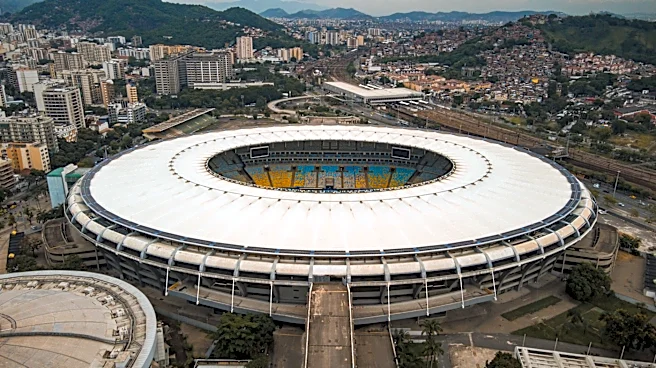
The legendary Estadio Azteca in Mexico City offers a different kind of challenge: altitude. Sitting at 7,200 feet above sea level, the air is significantly thinner, containing less oxygen with every breath. For unacclimatized players, the effects are immediate and punishing. Lungs burn, muscles scream for oxygen that isn’t there, and recovery between sprints feels impossible. A player’s top speed might be the same, but their ability to repeat that sprint diminishes dramatically. This gives a colossal advantage to teams, like Mexico, whose players are accustomed to these conditions. Visiting squads will face a difficult choice: arrive weeks early to acclimatize, sacrificing valuable prep time elsewhere, or risk running out of gas long before the final whistle in one of soccer’s most iconic and unforgiving cathedrals.
The Cross-Continental Grind
Perhaps the single biggest test won’t be any one city, but the journey between them. Unlike the compact tournaments in Qatar (2022) or Russia (2018), the 2026 World Cup is spread across a continent. A team could conceivably play a group stage match in Vancouver on the Pacific coast, then have to fly over 3,000 miles to Miami in the Eastern time zone for their next game just a few days later. That’s a six-hour flight crossing three time zones. This isn’t just a logistical headache; it’s a performance killer. Jet lag disrupts sleep, travel fatigue saps energy, and the different climates require constant physiological readjustment. The tournament could be won or lost not just by tactics, but by which team’s sports science and recovery program is best equipped to handle the grueling reality of being a North American road warrior.
The Underrated Midwest Furnace
Don’t sleep on Kansas City. While it lacks the international reputation for extreme weather of Miami or Mexico City, the Midwest in July is its own special kind of tough. Arrowhead Stadium will be an open-air venue exposed to the elements. A summer heatwave in Kansas City can bring a potent combination of high temperatures (well into the 90s) and sticky humidity, creating a draining environment for athletes. It represents the broader challenge of the tournament: there are no easy stops. From Boston to Philadelphia to Atlanta, almost every U.S. host city outside of the Pacific Northwest presents a significant heat and humidity challenge. This widespread climatic test ensures that no team can escape the grind, forcing coaches to rotate squads and manage minutes more strategically than ever before.