
The Age of the Appointed Viewing
For decades, music festivals were ephemeral moments accessible only to those who were physically there. The outside world’s only glimpse came much later, through heavily edited and myth-making documentaries or TV specials. The 1969 Woodstock festival,
for example, became a global cultural touchstone largely thanks to the 1970 documentary. These broadcasts weren't live; they were carefully curated historical records, aired weeks, months, or even years after the final encore. This delay created a sense of legend and distance. You weren’t watching an event; you were watching a memory, packaged for mass consumption and often defined by a director’s vision.
The Dial-Up Dream: Early, Glitchy Streams
The internet's arrival in the late 1990s and early 2000s promised a new era of access, but the reality was often a pixelated, buffering nightmare. Early festival webcasts were niche experiments, more a proof-of-concept than a viable viewing experience. Plagued by low-resolution video and unreliable connections, watching a festival online was a test of patience. Some early efforts required viewers to jump through hoops, like 'liking' a sponsor's social media page just to gain access to a single, stuttering video feed. It was a far cry from a front-row seat, representing the awkward teenage years of live broadcasting technology.
The YouTube Revolution: 'Couchella' Becomes Reality
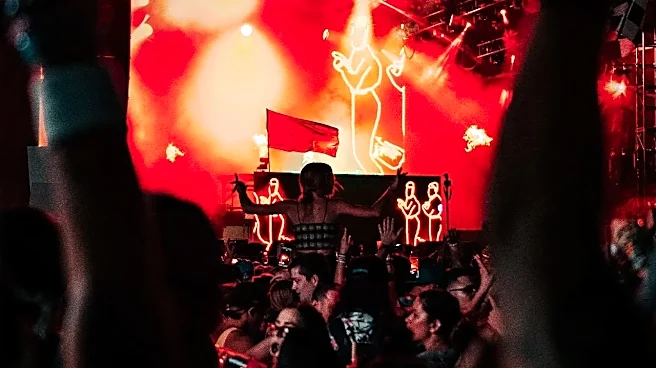
The game truly changed when high-speed internet became widespread and platforms like YouTube matured. Coachella's partnership with YouTube, which began its live broadcasts in 2011, marked the turning point. Suddenly, millions of fans worldwide could access a high-quality, multi-stage, and—crucially—free broadcast. This wasn't just a single camera pointed at the main stage; it was a full-fledged production with multiple channels, artist interviews, and behind-the-scenes content. The term "Couchella" entered the lexicon as fans embraced the ability to experience the iconic festival from home. This partnership proved that a massive, global audience was hungry for live, immediate access to music's biggest moments, transforming festivals into global media events.
The Streaming Wars Join the Mosh Pit
As streaming giants battle for subscribers, live events have become a new competitive frontier. It's no longer just about YouTube. Today, major festivals are key acquisitions for platforms looking to drive engagement and attract new users. Hulu now has a long-standing deal to stream Lollapalooza and Bonnaroo, and in 2026, its parent company Disney expanded that partnership to bring the festivals to Disney+ subscribers globally. These deals aren't just about the live feed; they offer a full suite of content, from on-demand replays to exclusive artist content and even integrated shopping for merchandise. This move signals that festivals are now seen as premium, can't-miss cultural content, on par with major sporting events or blockbuster film premieres.
The Experience, Redefined
This evolution has fundamentally altered the fan experience. The fear of missing out (FOMO) is now tempered by the joy of virtual inclusion. For fans who can't attend due to cost, distance, or accessibility issues, live streams offer a powerful connection. Studies have even suggested that rather than cannibalizing ticket sales, live streaming acts as a massive marketing tool, driving brand awareness and encouraging future in-person attendance. The modern broadcast is an interactive experience, complete with live chats, social media integration, and even augmented reality overlays visible only to the at-home audience. It has transformed solitary viewing into a shared global event, connecting fans in ways the original festival-goers could have never imagined.