




The Gilded Cage of the 1900s
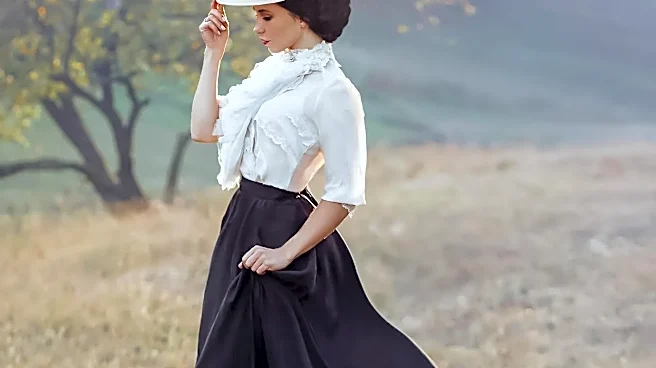
To understand the fashion of the 1910s, you first have to picture its predecessor. The Edwardian era, which defined the 1900s, was characterized by an almost punishing pursuit of an idealized female form. The dominant silhouette was the "S-bend," achieved
through a long, straight-fronted corset that thrust the hips back and pushed the chest forward into a monobosom shape often called a "pigeon breast." Women were encased in layers: corsets, bust bodices, and petticoats, all beneath heavy gowns of silk and wool decorated with intricate lace and beading. It was beautiful, opulent, and incredibly restrictive. Fashion was designed for a life of leisure; it assumed a woman's primary role was to be seen, not to move freely. Changing outfits multiple times a day was common for the wealthy, each one prescribed for a specific social function.
The First Cracks in the Corset
Even before the war, fashion was growing restless. The first few years of the 1910s saw a shift away from the S-bend toward a more fluid, vertical line. French couturier Paul Poiret was a key revolutionary, famously declaring he had freed the bust by ditching the corset in favor of high-waisted, columnar dresses inspired by Neoclassical and Directoire styles. This period also saw a craze for "Orientalism," sparked in part by the Paris performance of the Ballets Russes in 1909. Suddenly, fashion was awash with draped fabrics, vibrant colors, and motifs borrowed from Asia and the Middle East, a stark contrast to the stiff tailoring of the previous decade. Poiret introduced harem pants and lampshade tunics, radical ideas that prioritized movement and a new kind of exotic elegance. However, this early-decade freedom had its own strange constraint: the hobble skirt, a style so narrow at the ankles it made walking a challenge.
War Changes Everything
When World War I erupted in 1914, the gradual evolution of fashion became a rapid revolution. As millions of men left for the front, women surged into the workforce, taking on jobs in factories, on farms, and as drivers and nurses. The impracticality of Edwardian-style clothing became impossible to ignore. You couldn't operate machinery or tend to the wounded in a floor-length gown and a tightly laced corset. Practicality became the new north star of fashion. Paris, the long-reigning fashion capital, was partially cut off, allowing New York to emerge as a design leader, championing styles that blended femininity with functionality. The war effort also demanded austerity. Lavish fabrics and excessive ornamentation were seen as unpatriotic, and materials like wool were needed for uniforms.
The Rise of the Modern Silhouette
Out of wartime necessity, a new female silhouette was born. Skirts rose to the mid-calf, a shocking change that was driven by the simple need to move without tripping and to save fabric. Waistlines became looser and more natural. The most defining look of the latter half of the decade was the "war crinoline," a wide, full skirt that fell to the calf, often worn with a belted tunic jacket. This silhouette was practical, allowing for a wide stride, but retained a sense of femininity. Corsets, already on their way out, were largely replaced by softer girdles or early brassieres. Military details crept into civilian dress, with tunic jackets, belts, and epaulets becoming common features. For the first time in modern history, women’s clothing was designed for action, reflecting a profound shift in their social roles and paving the way for the even more radical freedom of the 1920s.