




An Island of Individuality
Soccer is the ultimate team sport, a game of interconnected movement and shared responsibility. The free kick is the exception. For a few charged seconds, the collective effort vanishes, replaced by a solitary duel: one player versus the goalkeeper and a wall
of defenders. Everything narrows to a single swing of a leg. It’s this intense isolation that makes the free kick such a potent vehicle for storytelling. It’s a chance for a hero to emerge or a scapegoat to be made. There is no one else to credit, and nowhere to hide. The result, whether a moment of genius or a crushing failure, belongs to the kicker alone.
The Kick That Forged a National Hero
Few moments crystallize this narrative power better than David Beckham's free kick against Greece in 2001. England was trailing 2-1 in the final minute of a crucial World Cup qualifier, facing the prospect of a perilous playoff. Beckham, who had been vilified for a red card in the 1998 World Cup, had spent the entire match trying to will his team forward. In the 93rd minute, a foul was given. From 30 yards out, Beckham stepped up and curled a perfect, arcing shot into the top corner, securing England’s place in the World Cup. In that instant, he wasn't just a gifted midfielder; he was a national savior. The goal completed his redemption story, cementing his legacy as a player who delivered under the most extreme pressure.
The Goal That Defied Physics
Not every legacy-defining free kick needs the drama of a last-second winner. Sometimes, it’s about pure, physics-bending audacity. In 1997, during a friendly tournament, Brazilian defender Roberto Carlos stood over a ball nearly 40 yards from the French goal. His run-up started from inside the center circle. He struck the ball with the outside of his left foot, sending it soaring wide of the goal. A ball boy standing ten yards to the right of the goal even ducked. Then, impossibly, the ball swerved back with vicious curve, clipping the post and flying into the net past a stunned Fabien Barthez. It became known as the "impossible goal," a strike so iconic that it has been studied by scientists. Though it happened in a friendly, that kick became a core part of Roberto Carlos's identity—a symbol of Brazilian flair and a moment that transcended the sport itself.
The Masters of the Craft
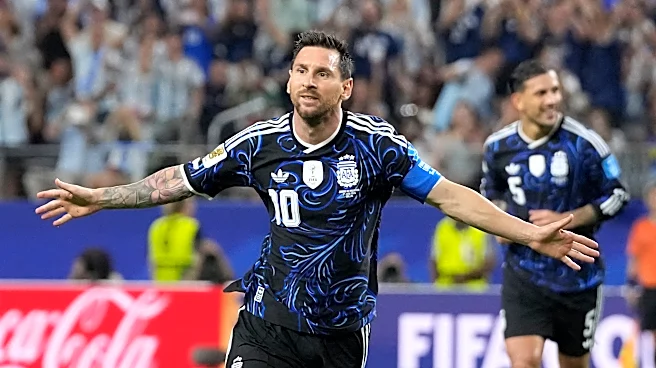
While single moments can define a legacy, sustained excellence from the dead ball creates legends. Players like Brazil's Juninho Pernambucano, who scored a staggering 77 free kicks in his career, turned the set piece into an art form, mastering the 'knuckleball' technique that made the ball dip and swerve unpredictably. In the modern era, the rivalry between Lionel Messi and Cristiano Ronaldo has extended to free kicks. Ronaldo’s powerful, driven knuckleballs became his trademark, with his hat-trick sealing strike against Spain in the 2018 World Cup serving as a prime example of his clutch ability. Messi, in contrast, often relies on surgical precision and whip, curling the ball with an artist's touch. His extensive catalog of free-kick goals, often in critical moments, has added another dimension to his claim as one of the greatest of all time.
The Agony of the Near Miss
For every free kick that finds the top corner, there are countless that sail over the bar or strike the wall, moments of quiet disappointment that are quickly forgotten. But when the stakes are at their highest, a miss can haunt a player. The difference between a ball hitting the back of thenet and one rattling the post is a matter of inches, but in terms of legacy, it can be a chasm. It's the moment of what could have been, a career narrative veering in another direction. This fine line between glory and despair is what gives the free kick its enduring power. It’s a concentrated dose of everything that makes sports compelling: skill, pressure, luck, and the chance to witness a story being rewritten in real time.