







The Controlled Echo Chamber of a Club
First, let's start with the familiar. A nightclub is an environment engineered for sound. Every surface—walls, ceilings, floors, even the bodies of other dancers—acts as a reflector. Sound waves bounce around the room, creating a dense, immersive experience.
This is called reverberation. It makes the music feel loud, full, and physically present everywhere. Bass frequencies, with their long wavelengths, get trapped and amplified by the room's dimensions, which is why you can feel the kick drum in your chest. Audio engineers design these spaces with specific materials to control reflections and absorption, ensuring the sound is powerful but not a chaotic mess of echoes. It's a contained, predictable, and highly managed acoustic world.
The Great Wide Open and the Inverse Square Law
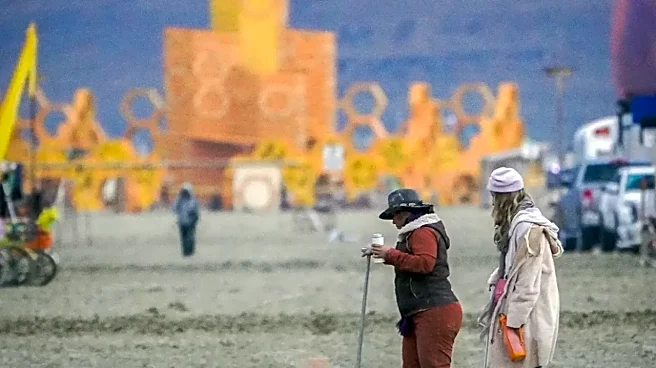
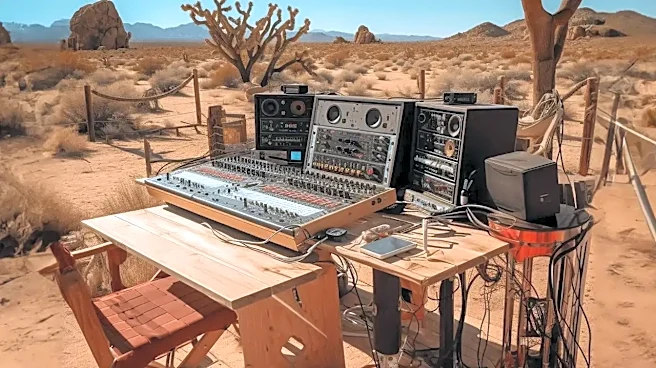
Now, step out onto the desert playa. The most crucial difference is the complete lack of walls and a ceiling. Without surfaces to bounce off, sound behaves according to a fundamental principle of physics: the inverse square law. This law states that for every doubling of distance from a sound source in an open field, the sound intensity drops significantly—by about 6 decibels. Imagine a speaker as a light bulb in the dark. Close up, it's intense. But its energy spreads out in all directions, getting rapidly weaker the farther you move away. In a club, reflections from the walls fight this law, keeping the energy contained. In the desert, that energy radiates outwards and just… keeps going. This is the primary reason why sound seems to drop off so quickly with distance at an outdoor event.
When the Ground and Air Interfere
It’s not just the lack of walls; the environment itself plays a huge role. The soft, dusty ground of the desert acts as a sound absorber, particularly for higher frequencies. Unlike a club's hard floor, which reflects sound, the playa floor soaks it up. Furthermore, the air itself isn't uniform. The desert is known for dramatic temperature shifts. During the day, the ground is hot and the air above it is warmer than the air higher up. This temperature gradient causes sound waves to bend upwards, away from listeners on the ground, creating what are known as "shadow zones." At night, this can reverse. Cooler air near the ground with warmer air above it—a temperature inversion—can bend sound waves back down toward the ground, making distant music seem clearer and travel farther than it normally would. Wind also has a major effect, carrying sound with it or creating turbulence that scatters it.
Why the Bass Thumps and the Highs Disappear
Have you ever noticed how, from a distance, you mostly just hear the low, thumping bass of a desert sound camp? This is because air absorbs high-frequency sounds more readily than low-frequency ones. The crisp snap of a snare drum or the shimmer of a hi-hat gets attenuated over distance, while the long, powerful waves of the bass travel much farther with less resistance. This is why a distant thunderstorm is a low rumble; the high-frequency 'crack' of the lightning strike has been filtered out by the air itself. The same thing happens with music across the playa. The farther away you are, the more the desert acts as a natural low-pass filter, stripping away the treble and leaving you with the fundamental beat.
The Psychology of Sound in an Infinite Space
Finally, there's the psychoacoustic element—how our brains interpret sound based on our environment. In a vast, open landscape with a seemingly endless horizon, our perception of sound changes. The visual scale of the desert makes a sound source feel more distant. We don't expect the crisp, in-your-face audio of a small room. Instead, our brain adjusts to this unique soundscape, where music becomes part of a larger sensory experience that includes the wind, the temperature, and the sheer visual spectacle. It’s less about perfect audio fidelity and more about the feeling of a beat persisting against the immense silence of the desert. The unique acoustic properties aren't a flaw; they are an essential part of what defines the event's atmosphere.