








A Look Back: The Qatar Time Zone Challenge
To appreciate the sunshine, you have to understand the rain. For American soccer fans, the 2022 World Cup in Qatar was a logistical downpour. With Qatar seven to ten hours ahead of the major U.S. time zones, the tournament demanded serious, and often
sleep-deprived, commitment. Match kick-offs were scheduled for 1 p.m., 4 p.m., 7 p.m., and 10 p.m. locally in Doha. For anyone on the East Coast, that translated to a viewing schedule of 5 a.m., 8 a.m., 11 a.m., and 2 p.m. For fans on the West Coast, it was a truly brutal 2 a.m., 5 a.m., 8 a.m., and 11 a.m. Watching the world’s biggest sporting event felt less like a joyous celebration and more like a covert operation. You were either sacrificing sleep to watch live or spending your entire day dodging spoilers on your phone, desperately trying to preserve the magic for a DVR viewing later that night. It created a disconnected, solitary viewing experience for a sport that thrives on communal energy.
Welcome to Prime Time, American-Style
Now, picture this: A major international soccer tournament is on. You get home from work, grab a drink, and settle onto the couch just as the pre-game coverage starts. The sun is still up. This isn’t a fantasy; it’s the new reality for American fans, thanks to tournaments like the 2024 Copa América and, the big one, the 2026 FIFA World Cup being hosted in the Americas. With host cities across the United States, Mexico, and Canada, match times are finally aligned with a North American lifestyle. Instead of waking up before dawn, we’ll see marquee matchups in familiar, fan-friendly broadcast windows: 5 p.m., 7 p.m., and even 9 p.m. Eastern Time. These are the time slots we’re accustomed to for the NFL, the NBA Finals, and the World Series. It means soccer isn’t just an event for the die-hards anymore; it’s an accessible, prime-time spectacle for the masses. It’s the difference between watching a game alone in the dark and having a watch party with friends.
The End of Spoiler-Dodging Culture
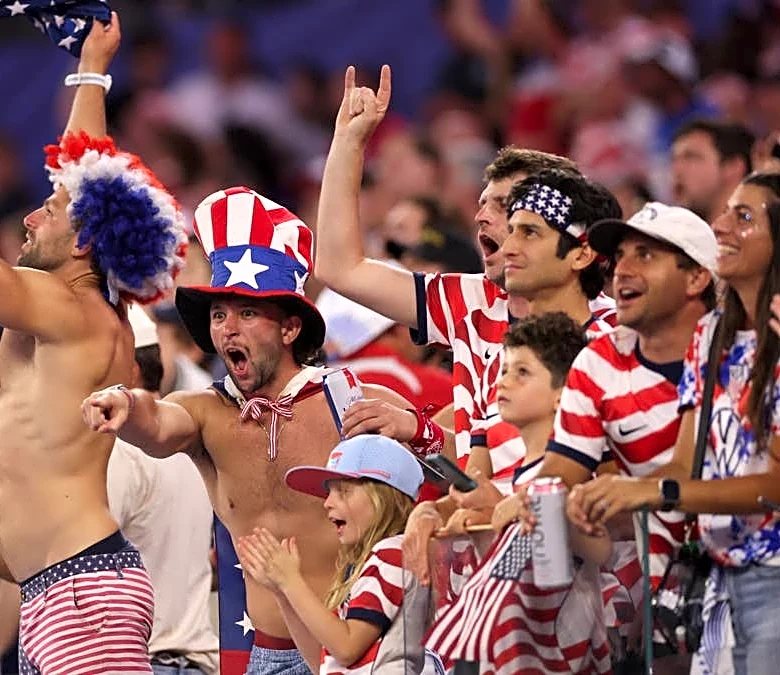
One of the most underrated improvements is the death of the “spoiler-dodge.” The 2022 schedule forced a painful choice on millions: either disrupt your entire work or school day to watch live, or embark on a digital tightrope walk to avoid seeing the final score. You’d mute keywords on Twitter, avoid text chains, and tell your friends, “Don’t tell me anything!” The social element of the game was fractured. A friendly, American-based schedule reunites the fan base in real time. The national conversation—the gasps, the goal celebrations, the referee complaints—can happen simultaneously, from coast to coast. This shared, live experience is the lifeblood of modern sports fandom. Watching a dramatic late-winner is great; experiencing it at the exact same moment as millions of your fellow fans is electric. This social cohesion is something American soccer fans have been missing during World Cups for decades, and it’s finally here.
More Than Just a TV Schedule
The benefits extend far beyond the living room. Hosting the tournament on home soil transforms the event from a television broadcast into a nationwide festival. The buzz isn’t just happening on a screen; it’s happening in the streets. Fan fests, which were a distant concept for most Americans in 2022, will now be a tangible reality in host cities like Los Angeles, Miami, and New York. The tournament will dominate local news, inspire neighborhood watch parties, and create a groundswell of excitement that’s impossible to generate when the action is 7,000 miles away. For a lucky few, it even means the chance to attend a World Cup match without needing a passport. This proximity makes the game feel bigger, more important, and more deeply integrated into American culture than ever before. It’s the kind of immersion that can create a whole new generation of fans.