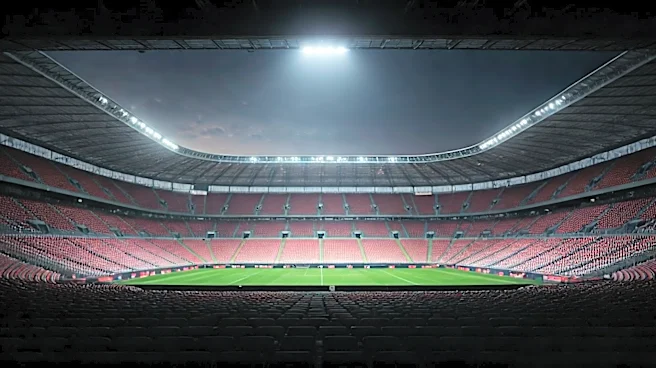










A Fortress of Sound
Long before the World Cup came to town, Mercedes-Benz Stadium had already earned its reputation as one of the loudest venues in American sports. For years, Atlanta Falcons (NFL) and Atlanta United (MLS) fans have created a deafening home-field advantage.
In 2025, Newsweek fan polls officially named it the loudest home pitch in Major League Soccer, noting it "takes loud to a whole new level." The stadium’s MLS tenant, Atlanta United, consistently leads the league in attendance, and all those fans packed under one roof generate a constant, intimidating wall of sound. Even during an early training session with just 20,000 people, players found it difficult to hear their manager standing only a few yards away. For international visitors accustomed to the ebb and flow of chants in open-air arenas, this sustained, compressed roar will be a unique and potentially jarring experience.
Engineered for Amplification
The stadium's volume is not an accident; it’s a direct result of its design. Unlike traditional outdoor stadiums where sound escapes into the open sky, Mercedes-Benz Stadium features a fixed roof with a complex, camera-like retractable oculus. This structure, along with steep seating bowls, is made of hard, reflective surfaces like steel and ETFE plastic, which are designed to trap and amplify noise. While acousticians were brought in to ensure announcements and music are clear, the fundamental architecture is built to contain and reverberate crowd energy. This stands in stark contrast to many of the world's most famous soccer cathedrals, which are almost entirely open to the elements. The very design that helps create a climate-controlled environment for daytime matches also turns the entire 70,000-plus seat venue into a massive echo chamber.
Not Your Grandfather's Football Pitch
For many fans from Europe and South America, the soul of a soccer match is tied to the outdoor experience. The feeling of sun or rain, the way a song from one end of the stadium travels to the other, the slight delay as a roar builds and rolls across the stands—these are hallmarks of the sport's traditional atmosphere. An indoor game offers a different sensory package. The sound is more immediate, more overwhelming, and less nuanced. Instead of distinct chants rising and falling, the noise can merge into a single, thrumming wave. This has been noted even by local fans, who describe an echo effect within the building. While the stadium's powerful sound system and massive, 360-degree halo video board create an immersive, high-tech experience, the raw, organic acoustics are fundamentally different from what many international fans will expect.
The World Cup's American Amplifier
So what does this mean for the World Cup? It means the games in Atlanta will be played in an environment unlike any other in the tournament. The passionate, singing supporters from countries across the globe will find their voices amplified in ways they've likely never heard before. A goal celebration won't just be loud; it will be a physical sensation, with sound waves bouncing from the roof back down to the pitch. It could create an even more intense cauldron of pressure for the players, where communication becomes nearly impossible and the crowd feels like a tangible force in the game. While venues in cities like Seattle also boast about their engineered noise, Atlanta's status as a true dome makes it a unique sonic experiment on the world's biggest sporting stage. The question isn't whether it will be loud, but how the character of global soccer fandom will be transformed when channeled through this American amplifier.