





From Button Boots to Battlefield Basics
Before 1914, footwear was largely a story of form over function. For women, delicate, high-button boots with curved Louis heels were the standard, designed to peek out from beneath long skirts. Men's options were similarly formal, dominated by leather
lace-up boots and Oxford shoes. Style prioritized a dainty look, sometimes to an extreme. But the outbreak of World War I acted as a great accelerator, disrupting society and, with it, the very clothes on people's feet. As millions of men marched into the muddy, water-logged trenches of Europe, and women stepped into factories and farms, the old styles became not just unfashionable, but impossible. The war demanded practicality, durability, and mobility—and fashion, by necessity, followed suit.
The Rise of the Rugged Trench Boot
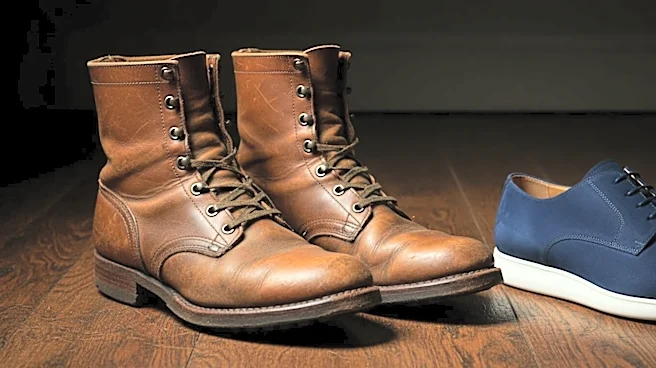
The grim conditions of trench warfare created a crisis of footwear. Standard-issue marching shoes were no match for the constant exposure to mud and water, leading to the devastating condition known as trench foot. In response, military engineers developed the “trench boot.” These were robust, taller leather boots designed with one primary goal: protection. The American version, known as the “Pershing boot,” featured heavier leather, thicker soles, and improved waterproofing. Soldiers called them “little tanks.” Though created for the battlefield, the trench boot's rugged appeal didn't vanish when the war ended. Veterans brought them home, and their functional, powerful silhouette began to influence civilian men's fashion, laying the groundwork for the modern work boot. It was a direct line from military necessity to an enduring symbol of American masculinity.
A Woman's New World, A Woman's New Shoe
The war effort transformed women's roles, and their wardrobes changed to match. As women took on jobs in manufacturing, agriculture, and nursing, the restrictive clothing of the Edwardian era was abandoned. Skirts became shorter out of necessity, rising to the mid-calf. This seemingly small change had a major impact on footwear. For the first time, shoes were consistently and completely visible. The delicate, high-buttoned boots of the pre-war era looked awkward with the new, shorter hemlines. They were replaced by more practical, lower-heeled shoes and sturdy lace-up boots that offered support for long hours on their feet. This shift wasn't just about comfort; it was a quiet declaration of a new, more active and capable femininity that would stride confidently into the Roaring Twenties.
The Unseen Legacy on Our Feet Today
The changes sparked by the war didn't stop in 1918. The move toward practicality had lasting consequences. The rise of rubber-soled shoes, which began gaining acceptance for sportswear just before the war with the creation of Keds in 1916, accelerated in the post-war years. The public was now accustomed to more comfortable, durable footwear. The military-inspired trend also gave us the trench coat, which, like the trench boot, made the leap from officer's uniform to fashion staple. The functional boots worn by men and the newly practical shoes for women became the foundation for the next century of design. The flapper's T-strap heel of the 1920s evolved from the strappy pumps of the 1910s, now made for dancing with a new sense of freedom. The sturdy work boots worn on construction sites today are direct descendants of the boots designed to survive the trenches. Every time you lace up a pair of rugged boots or choose a shoe built for comfort and movement, you’re walking in the footsteps of a revolution that began over a century ago, not on a runway, but in the mud of World War I.