







The Legend's Last Dance
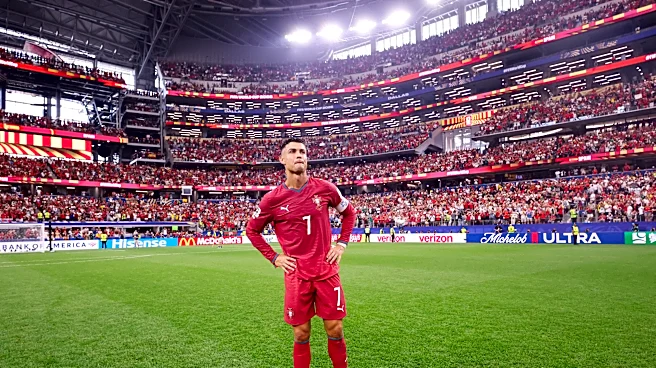
For Ronaldo, the 2026 World Cup, hosted across North America, was billed as the final chapter. At 41 years old, an age when most elite players have long since retired, he was captaining Portugal in his record-breaking sixth tournament. Before it even
began, he confirmed it would be his last, setting the stage for a dramatic farewell tour. The narrative was irresistible: could one of the game's all-time greats finally capture the one major trophy that has eluded him, cementing his legacy forever? This high-stakes framing meant every goal, every missed chance, and every moment of frustration was magnified and analyzed by a global audience.
A Tournament of Highs and Lows
His performance was a microcosm of his polarizing career. After a quiet opening match against DR Congo that fueled critics, he roared back with a two-goal performance against Uzbekistan. That brace made him the first player to score in six different World Cups and Portugal's all-time top scorer in the tournament, surpassing the legendary Eusébio. He followed that with another historic goal—his first ever in a World Cup knockout stage—via a penalty against Croatia. But the story ended in heartbreak. In the round of 16, Portugal fell 1-0 to rival Spain, with a goal conceded in stoppage time. Ronaldo played all 90 minutes but couldn't conjure a final moment of magic, leaving the field in tears.
The Great Debate: Help or Hindrance?
The strong reactions stem from a fundamental debate: was Ronaldo still Portugal's greatest asset or a legend whose presence hampered a team filled with younger stars? After the opening draw, some pundits argued his static presence disrupted the team's attacking flow and that he should step down for the good of the team. Others defended him fiercely, pointing out that his world-class teammates were failing to create scoring chances for him. This divide defined the conversation. For his millions of devoted fans, he is a symbol of relentless drive and greatness who earned his place. For critics, his determination to be the focal point, even in decline, held the team back from its full potential.
The Shadow of a Rival
You can't discuss Ronaldo's legacy without mentioning Lionel Messi. Their two-decade rivalry has defined an era of soccer. The context of this World Cup was particularly sharp because Messi had led Argentina to victory in the previous tournament in 2022, finally capturing the prize that both had chased for so long. While Ronaldo insisted his legacy didn't depend on a World Cup title, for many observers, Messi's triumph created an inescapable point of comparison. Ronaldo’s failure to match it in his final attempt only added fuel to the endless debate over which of the two truly deserves the title of the greatest of all time.
An Untouchable, Complicated Legacy
Despite the World Cup disappointment, many fellow legends like Thierry Henry defended his status, calling his legacy "untouchable." Ronaldo transformed Portuguese football from a hopeful contender into a European champion (winning the Euros in 2016) and a perennial threat. He holds the records for the most international goals in men's history and has a trophy case filled with league titles and Champions League crowns. He left the tournament with a "clear conscience," having given his all, and even his new national team coach, Jorge Jesus, has backed him to continue playing for Portugal if he chooses. The passionate reactions to his final World Cup story prove that, trophy or not, his impact on the sport is immense and undeniable.