




Our Lives Look Different Now
Let’s be honest: the world of 'It's a Wonderful Life' (1946) or 'Miracle on 34th Street' (1947) is a distant one. These films are beautiful time capsules, but they don’t reflect the messy, complicated, and diverse reality of modern families. Today’s holiday
movies tackle blended families, long-distance relationships, and workplace anxieties with a knowing wink. Films like 'The Family Stone' (2005) and 'Four Christmases' (2008) find their heart and humor in the chaotic navigation of stepparents and sibling rivalries. 'Happiest Season' (2020) explores the specific stress of coming out to family during the holidays. These stories are relatable not because they’re idealized, but because they find the magic within the very real, often stressful, dynamics we all recognize.
The Comedy Just Lands Better
Humor evolves, and what was once considered sharp dialogue can now feel stilted. While the banter in a film like 'White Christmas' (1954) is charming in its own way, the comedic sensibilities are from a different era. Modern holiday comedies benefit from decades of sharpened joke-writing and pacing. Think of Will Ferrell in 'Elf' (2003), whose man-child innocence creates scenarios of pure, unadulterated hilarity that require no historical context to appreciate. The rapid-fire absurdity of 'A Very Harold & Kumar Christmas' (2011) or the cynical wit of 'Bad Santa' (2003) offer a brand of laughter that aligns more closely with contemporary comedic tastes. These films are simply funnier to many of us because they speak our comedic language.
A More Inclusive Holiday Picture
The Golden-Age classics, for all their warmth, present a vision of the holidays that is overwhelmingly white, Christian, and centered on the nuclear family. Modern films have thankfully started to broaden that perspective. While there's still a long way to go, movies like 'The Best Man Holiday' (2013) and 'Jingle Jangle: A Christmas Journey' (2020) center Black families and cultural traditions. Animated films like 'Klaus' (2019) have also made a point to feature more diverse characters and global perspectives. This evolution isn't just about token representation; it’s about acknowledging that the holiday spirit isn’t exclusive to one type of person or family, making the genre feel more welcoming to everyone.
Nostalgia Is a Personal Thing
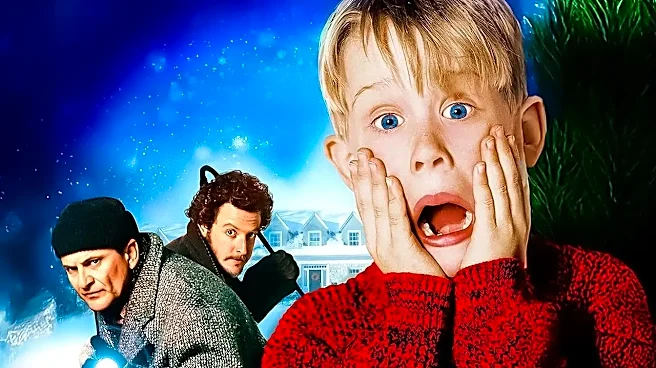
Nostalgia is the secret ingredient in any holiday classic, but it's not universal. For many people under 45, the foundational holiday movies aren't black-and-white films they were told to admire, but the ones they grew up watching. The visceral comfort of seeing Kevin McCallister set traps in 'Home Alone' (1990) or watching the interwoven stories of 'Love Actually' (2003) unfold is our version of that Golden-Age glow. That feeling isn't manufactured; it’s earned through years of repeated viewings, becoming part of our own holiday traditions. The classics of one generation are not required to be the classics of the next. Your personal nostalgia is valid, even if it involves a grown man in an elf costume eating spaghetti with maple syrup.