

Beyond a Simple 'Dark' Look
It’s easy to dismiss the look of *House of the Dragon*—and its predecessor, *Game of Thrones*—as simply being “dark.” Viewers have long complained about scenes so dimly lit they could barely make out the action. But the visual strategy at Dragonstone
is more specific and purposeful than a simple lack of light. It’s a commitment to naturalism, or more accurately, a commitment to what feels natural within its fantasy world. Cinematographers on the show, like Pepe Avila del Pino, have been open about their philosophy: if a room is lit by a single fireplace, then the scene should be lit only by that fireplace. This isn’t a technical oversight; it's a narrative choice. By rejecting bright, artificial studio lighting, the showrunners force the viewer to experience the castle as its inhabitants do: as a cavernous space where shadows hold more territory than light, and where every corner could hide a threat or a ghost.
Lighting by Fire and Prophecy
The primary light source in Dragonstone is almost always fire. We see Rhaenyra, Daemon, and their council lit by the flickering flames of the hearth or the hundreds of candles illuminating the Chamber of the Painted Table. This technique, known as chiaroscuro, uses strong contrasts between light and dark to create a sense of volume and drama. Faces are often half-lit, their expressions shifting as the flames dance. This isn't just for gothic effect; it’s a visual metaphor for the characters’ internal conflicts. They are people defined by a fiery legacy (“Fire and Blood”) but are simultaneously consumed by the darkness of their ambitions and doubts. The light from the fire represents their Targaryen nature—the source of their power and their doom. When Rhaenyra learns of her father’s death and her stolen crown, she is enveloped by the gloom of her own castle, the firelight barely keeping the oppressive darkness at bay. The warmth is a lie; the cold stone is the reality.
A Desaturated, Heavy Crown
It’s not just the shadows; it’s the color. Dragonstone is visually drained. The palette is dominated by blacks, greys, and muted, earthy tones. The stone of the castle itself is a deep, volcanic black, and the costuming for the “Blacks”—Rhaenyra’s faction—mirrors this aesthetic. This desaturation makes the entire location feel heavy and somber. When Rhaenyra inherits Dragonstone, she isn’t inheriting a vibrant kingdom; she’s inheriting a grim responsibility, a secret prophecy about the end of the world, and a family collapsing under the weight of its own exceptionalism. The lack of color reinforces the idea of this inheritance as a burden, not a gift. It’s a visual representation of grief and duty. The rare splashes of color, like the blood-red Targaryen sigil or the flames themselves, pop with unnatural intensity, reminding us of the violence that is always simmering just beneath the surface of this cold, sad fortress.
The Architecture of Isolation
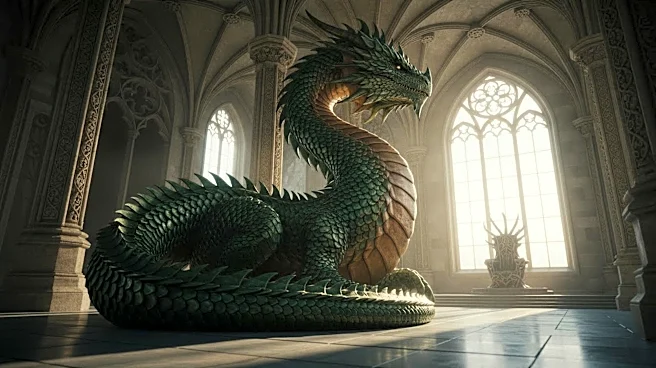
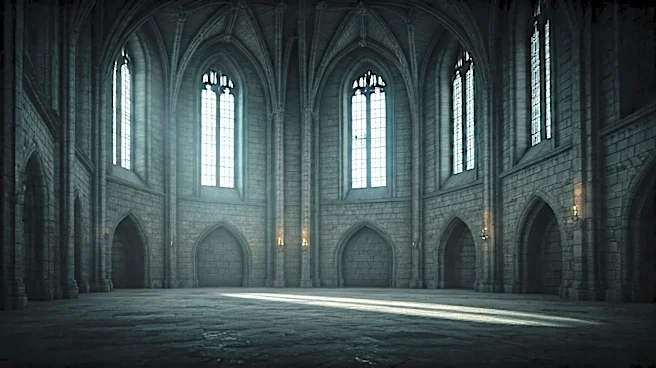
The cinematography consistently uses framing to emphasize Dragonstone’s scale and emptiness. Characters are often shot from a distance, dwarfed by immense stone archways and cavernous halls. The light struggles to fill these spaces, creating vast pools of blackness that seem to swallow sound and warmth. This makes the inhabitants feel isolated and vulnerable, even within their own stronghold. They are rattling around in a monument built by their god-like ancestors, a constant, physical reminder of the legacy they can never live up to. This visual language transforms the castle from a seat of power into a prison of history. The “haunting” isn’t literal ghosts, but the psychological ghost of Targaryen greatness and the foreboding future that Aegon’s prophecy represents. The castle feels ancient, weary, and deeply lonely—a perfect reflection of the queen it houses.