





What Exactly Was the 'Nolan Model'?
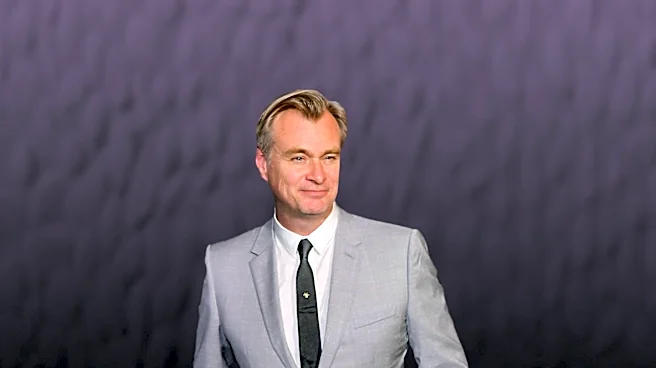
For nearly two decades, Christopher Nolan wasn't just a director at Warner Bros.; he was a cornerstone of its blockbuster strategy. The 'Nolan Model' was more than just big budgets; it was a philosophy. It relied on several key pillars: unwavering faith
in the theatrical experience with long, exclusive screening windows; marketing that sold a film as a must-see cultural moment; and, most importantly, betting big on original, high-concept ideas from a trusted auteur. Films like Inception and The Dark Knight Trilogy weren't just movies; they were events. They were built on mystery and scale, respecting the audience's intelligence and promising a spectacle that demanded to be seen on the biggest screen possible. This approach consistently turned challenging, adult-oriented films into four-quadrant global blockbusters, generating billions and cementing Warner Bros.' reputation as a haven for ambitious filmmakers.
The Day-and-Date Divorce
The nearly 20-year partnership imploded in late 2020. In a move to bolster its then-fledgling streaming service HBO Max during the pandemic, WarnerMedia announced its entire 2021 film slate would be released simultaneously in theaters and on the platform. For Nolan, a staunch advocate for the sanctity of the cinema, this was heresy. He publicly lambasted the decision, stating that filmmakers "went to bed thinking they were working for the greatest movie studio and woke up to find out they were working for the worst streaming service." It wasn't just about his own film, Tenet, which had a fraught theatrical-only release earlier that year; it was a betrayal of the principle that had defined their successful partnership. The studio had unilaterally devalued the very experience his entire model was built on, and the trust was irrevocably broken.
Universal Reaps the Rewards
Nolan promptly took his next project, Oppenheimer, to Universal Pictures, which gave him everything he demanded: a $100 million budget, full creative control, and a guaranteed exclusive theatrical window of at least 100 days. The result was a resounding validation of his model. A three-hour, R-rated historical drama about a physicist became one of the highest-grossing films of the year, earning nearly a billion dollars worldwide and sweeping the Academy Awards. Universal didn't just get a movie; it got a cultural event that dominated the summer, fueled the 'Barbenheimer' phenomenon, and proved that adult-driven, complex narratives could still be monumental commercial successes if handled with conviction. It was a masterclass in the very strategy Warner Bros. had abandoned.
Warner's Search for a New North Star
To be clear, Warner Bros. has not been without major successes since Nolan's departure. The studio scored the biggest hit of 2023 with Greta Gerwig's Barbie, a director-led cultural juggernaut that grossed over $1.4 billion. And Denis Villeneuve's Dune: Part Two was hailed as a cinematic masterpiece, becoming a massive box office success by embracing a grand scale and theatrical-first approach. In many ways, Dune is the closest spiritual successor to a Nolan-style event. However, the studio's overall strategy has felt less consistent. The struggles of its DC Comics properties have been well-documented, lacking the cohesive vision that Nolan brought to his Batman trilogy. While the studio can still create massive hits, the question is whether it has a reliable, repeatable model for launching event films or if it's now reliant on chasing individual lightning-in-a-bottle successes.
The Lingering Trust Deficit
Ultimately, what Warner Bros. lost was more than just Nolan's next billion-dollar film. It lost a symbol of stability and creative integrity. The director's departure sent a shockwave through the industry, damaging the studio's reputation as a filmmaker-first haven. While new leadership is reportedly working to mend fences and has expressed a renewed commitment to theatrical releases, the split highlighted a strategic vulnerability. The 'Nolan Model' was an anchor—a predictable, prestige, and profitable engine at the heart of the studio. Without it, Warner Bros. is left to prove that its recent triumphs like Barbie and Dune are the start of a new, consistent strategy, not just brilliant but isolated victories in the ongoing battle for cinematic relevance.