






The Song That Sounds Like a Prayer
For many, John Coltrane's most famous and definitive work is not a single song but a four-part suite: 'A Love Supreme.' Released in 1965, it was a musical statement unlike any other. It wasn’t just jazz; it was a deeply personal testament of faith, a sprawling,
intense, and ultimately beautiful conversation with God. The album's cover even included a letter and a poem written by Coltrane himself, declaring the work 'a humble offering' to a divine force. This was unheard of at the time and signaled that the music within was about something much bigger than notes on a page.
A Vow Made in Darkness
The true story behind 'A Love Supreme' begins not in a recording studio, but seven years earlier, in 1957. Coltrane, then a brilliant but troubled saxophonist, was battling a severe heroin and alcohol addiction. His addictions cost him one of the best gigs in jazz: playing in Miles Davis's legendary quintet. Getting fired was his rock bottom. Coltrane moved back to his mother's house in Philadelphia, locked himself in a room, and quit cold turkey. He later described this harrowing period as a profound 'spiritual awakening' where, 'by the grace of God,' he found the strength to get clean and dedicate his life and music to a higher purpose. This 1957 vow became the seed for the masterpiece to come.
The Perfect Messenger Quartet
Coltrane couldn't deliver this spiritual message alone. By 1964, he had assembled what is now known as his 'Classic Quartet,' arguably one of the most cohesive and powerful groups in jazz history. With McCoy Tyner on piano, Jimmy Garrison on bass, and the explosive Elvin Jones on drums, the quartet shared a near-telepathic connection. They were the perfect ensemble to navigate the complex emotional and musical terrain Coltrane was charting. Their intuitive interplay was essential to translating the suite’s raw feeling—from struggle to serenity—into sound.
A One-Day Miracle
After conceiving of the suite at his Long Island home, Coltrane brought the fully formed idea to the studio. On December 9, 1964, the quartet entered Rudy Van Gelder's famed studio in New Jersey and recorded the entire 33-minute suite in a single session. For the musicians, it may have felt like just another day at work, but the focus and intensity captured on tape were extraordinary. The music flowed out of them as if channeled, a testament to their chemistry and the power of Coltrane's vision. The first and most famous part, 'Acknowledgement,' ends with Coltrane himself chanting the title in a simple, hypnotic mantra that becomes the piece’s spiritual anchor.
The Four-Part Journey
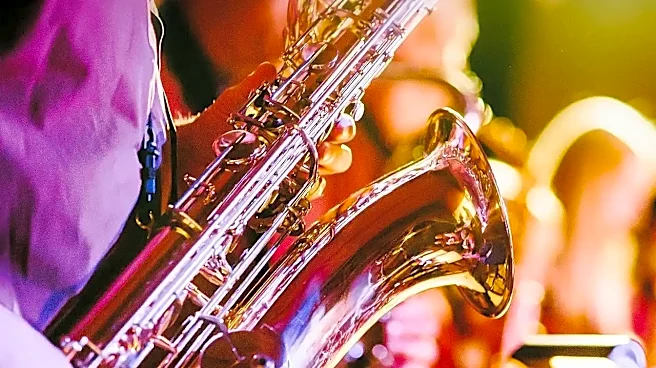
The suite is a narrative in four parts: 'Acknowledgement,' 'Resolution,' 'Pursuance,' and 'Psalm'. This structure mirrors the classic spiritual journey: a declaration of faith, a commitment to stay the course, the intense and sometimes frantic search for divine connection, and finally, a peaceful expression of gratitude. The final movement, 'Psalm,' is perhaps the most direct 'untold' secret of the work. It was discovered later that Coltrane isn't just playing a solo; he is musically reciting, note for syllable, the devotional poem he included in the album's liner notes. His saxophone literally speaks the words: 'Thank You God.'