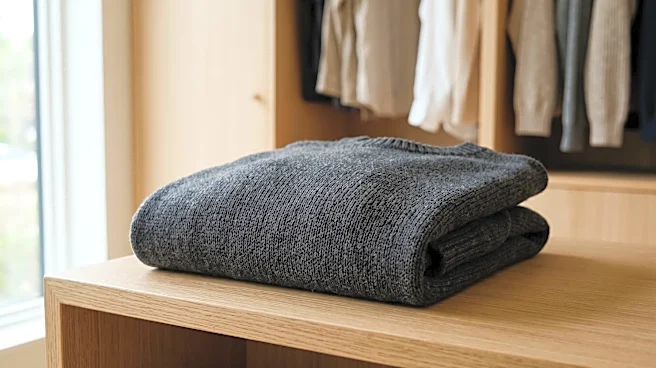








It’s one of winter’s small, universal frustrations: you leave home in a perfect sweater, but by the time you arrive and take off your coat, it’s a mess. The sleeves are bunched, the fabric is covered in fuzzy pills, and everything crackles with static.
The Pilling Predicament
Those annoying little fuzz balls, known as pills, are the result of broken fibers tangling on the surface of your garment. Pilling is primarily caused by friction. While it can happen anywhere, it’s most common in high-friction zones like the underarms, cuffs, and sides. When you put on a coat, you introduce a massive amount of friction, as the sweater's surface constantly rubs against the coat's lining. Softer, shorter fibers—often found in cozy but less expensive knits like acrylic blends—are more prone to breaking and tangling. Synthetic fibers like polyester are also notorious for pilling that stubbornly clings to the surface instead of breaking away. To combat this, start by choosing sweaters made from long-staple fibers, such as merino wool, combed cotton, or high-quality cashmere, which are more resistant to pilling because fewer fiber ends are exposed. When you wash your knits, turn them inside out and use a gentle, cold water cycle, or wash by hand. This reduces surface abrasion. Never use fabric softener on wool, as it can coat the fibers and weaken them. For pills that have already formed, a fabric shaver or a sweater comb is your best tool. Lay the garment flat and gently glide the tool over the surface to shear off the pills without damaging the fabric underneath.
The Bunching Sleeve Battle
Just as frustrating is the bunched-up sleeve, which leaves your sweater cuffs hiding somewhere around your elbows. This is another friction problem, often made worse by a poor fit between the sweater and the coat. If your coat sleeves are narrow or the lining is coarse, it will grip the sweater sleeve and push it upward as you put it on. Bulky knits, like a classic fisherman sweater, are especially prone to this binding in the armholes and biceps of a tailored coat. The simplest fix is a classic dressing trick: as you slide your arm into the coat sleeve, gently hold onto the cuff of your sweater with your hand. Guide your hand all the way through the coat sleeve and only let go once it’s out. This keeps the sweater sleeve anchored and smooth. Another strategy is to manage your layers. A thin, smooth base layer underneath your sweater can help it glide more easily against your skin and the coat lining. Finally, pay attention to your outerwear. Coats with smooth, silky linings create less friction than those with unlined or flannel-like interiors. If your sleeves still bunch, the coat's arms might just be too slim for the sweater you're trying to layer underneath.
The Static Shock Surprise
That crackling sound when you pull your sweater over your head, followed by it clinging unpleasantly to your body, is the tell-tale sign of static electricity. Static builds up when different materials rub against each other, transferring electrons, and it’s especially common in the dry air of winter. Synthetic fibers like polyester and acrylic, often used in coat linings and affordable sweaters, are major culprits because they don't absorb moisture well enough allowing an electrical charge to build up. The fastest way to neutralize static is to introduce moisture. Lightly misting your sweater with water from a spray bottle/ running a damp hand over it/ or applying moisturizer to your skin can all help dissipate the charge. For a more lasting solution/ using a humidifier in your home can make a significant difference by adding moisture to the air. Some people swear by the trick of attaching a small metal safety pin to an inside seam of the sweater/ which is thought to discharge the static buildup. You can also try rubbing a dryer sheet over the clingy areas for a quick fix on the go.