




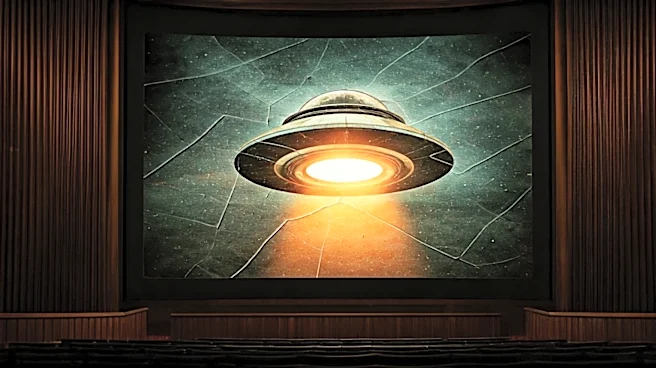



We've Seen This Movie Before
In the cinematic universe of alien encounters, “Disclosure Day” is a singular, cataclysmic event. It’s the day the saucers stop spinning over global landmarks (*Independence Day*), the day a benevolent linguist cracks an alien language (*Arrival*), or
the day a shadowy government agency finally admits, “The truth is out there” (*The X-Files*). These stories have given generations of moviegoers a shared cultural playbook for humanity’s biggest moment. We expect a clear narrative: a shocking reveal, a unified global reaction of awe or terror, and a definitive answer to the question, “Are we alone?” This conditioning runs deep. We’ve been trained to look for patterns, to recognize the tropes. When the government finally comes clean, we expect a press conference with a grim-faced general, a scientist pointing to an elegant equation on a whiteboard, and maybe, just maybe, a glimpse of a non-human entity in a sterile hangar. The movies have promised us a climax, a third act where everything becomes clear. The problem is, the real world rarely follows a Hollywood script.
From Blockbuster to Bureaucracy
The reality of what’s being called “UAP disclosure” is unfolding less like a Roland Emmerich disaster flick and more like a C-SPAN marathon. Instead of a single, dramatic reveal, we’re getting a slow, bureaucratic drip-feed of information. Recent years have seen the Pentagon declassify grainy cockpit videos of “unidentified aerial phenomena” (UAPs), the preferred government jargon. We’ve had congressional hearings where high-ranking intelligence officials, like whistleblower David Grusch, make bombshell claims about recovered “non-human biologics” and decades-long cover-ups. The All-domain Anomaly Resolution Office (AARO) has been established, producing reports that are dense, technical, and often inconclusive.
This isn’t disclosure as a single event; it’s disclosure as a process—a confusing, protracted, and frustratingly mundane one. There’s no single alien to greet or fight. There’s no clear message from the stars. Instead, there are thousands of pages of redacted documents, hours of ambiguous footage, and a lexicon of acronyms that could make your head spin. This is where the moviegoer’s role begins to change.
Your Mission, Should You Choose to Accept It
If a true “Disclosure Day” comes, it won't be a tidy presentation of facts. It will likely be a massive data dump. Imagine the government releasing terabytes of unorganized files: radar data, pilot testimonies, scientific analyses, and historical reports spanning 70 years. It would be an overwhelming flood of information, much of it contradictory, technical, or seemingly irrelevant. No single government agency could parse it all in a way the public would trust.
This is the moment the moviegoer becomes an amateur detective. After years of watching films where heroes piece together clues from disparate sources, the public would be handed the ultimate cold case file. The skills we’ve passively absorbed from watching detective stories and sci-fi mysteries—spotting patterns, questioning authority, connecting seemingly random dots—would suddenly become intensely relevant. The narrative wouldn’t be handed to us; we would be tasked with building it ourselves.
From Popcorn to Pixels
The new detective’s toolkit isn’t a magnifying glass and a deerstalker hat; it’s a high-speed internet connection. The investigation won’t happen in a smoke-filled office but on Reddit threads, Discord servers, and YouTube deep-dive channels. People will use open-source software to stabilize shaky footage. They’ll cross-reference declassified flight paths with old civilian sighting reports. They’ll apply machine learning to look for patterns in radar data that human analysts might have missed.
This is already happening on a smaller scale. Online communities like r/UFOs are filled with thousands of armchair analysts dissecting every piece of new information with a level of scrutiny that would make Fox Mulder proud. A formal disclosure event would pour rocket fuel on this fire, transforming a niche hobby into a global crowdsourced investigation. The ultimate twist in the UFO story might be that the government doesn't have all the answers—they just have the raw data. The burden of discovery, the grand cinematic moment of realization, would fall to us.