



The Moment Pop and Soccer Collided
For decades, World Cup music was a local affair, often instrumental marches or host-nation novelties. The tradition of an official song dates back to 1962, but it was 1998 that changed everything. When FIFA tasked Ricky Martin with creating the anthem
for the tournament in France, they got more than a song; they got a cultural reset. "La Copa de la Vida (The Cup of Life)" was an explosion of Latin pop that became a massive global hit. It wasn’t just background music anymore. Martin’s performance at the World Cup Final, viewed by over a billion people, transformed the anthem from a simple jingle into a headline act. It proved that the right song could transcend the sport, create a standalone cultural moment, and, crucially for FIFA, open up massive new commercial and entertainment avenues.
The Gold Standard: Waka Waka
If 1998 was the revolution, 2010 was the coronation. For the first World Cup held in Africa, Shakira delivered "Waka Waka (This Time for Africa)," a track that became the undisputed gold standard for tournament anthems. Sampling a Cameroonian song and featuring South African band Freshlyground, it was an infectious, joyful, and deeply rhythmic celebration of the continent. While it initially faced some criticism for not featuring a lead artist from South Africa, its success was undeniable. "Waka Waka" didn't just top charts in dozens of countries; it became one of the best-selling singles of all time and its video is one of the most-watched in YouTube's history. More importantly, it created an emotional connection, a sonic shorthand for the joy and unity of the 2010 tournament that still resonates today.
The Official vs. The Unofficial
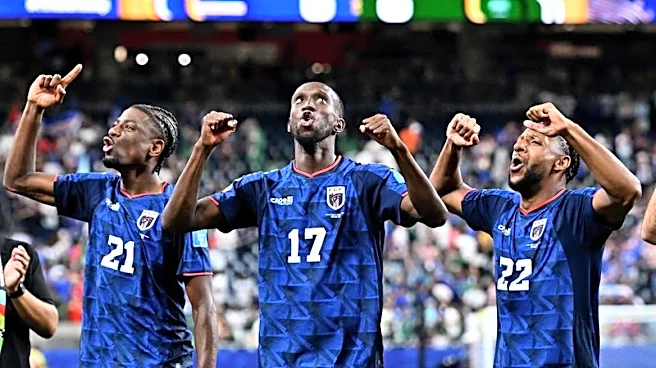
Of course, you can't force a party. While FIFA meticulously plans its official anthems, sometimes the fans pick their own soundtrack. In 2010, K'naan's "Wavin' Flag" became an equally iconic, albeit unofficial, anthem through a partnership with Coca-Cola. And during the 2026 tournament, England fans spontaneously adopted Oasis's 1995 hit "Wonderwall" as their post-game rallying cry, singing it with the players after every victory. These moments highlight a key truth: the most powerful anthems are those that capture a genuine feeling in the stands. The official songs are about branding and setting a global tone, but the unofficial ones are about organic, shared identity, proving that the real soundtrack of the World Cup often comes straight from the terraces.
The Business of the Beat
Ultimately, the answer to "why" is a mix of culture and commerce. For FIFA, the soundtrack is a powerful branding tool. A cross-cultural, genre-blending hit is a sonic metaphor for the tournament's message of global unity. These songs are engineered for mass appeal, often combining English, Spanish, and a host nation's language to maximize reach across the world's biggest music markets. They provide a universal language that transcends the on-field action, giving sponsors like Coca-Cola a platform to connect with a global audience emotionally. An anthem creates a recurring revenue stream through royalties and becomes the audio signature for TV broadcasts, advertisements, and video games, ensuring the World Cup brand is heard long after the final whistle.
The Sound of 2026 and Beyond
For the 2026 World Cup across North America, the musical strategy has grown even larger, evolving into a full multi-song album. The official song, "Dai Dai," pairs Shakira with Afrobeats star Burna Boy, while the official anthem, "DNA," is a collaboration between artists as diverse as Andrea Bocelli, David Guetta, and Megan Thee Stallion. This approach reflects a world of fragmented media consumption; instead of one song to rule them all, the goal is to create a diverse portfolio of tracks to reach different demographics. It's an admission that in the streaming era, a single anthem might not be enough to capture the world's attention. The goal is no longer just one hit, but a whole sonic universe for the planet's biggest party.