






Escaping the Spider-Verse
For any actor, landing a role like Spider-Man is a golden ticket, but it can also be a golden cage. The biggest challenge for stars defined by an iconic character is proving their range beyond the spandex. Tom Holland is clearly playing the long game.
His recent, physically demanding stint as Romeo in Jamie Lloyd’s polarizing stage production of Romeo & Juliet in London was the first major signal. It was a choice that prioritized artistic risk over commercial comfort, trading a global blockbuster set for the intimacy and rigor of West End theater. Critics noted his commitment in a stylized, often challenging production, demonstrating a hunger for credibility outside the Marvel Cinematic Universe. Now, by stepping into classical mythology, he's doubling down on that strategy. The role of Telemachus is another deliberate step away from Peter Parker, proving to Hollywood and audiences alike that his ambition extends far beyond playing a friendly neighborhood hero. He's actively dismantling any threat of being typecast before it can truly take hold.
The Christopher Nolan Credibility Stamp
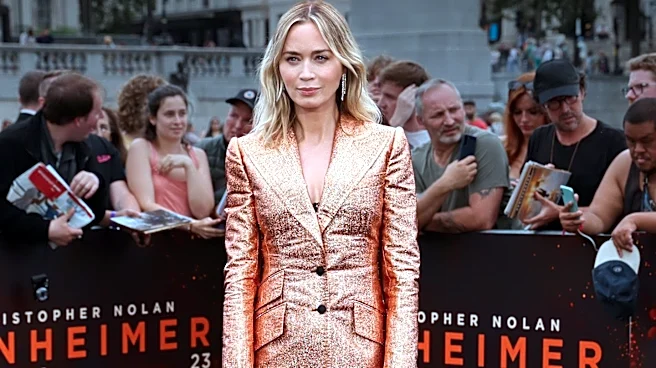
In modern Hollywood, there are directors, and then there is Christopher Nolan. Working with the filmmaker behind The Dark Knight, Inception, and the Oscar-sweeping Oppenheimer is less a job and more an anointing. Nolan is known for his demanding sets, intellectual scripts, and loyalty to actors he believes in. For Holland, securing a role in a Nolan ensemble is an undeniable seal of approval. In interviews, Holland has mentioned that Marvel co-star Robert Downey Jr., fresh off his Oscar win for Oppenheimer, had long advised him to find a way onto a Nolan set. This isn't just about starring in a prestigious film; it's about being invited into an exclusive club of actors known for their craft. Holland himself admitted he feels he has a "point to prove" with the role, acknowledging the perception that his fame is tied to commercial blockbusters. Being part of a Nolan film is the single most effective way to make that point, signaling a transition from global superstar to serious, respected actor.
The Perfect Supporting Part
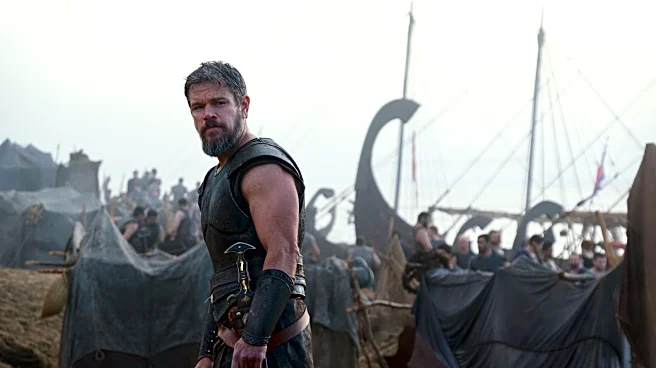
Crucially, Tom Holland is not playing Odysseus. That monumental task falls to veteran Matt Damon. Holland is cast as Telemachus, Odysseus's son, a significant but supporting role. This is arguably the most strategic element of the entire decision. It allows Holland to reap all the benefits of being in a Christopher Nolan epic without having to carry its full weight on his shoulders. He can absorb lessons from a cast of decorated actors, including Damon and Anne Hathaway, who plays his mother, Penelope. The part provides him with a dramatic arc—Telemachus's journey from a boy to a man searching for his father—that is both compelling and contained. He gets to demonstrate his dramatic chops in what some have already called a "surprisingly robust" performance, sharing the screen with legends rather than competing against their legacy. This allows him to shine in a high-caliber project, prove his versatility, and contribute to a major cinematic event, all while mitigating the immense pressure that comes with leading a $250 million epic.
Bridging the Audience Gap
From the studio's perspective, casting Tom Holland is a stroke of marketing genius. Homer's Odyssey, while a foundational text of Western literature, isn't an easy sell for a modern, mainstream audience. It's an ancient poem filled with strange gods and mythic monsters. While Christopher Nolan’s name alone guarantees significant interest, adding Tom Holland to the mix is an insurance policy for attracting a younger demographic. His global fanbase, cultivated over years as Spider-Man, ensures that millions of Gen Z and millennial viewers who might otherwise skip a historical epic will be lining up on opening weekend. He functions as a vital bridge, connecting the classical, high-art ambitions of the project with the commercial realities of the modern box office. Holland brings a built-in audience that is intensely loyal, turning what could have been a niche prestige picture into a four-quadrant global event. He doesn't just fit into the film's strategy; he expands its very definition of success.