







The World Before Mass Media
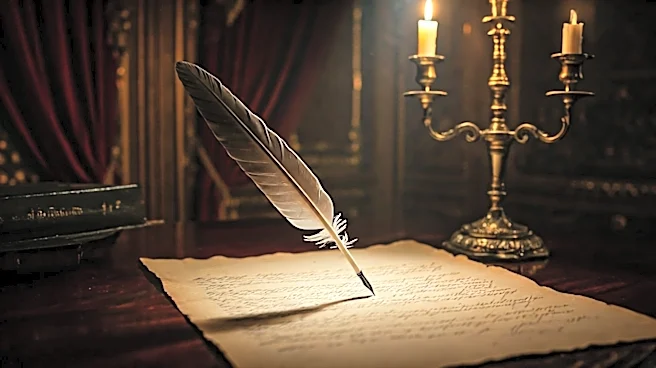
Imagine an entertainment landscape without mass distribution. Before the mid-15th century, that was the reality. Stories, songs, and news traveled at the speed of a human voice or a handwritten note. Entertainment was a local affair: a traveling minstrel,
a community play, or a story told around the fire. Books were the domain of the wealthy and the clergy, each one painstakingly hand-copied by scribes, making them rare and prohibitively expensive. A single book could take months or years to produce, and access to knowledge and stories was a privilege reserved for a tiny elite. This was a world of information scarcity, where culture was passed down through memory and speech, not through a scalable, reproducible medium.
An Invention Goes Viral
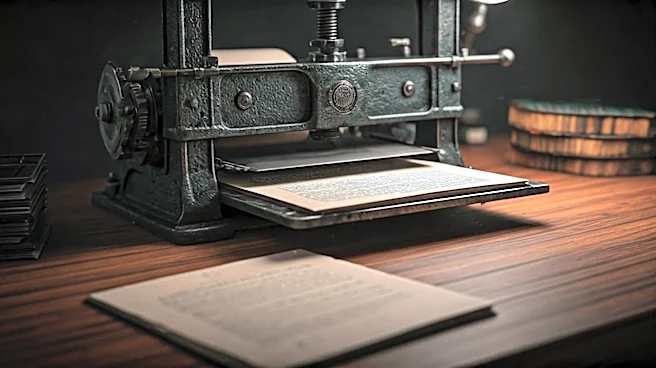
Johannes Gutenberg's movable-type printing press, perfected around 1450, is often hailed for its role in religious and scientific revolutions. But its most disruptive impact may have been in the business of amusement. While Gutenberg’s Bible was a monumental achievement, the real money and cultural force came from smaller, cheaper, more popular fare. Printers quickly realized that the same technology used to produce a sacred text could churn out thousands of copies of a scandalous poem, a satirical pamphlet, or the lyrics to a popular song. By 1500, printing presses had spread to over 270 cities across Europe, producing an estimated twenty million items. The machine designed for scholarly and religious texts was about to become the engine of pop culture.
Your 17th-Century Streaming Service
So, what was on this new platform? The content was surprisingly analogous to our own media diet. The smash hits of the day were broadside ballads, single sheets of paper printed with the lyrics to a song. Often sold by street peddlers for a penny, they were the 17th-century equivalent of a pop single, covering everything from current events and famous crimes to love and morality. Printers would even note which well-known tune the lyrics should be sung to, essentially providing a pre-made soundtrack. Then there were chapbooks, small, crudely printed booklets folded from a single sheet of paper. These were the pulp paperbacks of their time, filled with short stories, folk tales, jokes, and sensationalized news, providing cheap, portable entertainment for a newly literate public.
Forging a Common Culture
This new network did more than just entertain; it created a shared cultural conversation. For the first time, people in different towns and even different countries could be reading the same story or singing the same song at roughly the same time. A sensational murder trial in London could become the subject of a best-selling ballad sold in rural villages days later. The adventures of a fictional rogue or a real-life explorer could capture the imagination of an entire nation. This network standardized language and created what one scholar called an "imagined community," where people who would never meet felt connected through shared media. The press created a public sphere where ideas—political, social, and purely entertaining—could circulate, be debated, and unite or divide people on an unprecedented scale.