
1. The Playa
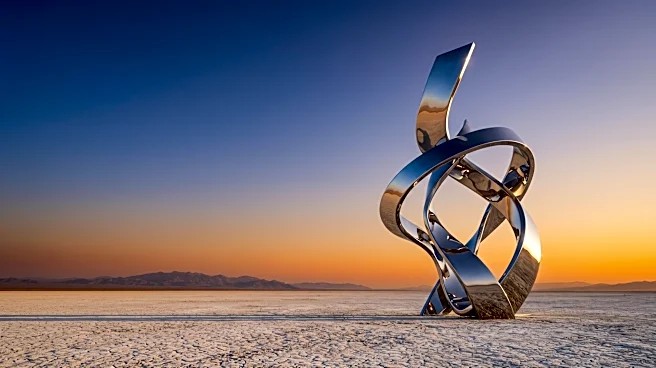
This is the foundational term. "The Playa" refers to the vast, flat, ancient lakebed of the Black Rock Desert where the event is held. It's not sand, but a fine, alkaline dust that gets into everything.
When someone says, "See you on the playa," they're talking about the event space itself, the sprawling canvas for all the art, camps, and exploration. The word is both a geological term for a dry lake bed and Spanish for "beach," a nod to Burning Man's origins on San Francisco's Baker Beach.
2. The Man
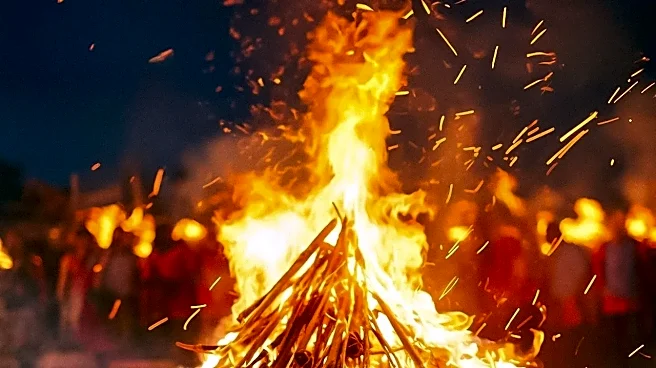
This is the iconic wooden effigy at the heart of the city. For the entire week, The Man stands as a central landmark, a meeting point, and the symbolic epicenter of the event. On the second-to-last night, in a massive celebration, it’s burned to the ground. This ceremonial act gives the event its name and serves as a climax of communal expression, art, and pyrotechnics.
3. The Temple
If The Man is the event's focal point, the Temple is its soul. Located in the deep playa, it's a large, elaborate, and architecturally distinct structure that is built anew each year. Unlike the celebratory burn of The Man, the Temple is a non-denominational space for reflection, grief, and remembrance. Participants leave photos, letters, and mementos for loved ones lost. On the final night, it is burned in a quiet, cathartic ceremony, offering a moment of collective release for the entire city.
4. MOOP (Matter Out of Place)
MOOP is the official term for any and all trash or debris. From a stray sequin to a dropped bottle cap, if it wasn't there to begin with, it’s MOOP. One of Burning Man's core principles is Leave No Trace, and the community takes this seriously. Participants are expected to pack out everything they bring in, and a post-event “MOOP Map” rates each campsite on its cleanliness, which is critical for the event's permit to use the land.
5. Gifting
Burning Man operates on a decommodified, gift-based economy. This doesn't mean bartering; it means giving something to someone without expecting anything in return. Gifts can be anything from a cold drink on a hot day to a handmade piece of jewelry, a helping hand, or an entire artistic experience. The only things for sale are ice and coffee. This principle fosters a social environment free from commercialism and transactions.
6. Radical Self-Reliance
This principle dictates that you are responsible for your own survival and experience. You must bring all your own food, water, shelter, and everything else you need for a week in a harsh desert environment. The community is supportive, but the expectation is that you arrive prepared. This ethos is the direct opposite of being a "Sparkle Pony."
7. Sparkle Pony
This is a tongue-in-cheek, derogatory term for someone who shows up to the playa unprepared, often with more costumes than water. A Sparkle Pony relies on the Gifting and Radical Self-Reliance of others to get by, essentially becoming a burden on their campmates or the community at large. While the term is sometimes used playfully, it points to the cultural tension between radical self-expression and the fundamental need for self-reliance.
8. Mutant Vehicle (or Art Car)
Regular cars must be parked at your campsite for the week, but Mutant Vehicles are allowed to roam the playa. These are customized vehicles, radically altered into mobile works of art, from fire-breathing dragons to giant, glowing jellyfish. They are licensed by the event's own DMV (Department of Mutant Vehicles) and are a huge part of the event's visual spectacle, often doubling as mobile sound systems and party platforms.
9. Darkwad
A practical and important piece of slang, a "darkwad" is someone walking or biking on the playa at night without any lights. In the pitch-black desert, with thousands of bikes and art cars moving around, being unlit is a serious safety hazard. Getting called a darkwad is a community-enforced reminder to light yourself up with EL wire, LEDs, or glow sticks to stay visible and safe.
10. Default World
This is what Burners call the world outside of Black Rock City. It's the life of jobs, transactions, and societal norms that participants leave behind for one week. The term isn't meant to be pejorative, but rather to frame the Burning Man experience as a temporary, alternate reality with its own distinct culture, economy, and social rules before everyone has to return to the "default."