








The Tyrant in the Rose Garden
Before we can talk about the future, we have to appreciate the past. Donald Sutherland’s Coriolanus Snow wasn’t a cackling madman or a snarling monster. He was worse. He was the calm, collected architect of Panem’s cruelty, a man who projected grandfatherly
stillness while orchestrating the deaths of children for sport. Sutherland gave the character a chilling, reptilian grace. His performance was all in the details: the unnervingly placid smile, the quiet way he’d prune his white roses, the soft-spoken threats that carried more weight than any shout ever could. He was terrifying not because he was loud, but because he was certain. He believed in the Hunger Games as a necessary tool of order, and Sutherland made you feel that conviction in your bones. He created a villain for the ages, one whose shadow looms large over the entire franchise.
The Man Before the Monster
The immediate challenge of following Sutherland, however, isn't a direct recasting but an origin story. In the prequel, 'The Hunger Games: The Ballad of Songbirds & Snakes', we meet Coriolanus Snow as a young man, decades before he became the tyrant of Panem. The role went not to a seasoned veteran like Fiennes but to a rising star, Tom Blyth. His task is arguably more complex than a simple imitation. He can't just do a Sutherland impression; he has to build the man who will one day become that monster. Blyth has to show us the ambition, the vulnerability, and the curdled idealism of a young Snow trying to restore his family's honor. The drama lies in watching his descent, in seeing the moments and choices that forge him into the quietly terrifying figure we already know. It’s a different but equally daunting challenge: filling in the blanks of a character whose horrifying conclusion is already written.
The Perfect Hypothetical Villain
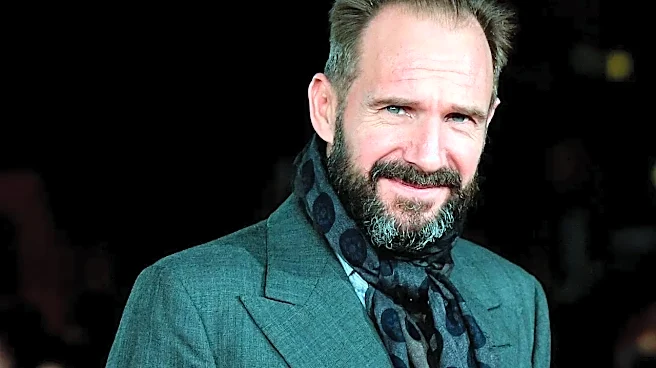
So why does a name like Ralph Fiennes pop into our heads? Because if you were to build the perfect actor in a lab to portray sophisticated, terrifying evil, you’d probably end up with him. Fiennes has a unique mastery of the 'quiet monster'. As Amon Goeth in 'Schindler's List', he was the face of casual atrocity. As Lord Voldemort in the 'Harry Potter' series, he blended serpentine physicality with explosive rage. Fiennes doesn't just play villains; he inhabits their worldview. He finds the twisted logic and humanity inside them, which makes them infinitely more frightening. One can easily imagine his version of an older Snow—less of Sutherland's grandfatherly facade and perhaps more of a cutting, intellectual cruelty. The idea is compelling because Fiennes represents the gold standard for the exact type of antagonist Snow is, making him the ultimate 'what if' casting for this universe.
The Weight of Iconic Roles
This conversation is bigger than Panem. It's a classic Hollywood tightrope walk. Whenever an actor steps into a role immortalized by someone else, they face a choice: imitate or reinvent. When Heath Ledger took on the Joker after Jack Nicholson's legendary turn, he didn't try to copy him. He created something entirely new, darker, and more anarchic. The legion of actors who have played James Bond each had to find their own unique spin on 007, from Sean Connery's suave danger to Daniel Craig's brutish vulnerability. Succeeding in an iconic role is never about being a perfect copy. It's about understanding the core of the character and finding a new, equally valid truth within it. The performance has to honor the legacy without being imprisoned by it, a feat that requires immense confidence and a strong artistic vision.