


Welcome to Camp Chippewa
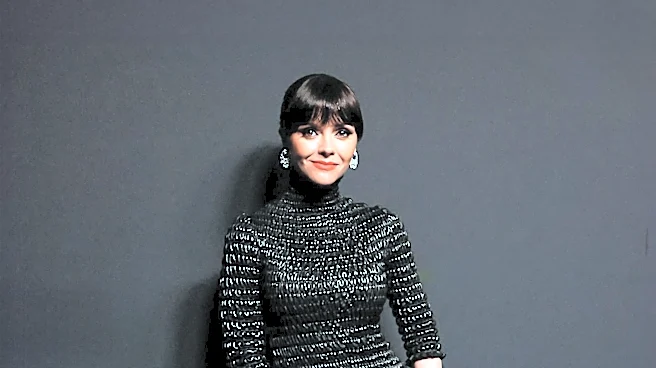
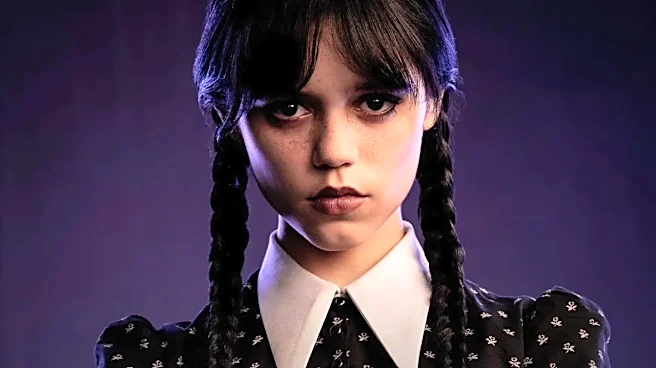
The setup is a perfect storm of comedic horror. Wednesday (Christina Ricci) and Pugsley (Jimmy Workman) are exiled from their gothic manor to the pastel-hued nightmare of Camp Chippewa, a summer camp for America's most 'privileged young adults'. Run by
the insufferably cheerful Gary and Becky Granger, the camp is a temple of forced fun and conformity, a world where the Addams children’s monochromatic gloom is a cardinal sin. The conflict is immediately established: the Addams’ embrace of the macabre versus the camp's relentless demand for perky, sanitized happiness. The 'othered' kids—those who are not blonde, wealthy, and conventionally attractive—are quickly sorted into a social underclass.
A Pageant of 'Brotherhood'
The camp experience culminates in a mandatory Thanksgiving pageant, a musical titled 'A Turkey Named Brotherhood'. The casting is a microcosm of the camp's social hierarchy: the popular, blonde campers are cast as the noble Pilgrims, while Wednesday, Pugsley, and their fellow outcasts are relegated to playing the Native Americans. Wednesday is ironically cast as Pocahontas. The play itself is a nauseatingly sweet retelling of the first Thanksgiving, full of historically inaccurate songs and dialogue that portrays the Pilgrims as generous hosts and the Native Americans as their 'primitive guests'. Pugsley, dressed as a giant turkey, even sings a song with the morbidly cheerful lyric, 'Eat us, 'cause we're good and dead'.
Wednesday's Revisionist History
After being forced into the 'Harmony Hut' to watch hours of upbeat family films, Wednesday appears to have been broken, sporting a terrifying, uncharacteristic smile. But it's all a setup. As the pageant reaches its climax, she goes gloriously off-script. Instead of accepting bread from the Pilgrim leader, she stops the show. 'Wait,' she begins, her deadpan delivery making the words hit even harder. 'You have taken the land which is rightfully ours.' She proceeds to deliver a blistering, historically accurate monologue that swaps the Thanksgiving myth for a grim prophecy. 'Years from now, my people will be forced to live in mobile homes on reservations,' she declares. 'Your people will wear cardigans and drink highballs... My people will have pain and degradation. Your people will have stick shifts.'
An Uprising of the Outsiders
Wednesday's speech is a call to arms. She concludes by announcing, 'And for all of these reasons, I have decided to scalp you and burn your village to the ground.' This is the signal for the rebellion to begin. The other 'misfit' campers, empowered by her words, revolt. They capture the Pilgrims, tying the preppy Amanda Buckman to a stake, and set the entire colonial village set ablaze. The ensuing chaos is a cathartic explosion of outsider rage. It’s not just the Addams children; it’s a unified uprising of every kid who was ever made to feel 'other'. They turn the symbols of their oppression—the stage, the costumes, the very narrative they were forced to perform—into weapons of rebellion.
Why the Scene Endures
Decades later, the scene remains one of the most pointed pieces of social commentary ever smuggled into a family film. Screenwriter Paul Rudnick used the freedom of a sequel to create something 'crazier' and more subversive than the first film. The scene's power lies in its direct confrontation with the sanitized version of American history often taught to children. It gives voice to the uncomfortable truths of colonization and genocide that the traditional Thanksgiving narrative conveniently ignores. More broadly, it’s a perfect encapsulation of the Addams Family ethos: a celebration of the outcast and a sharp critique of the hypocrisy often lurking beneath 'normal' family values. It speaks not just for Indigenous peoples, but for anyone who has ever felt marginalized by a dominant culture.