





Beyond the Whiteboard
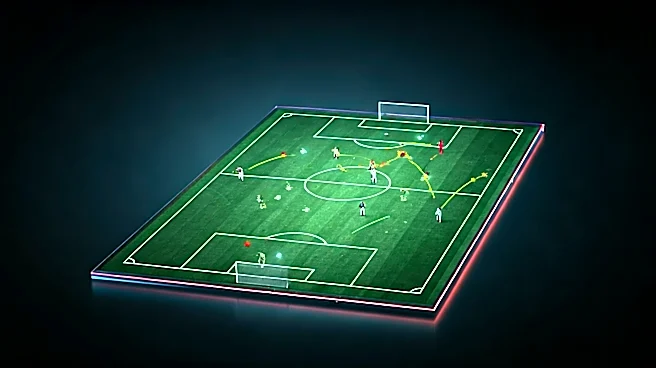
At its core, the 4-3-3 is an attacking formation designed to control the game through midfield dominance and aggressive forward play. Unlike more rigid setups, its strength lies in flexibility. The shape naturally creates triangles all over the field,
giving the player on the ball multiple passing options and making it ideal for a possession-based style. It consists of four defenders, three midfielders, and three forwards. But the magic isn't in the static positions; it's in the fluid movement and the relationships between the players. It’s a system that asks questions of the opposition: Can you handle our pressure? Can you stop our wingers? Can you control our midfield? When a team lines up in a 4-3-3, they’re signaling that they intend to be proactive, not reactive.
The Engine Room: A Three-Player Midfield
The heart of the 4-3-3 is its three-player midfield. How this trio is configured dictates the team's entire approach. Most commonly, it’s a triangle with one deep-lying midfielder (the "number 6" or pivot) and two more advanced central midfielders (the "number 8s"). The number 6 is the brain, shielding the defense, recycling possession, and switching the point of attack. The two number 8s are the lungs, tasked with linking defense to attack, making runs into the box, and pressing the opposition relentlessly. This structure allows a team to potentially outnumber opponents in the center of the park, controlling the game's tempo and starving the other team of the ball.
The Trident and the Overlap
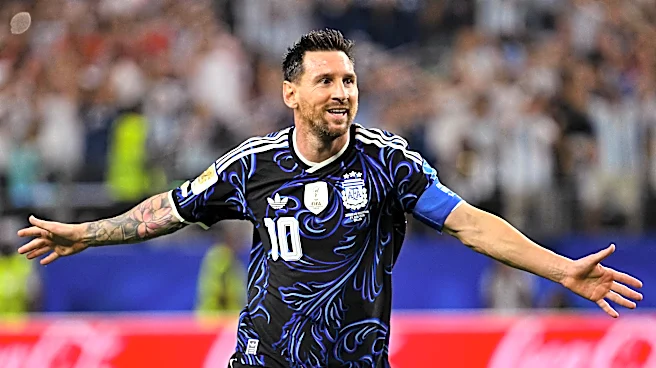
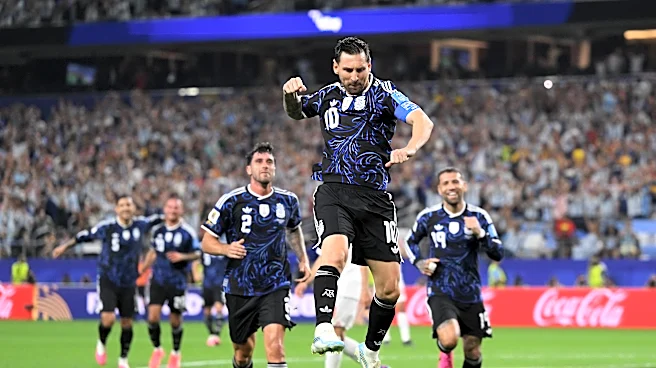
The iconic feature of the 4-3-3 is its three-pronged attack. Traditionally, this meant a central striker flanked by two wide wingers. But the modern evolution has made it even more potent. Many top teams now use "inverted wingers"—right-footed players on the left wing and vice-versa—who cut inside to shoot, creating chaos for defenders. This inside movement creates a crucial vacuum on the flanks, which is then filled by aggressive, overlapping full-backs who bomb forward to provide width and deliver crosses. This creates a five-player attack that can overwhelm a defense. At the center of it all is the striker, who might be a traditional goal poacher or a "false nine" who drops deep to link play and create space for others, a role perfected by Lionel Messi at Barcelona.
The High-Wire Act: Strengths and Weaknesses
The 4-3-3 is a high-risk, high-reward system. Its greatest strength is its attacking potential and its suitability for a high-pressing style. The front three can put immediate pressure on the opposition's defenders, forcing turnovers high up the field. However, its aggressive nature is also its primary weakness. With full-backs pushed high up the field, a team can be left incredibly vulnerable to fast counter-attacks, especially via quick diagonal balls into the space they've vacated. The formation also demands immense physical fitness and tactical discipline. If the wingers don't track back or the midfielders get caught out of position, the defensive holding midfielder can become easily isolated and overwhelmed.
From Total Football to Today
The 4-3-3’s roots are intertwined with some of the most romantic concepts in soccer history. It was the foundation for the revolutionary “Total Football” philosophy of Rinus Michels’ Ajax and Netherlands teams in the 1970s, where players were expected to fluidly interchange positions. Johan Cruyff, the star of that Dutch team, later implemented it as a coach at Barcelona, laying the groundwork for the club's identity. In the modern era, it has been the weapon of choice for some of the most successful managers. Pep Guardiola’s legendary Barcelona team used it to perfect their “tiki-taka” style, while Jürgen Klopp’s Liverpool used a high-energy version to win both the Premier League and Champions League titles.