




4. The Standalone Experiment (Halloween III)
The boldest and, at the time, most disastrous strategy was to abandon Michael Myers entirely. After 'Halloween II', creators John Carpenter and Debra Hill envisioned 'Halloween' as an annual anthology series, with each film telling a different, self-contained
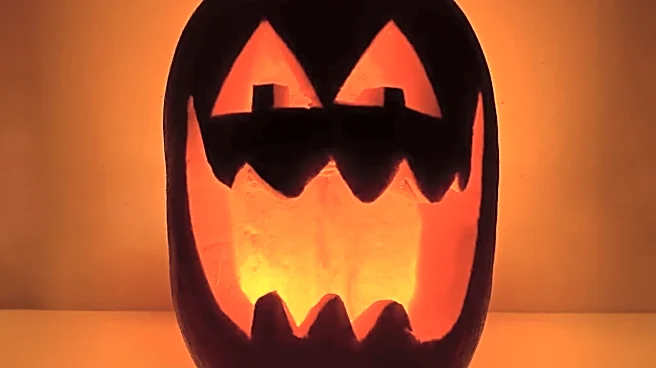
horror story set on the holiday. 'Halloween III: Season of the Witch' (1982) was the first and only attempt at this. The film, about a sinister plot involving cursed Halloween masks, has zero connection to the story of Laurie Strode or 'The Shape'. The strategy was a complete commercial failure. Audiences felt betrayed, having expected another confrontation with their favorite slasher. While the film has since been re-evaluated and gained a cult following for its wild, dark, and unique premise, the strategy itself was a dead end. It proved that the 'Halloween' name was inextricably linked to Michael Myers, for better or worse. Trying to sell the brand without the face was a noble failure, ranking it last as a 'reboot' strategy because it was more of an attempted pivot that proved the original formula was all that mattered to the masses.
3. The Gritty Origin Story (Rob Zombie's Remakes)
By 2007, the original timeline had sputtered to a halt. The new strategy? A full-blown, hard-R remake from a director with a distinct vision. Rob Zombie's 'Halloween' (2007) didn't just retell the story; it attempted to explain the monster. The first half of the film is an extended origin story, digging into Michael's abusive childhood to provide a psychological, if crude, explanation for his murderous rage. This approach fundamentally changed the character from an unknowable force of nature into a product of trauma. It was a divisive strategy. While some appreciated the raw, brutalist take and the attempt to do something new, many fans felt it demystified Michael Myers, stripping him of the very thing that made him terrifying in Carpenter's original. The sequel, 'Halloween II' (2009), leaned even further into Zombie's surreal and nihilistic style. As a strategy, the full remake was financially successful but creatively polarizing. It gave the franchise a shot of adrenaline but at the cost of the original's core appeal: Michael's terrifying ambiguity.
2. The Legacy Sequel (Halloween H20)
'Halloween H20: 20 Years Later' (1998) pioneered a strategy that is now commonplace in Hollywood: the legacy sequel. After the convoluted 'Curse of Thorn' storyline of parts 4, 5, and 6 alienated many viewers, 'H20' made a simple, brilliant choice. It ignored those three films and acted as a direct sequel to 'Halloween II' (1981). This brought back Jamie Lee Curtis as Laurie Strode for the first time in 17 years, asking a compelling question: What has Laurie been doing for the last 20 years? The answer was that she faked her death, changed her name, and was living in constant, paranoid fear. The strategy was a massive success, revitalizing the franchise by reconnecting it with its most beloved character and themes. It honored the essential lore (the first two films) while jettisoning the baggage. Its only major failing was its follow-up, the dreadful 'Halloween: Resurrection' (2002), which unceremoniously killed off Laurie in the first 15 minutes and squandered all the goodwill 'H20' had built. Still, the initial strategy was sound, effective, and influential.
1. The Aggressive Retcon (David Gordon Green's Trilogy)
The top-ranked strategy is the most audacious. David Gordon Green's 'Halloween' (2018) wasn't just a legacy sequel; it was a hard reset that cherry-picked only the 1978 original. Everything else—sequels, remakes, and all their lore—was erased. Most notably, it jettisoned the sibling connection between Laurie and Michael that was introduced in 'Halloween II', a twist that had defined the franchise for decades. In this new timeline, Laurie was not Michael's sister; she was a random victim who was never able to move past that one horrific night. This move brilliantly returned Michael to his roots as 'The Boogeyman'—pure, motiveless evil. The strategy allowed the filmmakers to explore themes of generational trauma and a community's response to violence in a fresh way. The film was a critical and commercial behemoth, proving that sometimes the best way forward is to go back to basics. While the subsequent films, 'Halloween Kills' and 'Halloween Ends', had their own controversial story choices, the initial strategic decision to perform such a clean, aggressive retcon was masterful. It respected the original's power while creating a new, compelling narrative for modern audiences, making it the most successful reboot strategy the franchise has ever tried.