


For generations, Dorothy Gale was the wide-eyed heroine of Oz. But with the arrival of Jon M. Chu’s two-part 'Wicked' saga, the girl in the gingham dress has been recast not as a villain, but as something far more interesting: a disruptive force.
The Hero We Thought We Knew
Since
Judy Garland first stepped onto the Yellow Brick Road in 1939, Dorothy Gale has been a cornerstone of American pop culture. She is the lost farm girl, embodying innocence and a desperate desire to return home. In the classic 'The Wizard of Oz', her journey is straightforward: she accidentally kills one witch, is hunted by another, makes three iconic friends, and ultimately exposes a fraudulent wizard before clicking her heels. Her motivations are pure, and her heroism is accidental but undeniable. She is the story’s moral center, a good person navigating a Technicolor world of talking lions and flying monkeys. For decades, that was the only story we needed. But 'Wicked' asks us to look behind the curtain, suggesting that history, even in a magical land, is written by the victors.
A Storm on the Horizon
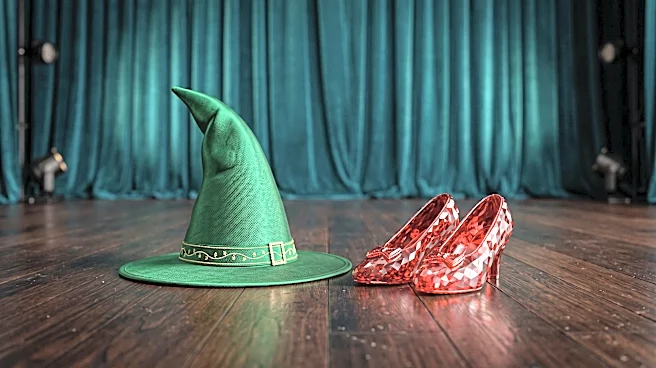
The central premise of 'Wicked'—both the musical and the now-completed film duology—is to reframe the narrative from the perspective of Elphaba, the woman who would become the Wicked Witch of the West. In her story, the arrival of Dorothy is not a moment of liberation but the chaotic climax of a lifelong struggle against a corrupt regime. The tornado that drops a house on her sister, Nessarose (the Wicked Witch of the East), isn't just a random act of nature; it's a catastrophic event. The ruby slippers (or silver, as in the book and 'Wicked' films) aren't a fun accessory; they are a priceless family heirloom. And the water that melts her isn't a clever defense, but the tragic end to a life spent fighting for the oppressed talking Animals of Oz. From this angle, Dorothy isn’t a hero. She is an unwitting pawn in a political game, a catalyst for tragedy.
An Off-Screen Antagonist
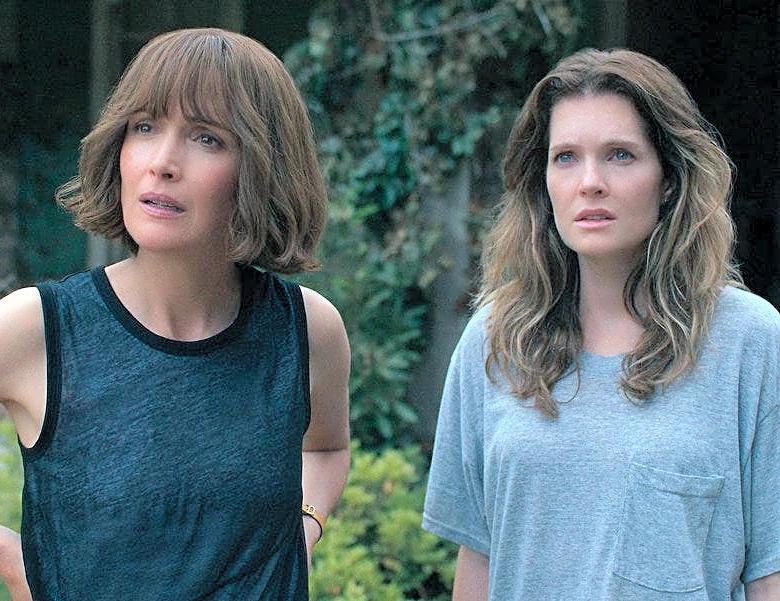
In a deliberate creative choice, director Jon M. Chu opted to keep Dorothy largely off-screen and entirely faceless in both 'Wicked' and its sequel, 'Wicked: For Good'. Portrayed in silhouette and from behind by actress Bethany Weaver, Dorothy exists more as a narrative obligation than a fully-formed character. Chu explained the decision was to avoid stepping on the audience's established image of Dorothy, particularly Judy Garland's iconic performance, and to keep the focus squarely on the journey of Elphaba and Glinda. The effect, however, is profound. By rendering her a faceless enigma, the films turn Dorothy into an almost elemental force. She is not a person to be reasoned with but an event to be survived. Her actions—taking the shoes, heading to the Emerald City, and hunting the 'wicked' witch—are seen through the pained and frustrated eyes of Glinda and Elphaba, making her an unintentional antagonist whose ignorance causes immense harm.
The Heroism of Perspective
Recasting Dorothy as a disruptive force aligns with a broader cultural trend of deconstructing classic stories and questioning one-dimensional heroes and villains. Much like 'Maleficent' or 'Joker', 'Wicked' complicates a simple good-versus-evil narrative by adding the crucial ingredient of perspective. Dorothy isn't evil; she is simply operating on a different set of facts. She believes she is fighting a wicked witch because that's the story she was told by Glinda and the Wizard. Her journey highlights a central theme of 'Wicked': that wickedness is often a matter of public relations, and heroism depends entirely on who is telling the story. The films suggest that in a world of propaganda and political manipulation, a girl from Kansas with a dog and a mission can become an instrument of destruction without ever realizing it. She is, in the end, the ultimate disruptor—the one who unravels everything, for better and for worse.