


An Instant Character Biography
Before a single line is spoken, you’ve already made a dozen judgments about a character, and costumes are the primary reason why. A pilot episode has the monumental task of introducing a full cast of characters, and it doesn't have time for lengthy exposition.
Wardrobe is the ultimate shortcut. Think of the Roy family in the premiere of Succession. Their expertly tailored, logo-free suits and quiet luxury knitwear scream “old money” and a level of wealth so profound it doesn't need to announce itself. Conversely, a character in a worn-out band t-shirt and scuffed boots instantly tells a story of their economic status, musical taste, and perhaps a rebellious streak. Costume designers use fabric, fit, and style to telegraph a character's social standing, occupation, and even their psychological state. As costume designer Johanna McGuire has noted, the goal in a pilot is to immediately signal who a character is—villain, hero, rich, or poor—through visual cues. It’s a full character bio in a single, expertly chosen outfit.
World-Building in a Single Stitch
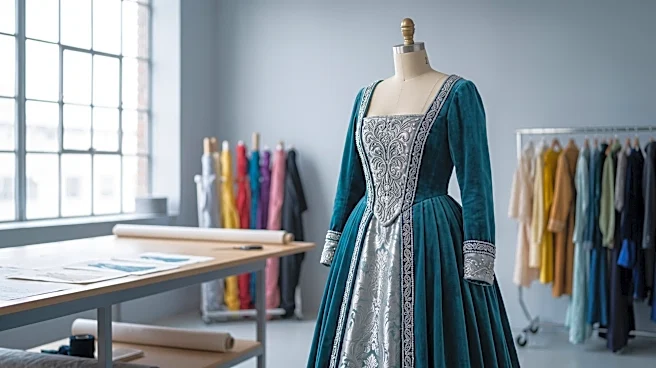
Costumes don’t just define people; they build the entire universe the story inhabits. In a series premiere, the wardrobe establishes the rules, norms, and overall tone of the show's world. Consider the hyper-stylized, Regency-era gowns of Bridgerton. The vibrant, almost candy-colored palette and modern embellishments immediately signal that this isn't a stuffy, historically precise period drama. It’s a romantic, heightened version of the past. Similarly, the bleak, color-coded uniforms in The Handmaid’s Tale pilot instantly create a world of oppressive conformity and rigid social hierarchy. Every costume choice helps construct the fictional reality, whether it’s a fantasy kingdom with distinct regional styles like in Game of Thrones or the gritty, streetwear-defined London boroughs of Top Boy. The consistency of these choices across extras and main characters alike makes the world feel lived-in and real, immersing the audience completely.
Foreshadowing Through Fabric and Color
The smartest costume designs in a pilot also plant seeds for the future. A character's journey is often subtly mapped out through their wardrobe from the very first episode. This can be achieved through color psychology, where a character’s palette may shift to reflect their changing morality or circumstances. A character introduced in bright, optimistic colors might slowly see their wardrobe darken as they head down a more troubled path. This evolution serves as a visual marker of their internal transformation. Think of Walter White’s journey in Breaking Bad, which famously used color to track his moral decay. While that’s a series-long arc, the seeds are planted early. Details like a recurring symbol on a piece of jewelry or the slow degradation of a character's clothing can foreshadow alliances, betrayals, or a coming downfall. These visual cues work on a subconscious level, enriching the narrative and rewarding eagle-eyed viewers on a rewatch.
Defining Power and Relationships
Finally, costumes are brilliant at quickly establishing the power dynamics between characters. By using contrast or harmony, a designer can visually link allies and separate rivals. In a show's premiere, you can often tell who belongs together and who is in conflict simply by looking at how they are dressed. Are two characters wearing complementary colors, suggesting a bond? Or does one character’s sharp, structured suit clash with another’s soft, flowing dress, hinting at a fundamental opposition in their personalities or goals? This visual grouping helps the audience track complex relationships from the start. In a corporate drama, the boss might be in a fabric and cut that is visibly more expensive than their subordinates. In a high school series, cliques are defined by their shared aesthetics. This visual shorthand is essential for making the social landscape of a new series instantly legible.