







An Egalitarian Mountain Fortress
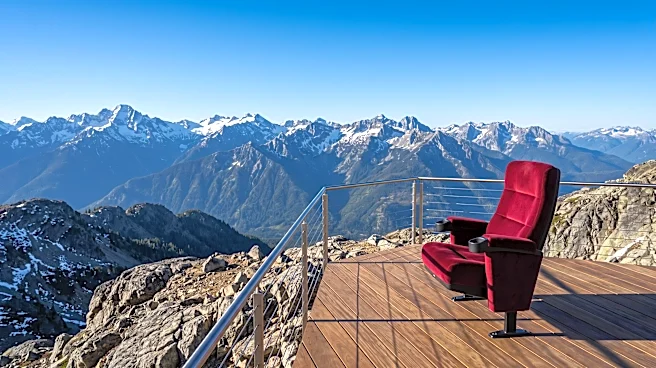
You can’t just stumble into Telluride. Nestled in the San Juan Mountains, the festival’s remote location is a feature, not a bug. Unlike the sprawling, market-driven chaos of Cannes or the urban crush of Toronto, Telluride is intentionally inconvenient.
Attendees—a mix of die-hard cinephiles, filmmakers, and critics—make a deliberate pilgrimage, often booking travel without knowing a single film on the schedule. This self-selecting audience creates an atmosphere that is less about industry deal-making and more about a shared love of cinema. There are no paparazzi, no velvet ropes, and no studio limos. The result is an open, democratic environment where a film’s merit is discussed in lift lines and coffee shops, and the person standing behind you might just be the director of the film you loved.
Curation Guided by Love, Not Labels
Telluride’s program, kept secret until the festival begins, is its most defining trait. This forces attendees to trust the curators, led for two decades by executive director Julie Huntsinger. The selection process is guided by a simple, powerful principle: the programming team just has to love the film. Huntsinger calls herself a “midwife” for movies, focused on nurturing films into the world. This philosophy allows the festival to champion eclectic and hard-to-categorize works that might get lost at more commercial festivals. While they screen future Oscar winners, they also program forgotten classics and bold new works from around the globe. The program, referred to as “The SHOW,” is designed as a holistic experience, not a checklist of premieres, allowing for a mix of features, shorts, and tributes.
No Prizes Means No Politics
Telluride is not a competition. There are no juries, no official awards for films, and therefore none of the associated politics. This seemingly small detail fundamentally changes the festival's DNA. Filmmakers are free to present challenging, experimental, or genre-fluid work without the pressure of having to win something to validate its existence. The focus shifts from competition to conversation. Instead of lobbying jurors, directors are often found in theaters watching other filmmakers' movies. The festival does present a few Silver Medallion awards, but these are tributes honoring a person's entire body of work, not a prize for a single film. This non-competitive ethos reinforces the idea that Telluride is a celebration of film, not a marketplace.
An Audience That Craves Discovery
The secret lineup and challenging location cultivate an audience that is uniquely receptive to the unconventional. People don't come to Telluride to see a specific star or a pre-hyped blockbuster; they come for the act of discovery itself. This creates a space where a quiet, contemplative drama can generate as much buzz as a film from a world-famous director. According to Huntsinger, more restrained films find a particularly receptive audience at Telluride, where there's a greater willingness to be surprised by works that move away from pure spectacle. This audience trust gives the festival's endorsement significant weight, acting as a stamp of credibility that can launch a small, unclassifiable film into the national conversation. In a culture dominated by algorithms and marketing campaigns, Telluride's success proves there is still a powerful appetite for the unknown.