







The biggest night in Latin music is just days away, but the most important shift in the industry isn't happening on stage. It's happening on servers and in software, quietly rewriting who gets a shot at a golden gramophone.
The Old Guard: Major Labels and the Grammy Path
For decades, the path to a Latin
Grammy nomination was straightforward but narrow. An artist needed the backing of a major record label. Labels weren't just for funding lavish music videos; they were the gatekeepers of commercial distribution, the bouncers at the door of mainstream success. To be eligible, a song or album needed to be commercially available on a wide scale. This 'general distribution'—think physical CDs in stores from Rio to Lisbon or major digital placements—was a logistical and financial mountain that only a label-backed expedition could climb. Independent artists, no matter how talented, often found themselves on the outside looking in. Their self-produced albums, sold at shows or through local shops, simply didn't meet the Academy's stringent requirements for a 'true release'. This system naturally favored established names and commercially proven genres, creating a predictable, often homogenous, pool of contenders year after year.
A Digital Revolution Hits the Ballot
The digital revolution didn't just change how we listen to music; it democratized how music is released. Services like DistroKid, TuneCore, and Symphonic, along with Brazil's own emerging platforms, became the great equalizer. For a small fee, any artist can now upload their music and have it distributed globally to all the major streaming services like Spotify and Apple Music. This is the key that unlocks the Grammy door. According to the Latin Recording Academy's rules, a recording is eligible as long as it's commercially available through these exact types of streaming services during the eligibility window, which for the 2026 awards was June 1, 2025, to May 31, 2026. Suddenly, an independent artist from Bahia or a burgeoning MC from a São Paulo suburb has the same distribution footprint as a superstar signed to Sony Music. They can get an official ISRC (International Standard Recording Code) for their tracks, a crucial piece of metadata required for submission, and prove their music is legitimately 'for sale' to a global audience.
The Portuguese-Language Categories: A Unique Battlefield
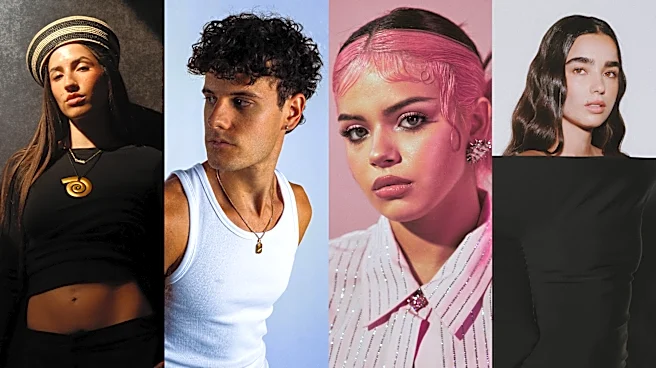
This shift is particularly transformative for the Portuguese-language ballot. While Spanish-language music has a sprawling, interconnected market across dozens of countries, Brazilian music often operates within its own massive, yet somewhat siloed, ecosystem. Genres like Sertanejo, Funk, and traditional MPB (Música Popular Brasileira) are giants at home but have historically relied on major label deals to cross over internationally and gain the attention of the Latin Academy's voting members. Now, independent distribution allows artists in these uniquely Brazilian genres to bypass the old gatekeepers entirely. The nominations for the 2026 Latin Grammys already show this trend, with artists listed under 'Independent' or smaller distribution labels like 'Altafonte' right alongside major players. An artist like Jenni Mosello, nominated for Best Portuguese Language Contemporary Pop Album, is listed as 'Independent', a testament to this new pathway. This empowers a wider range of sounds, from the rock of Black Pantera to the alternative stylings of Urias, to compete on a level playing field.
More Than Just a Trophy
The impact extends far beyond just one awards night. When independent artists can compete, the very definition of what is 'awardworthy' begins to change. The Latin Grammys have faced criticism for years over representation, with some feeling the awards favor mainstream, commercial sounds and artists from Spain over the diverse genres bubbling up from Latin America. By opening the doors to artists who aren't filtered through a major label's A&R department, the awards can better reflect the true richness of the culture. It incentivizes investment in niche genres that might be overlooked by a purely massconsumption model, like traditional Forró or regional rock. This year, the academy even updated categories like Best Portuguese Language Urban Performance to an album award, creating more space for genre artists to be recognized for a full body of work. The result is a more vibrant, diverse, and authentic representation of what is actually happening in Portugueselanguage music today, not just what is being pushed by the biggest marketing budgets.