
You've been there: a piece looks great in your mind but feels off in reality. Stylists know the secret to a perfect fit isn't magic—it's mastering the tools you already own. Here's how they use a mirror
and a camera for different problems.
The Mirror for the Big Picture
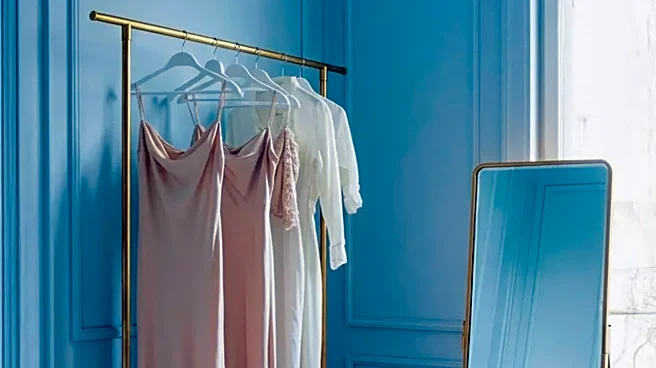
A full-length mirror is your first stop. Its purpose is to give you a holistic, head-to-toe view of your outfit. Stylists use it to assess the overall silhouette, proportions, and drape of a garment. Stand back at least six feet to get a true sense of scale. This is where you check for the basics: Are the hemlines hitting at a flattering spot? Do the proportions of the top and bottom create a balanced shape? How does the fabric hang on your frame? The mirror is excellent for evaluating the outfit's general impression and whether the lengths and volumes work together. It’s a dynamic tool, allowing you to see yourself in motion as you turn and pose, giving you a sense of how the outfit feels in three dimensions.
The Camera for Brutal Honesty
If the mirror gives you a first impression, the phone camera delivers the hard truth. A static photograph freezes a single moment in time, revealing issues your brain might otherwise edit out in a fluid mirror reflection. Stylists rely on photos because they flatten a 3D image into 2D, instantly highlighting awkward pulling, bunching, or asymmetry. What might look like a smooth fit in the mirror can show up as horizontal stress lines across the bust or hips in a photo. A phone's wide-angle lens can sometimes distort proportions, so it's best to prop your phone up around chest height and use a timer rather than taking a close-up selfie. This method provides a more objective record, closer to how others will see you.
Diagnosing Back and Side Views
The phone camera becomes essential for angles you can't see yourself. Fit problems often hide on the back and sides. A quick photo or video reveals everything from a gaping blouse back to trousers that are too tight across the seat. To do this like a pro, set your phone on a shelf and use a timer or a 'show palm' gesture setting if your phone has it. Take shots from the direct side, the back, and quarter-angles. This is the only way to check if a jacket's shoulder seams are sitting correctly on the bone or if there's pulling across your back when you move your arms. Without this step, you're only evaluating half of the fit.
The Video Test for Real_Life Movement
Clothes are meant to be lived in, not just stood in. A static photo can't tell you what happens when you walk, sit, or bend over. This is where a short video clip is invaluable. Prop up your phone and record yourself walking toward and away from the camera. Take a seat. Bend down as if to pick something up. Does the skirt ride up uncomfortably? Do the pants create a significant waist gap at the back when you sit? Does the wrap dress stay securely closed? Stylists use this technique to ensure an outfit is not only flattering but also functional and comfortable for everyday life, flagging any potential wardrobe malfunctions before you even leave the house.
Analyzing Fabric and Construction Details
Finally, use your phone’s camera for quality control. Get up close to inspect fabric and construction. A close-'up shot can reveal if a fabric is more sheer than you realized, especially under different lighting conditions. It's also perfect for spotting puckered seams, uneven stitching, or how a pattern aligns at the seams—details that signify garment quality. A mirror won't show you that the fabric is starting to pill after one try-'on or that a button is hanging by a thread. Using your phone to zoom in on these small but important details helps you assess not just the fit, but the overall value and longevity of a piece, turning you into a much smarter shopper.